

Diesel exhaust fluid (DEF) is defined as a standardized aqueous solution of 32.5% synthetic urea and 67.5% deionized water, used in modern diesel engines to reduce nitrogen oxide (NOx) emissions through Selective Catalytic Reduction (SCR) systems. Every diesel vehicle built to meet EPA Tier 4 and Euro VI standards requires DEF to operate legally and at full power. Without it, your engine will derate, restrict speed, and eventually refuse to run. DEF is not a fuel additive. It is injected separately into the exhaust stream, where it triggers a chemical reaction that converts toxic NOx gases into harmless nitrogen and water vapor. SCR technology with DEF reduces NOx emissions by up to 90%, making it one of the most effective emission control tools available for diesel fleets.
What is diesel exhaust fluid made of?
DEF composition is tightly controlled by the ISO 22241 standard, which defines purity levels, permissible impurities, and testing requirements. The 32.5% urea concentration is not arbitrary. It is the precise ratio that produces the lowest possible freezing point at 12°F (negative 11°C), protecting the fluid in cold climates while maintaining optimal ammonia generation inside the SCR catalyst.
The urea used in DEF must be synthetic automotive-grade urea, not agricultural urea. Agricultural urea contains biuret and other impurities that poison SCR catalysts. The deionized water must also meet strict purity thresholds. Tap water introduces minerals and metals that degrade fluid quality and damage downstream components.
Key composition requirements under ISO 22241:
- Urea concentration: 32.5% (plus or minus 0.7%)
- Water type: Deionized only, no tap or distilled substitutes
- Urea grade: Synthetic automotive-grade, not agricultural
- Permissible impurities: Strictly limited metals, aldehydes, and phosphates
- Freezing point: 12°F (negative 11°C) at the standard concentration
Pro Tip: Check the label for the API Diesel Exhaust Fluid certification mark before purchasing. That mark confirms the fluid meets ISO 22241 purity standards and protects your engine warranty.
How does diesel exhaust fluid work in an SCR system?
The SCR system is the mechanism that puts DEF to work. It sits downstream of the engine in the exhaust path, between the diesel particulate filter and the tailpipe. The system uses DEF as a reagent to chemically neutralize NOx before it exits the exhaust.
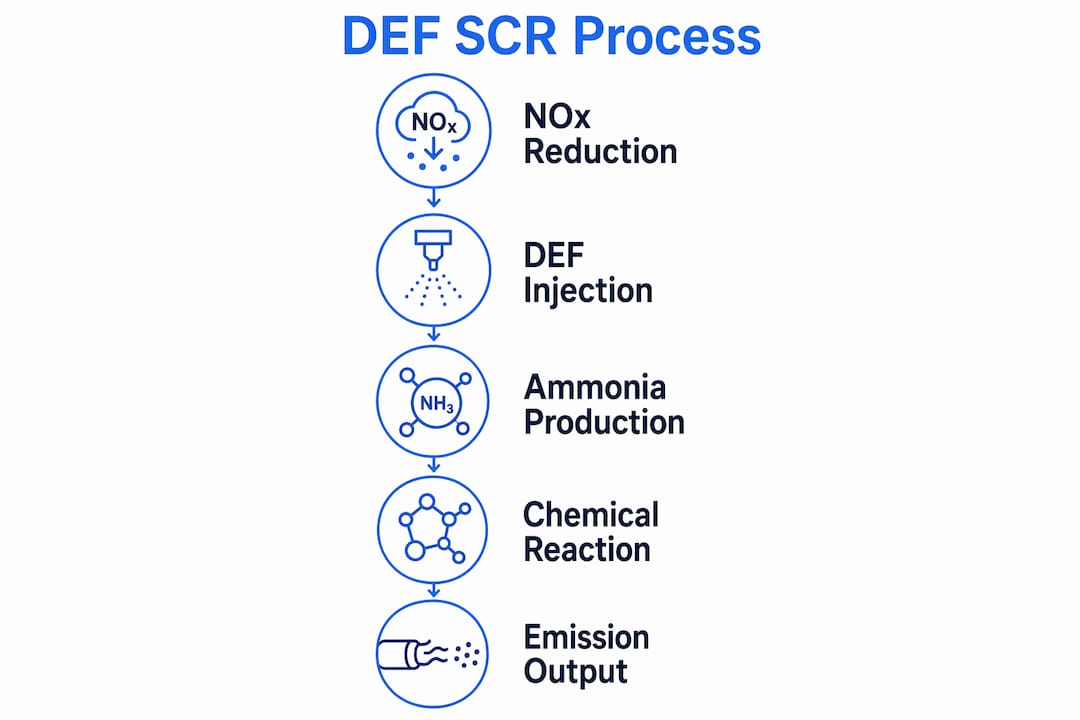
The process follows four steps:
- Injection: A dosing pump injects a precise amount of DEF into the hot exhaust stream upstream of the SCR catalyst.
- Thermal decomposition: Heat breaks DEF down into ammonia (NH3) and carbon dioxide. This step is called thermolysis and hydrolysis.
- Catalytic reaction: Ammonia enters the SCR catalyst and reacts with NOx gases. The catalyst converts NOx into nitrogen gas (N2) and water vapor (H2O).
- Clean exhaust: The resulting gases are non-toxic and exit through the tailpipe.
The table below summarizes what enters and exits the SCR catalyst:
| Input | Output |
|---|---|
| NOx (nitrogen oxides) | N2 (nitrogen gas) |
| NH3 (ammonia from DEF) | H2O (water vapor) |
| Exhaust heat (activation) | No harmful byproducts |
The SCR system does not affect engine combustion. It treats the exhaust after it leaves the engine. That separation is why DEF must never be added to the diesel fuel tank. Mixing DEF with diesel causes immediate, catastrophic damage to fuel system components, requiring full replacement. The DEF tank on most vehicles is clearly marked with a blue cap to prevent this mistake.
Quality considerations: why certified DEF matters
API-certified DEF uses synthetic urea and deionized water that meet ISO 22241 purity standards. That certification is not a marketing label. It is the difference between a functioning SCR system and a damaged one.
Contamination is the primary cause of SCR failure in fleet operations. The contaminants do not have to be obvious. Dust particles, tap water minerals, trace metals from improper storage containers, and even residue from a previously used container can permanently poison the SCR catalyst. Once the catalyst is poisoned, the repair cost far exceeds the price of any DEF savings from buying uncertified fluid.
Common contamination sources and their consequences:
- Tap water substitution: Introduces calcium, magnesium, and chlorides that degrade catalyst efficiency
- Non-stainless or non-HDPE containers: Metals leach into the fluid and trigger sensor faults
- Agricultural urea: Biuret content causes catalyst poisoning and emissions test failure
- Reused containers: Residue from other fluids introduces chemical incompatibilities
- Dust and debris: Even microscopic particles disrupt the catalytic reaction
Cost savings from non-certified DEF are an illusion. A single SCR catalyst replacement costs thousands of dollars. API-certified fluid from a trusted supplier is the only financially rational choice for any fleet.
Pro Tip: Use closed-loop dispensing systems for bulk DEF storage. Closed systems prevent airborne contamination during transfer and eliminate the risk of cross-contamination from open containers.
Best practices for DEF storage and handling
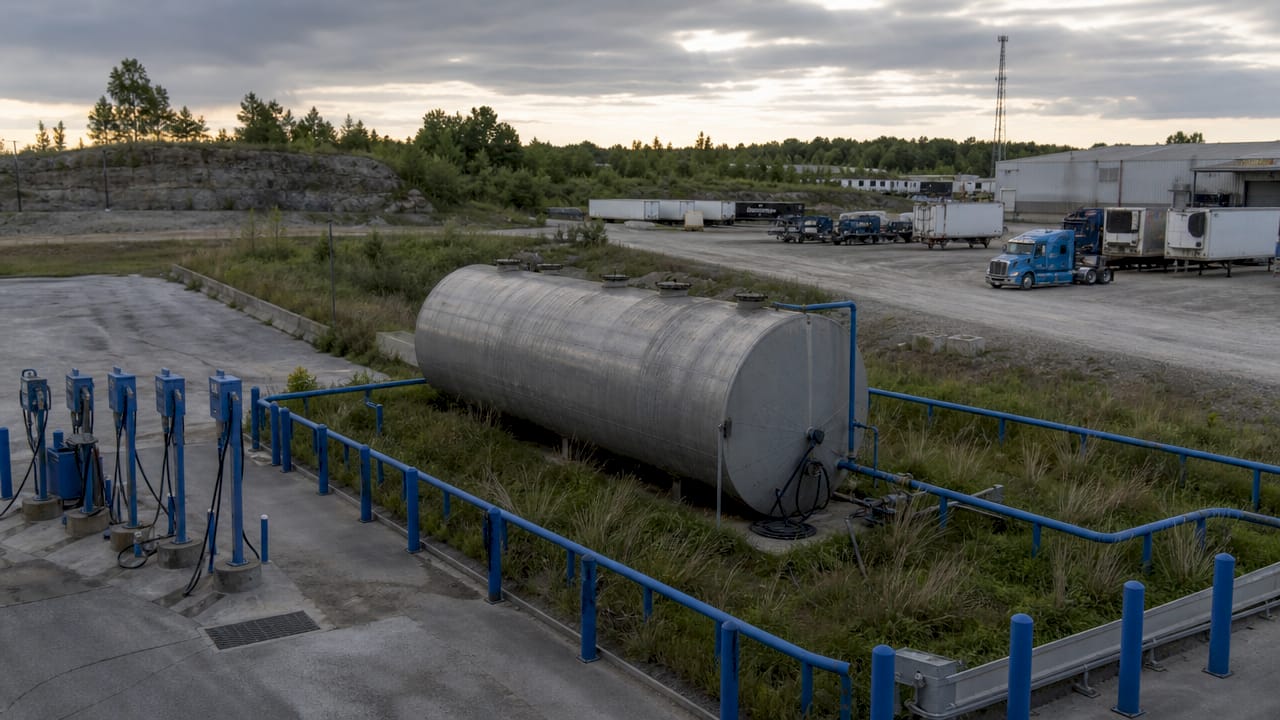
DEF requires specific storage conditions to maintain its chemical integrity. DEF is corrosive to aluminum, carbon steel, and copper, so storage tanks and dispensing equipment must be made from stainless steel or high-density polyethylene (HDPE). Using the wrong materials introduces metal ions into the fluid, which degrades quality before the fluid ever reaches the vehicle.
Shelf life and temperature
DEF shelf life ranges from 18–24 months at 77°F, but that window shrinks significantly in warmer conditions. At temperatures above 95°F, shelf life drops to 6–12 months. That reduction matters for fleets storing DEF in outdoor tanks during summer months in Texas, Arizona, or other hot-climate states.
| Storage temperature | Expected shelf life |
|---|---|
| Below 50°F | Extended beyond 24 months |
| 50°F to 77°F | 18–24 months (optimal range) |
| 77°F to 95°F | 12–18 months |
| Above 95°F | 6–12 months |
DEF freezes at 12°F. Freezing does not permanently damage the fluid as long as the container is not cracked. The fluid returns to full potency after thawing. However, repeated freeze-thaw cycles in improperly sealed containers can introduce contamination.
Bulk storage vs. packaged jugs
Bulk on-site DEF storage reduces contamination risk and eliminates the handling inefficiencies of individual jugs. For fleets running more than five vehicles, bulk tanks with dedicated dispensing equipment pay for themselves quickly in reduced labor and lower per-gallon cost. Operators managing large equipment pools in construction, mining, or municipal services should review the true cost comparison between bulk and jug supply before committing to either format.
Store DEF in a cool, dark, well-ventilated area. Direct sunlight accelerates urea degradation and promotes crystallization around fittings and caps. Urea crystals are not dangerous, but they indicate temperature stress and signal that storage conditions need correction. For a full breakdown of temperature requirements, Defsales covers DEF storage temperature in detail.
Pro Tip: Label all DEF storage tanks and dispensing nozzles clearly. Color-code them blue to match the vehicle DEF cap standard. This single step eliminates the most common misfueling errors on busy job sites.
What happens when a diesel vehicle runs out of DEF?
Modern diesel vehicles monitor DEF levels and fluid quality continuously through onboard diagnostic (OBD) systems. The warning sequence is designed to give operators time to refill before consequences become severe. Ignoring those warnings is expensive.
The consequences escalate in stages:
- Low DEF warning light: Activates when the tank reaches roughly 10% capacity. No performance impact yet.
- Engine derate: As the tank approaches empty, the engine control module reduces power output to force the operator to refill.
- Speed restriction: When DEF runs out completely, the vehicle enters limp mode and restricts speed to as low as 5 mph. This is a federal compliance requirement, not a manufacturer choice.
- No-start condition: Some vehicles will not restart after a full DEF depletion event until the tank is refilled and the system resets.
Contaminated DEF triggers a separate but equally serious failure path. The OBD system detects abnormal NOx levels downstream of the SCR catalyst and flags a quality fault. The engine derates even if the tank is full. Clearing that fault requires draining the DEF tank, flushing the system, and in severe cases, replacing the SCR catalyst. Fleets can use the DEF calculator on Defsales to estimate consumption rates and avoid running low in the first place.
The financial impact of a DEF-related breakdown extends beyond repair costs. A truck stuck in limp mode at 5 mph on a job site or highway creates scheduling delays, towing costs, and lost productivity. For fleets with tight delivery windows or construction deadlines, a single DEF failure can cascade into significant contract penalties.
Defsales: your resource for DEF supply and fleet management
Defsales is built for fleet managers and diesel operators who need accurate, practical DEF information without sorting through manufacturer marketing. Whether you are setting up bulk storage for the first time or troubleshooting an SCR derate, the guides and tools on Defsales cover the full operational picture.
For fleets ready to move beyond jugs, Defsales connects operators with bulk DEF delivery through Anytime Fuel Pros, serving fleets in San Antonio, Austin, Dallas, and Salt Lake City with on-site delivery and wet-hosing options. The fleet guides on Defsales cover bulk supply logistics, storage setup, and consumption planning in one place. If you manage a diesel fleet and want reliable DEF supply without the guesswork of jug purchasing, Anytime Fuel Pros offers scheduled and emergency delivery to keep your equipment running.
Key takeaways
Diesel exhaust fluid is a chemically standardized solution that SCR systems require to convert NOx into harmless nitrogen and water vapor, and using non-certified or contaminated fluid causes irreversible catalyst damage that costs far more than the fluid itself.
| Point | Details |
|---|---|
| DEF composition is fixed | ISO 22241 mandates 32.5% synthetic urea and 67.5% deionized water for correct SCR function. |
| SCR reduces NOx by up to 90% | DEF injection and catalytic conversion eliminate the vast majority of harmful nitrogen oxides. |
| Contamination is the top SCR failure cause | Use API-certified DEF and closed-loop dispensing to protect the catalyst and engine warranty. |
| Storage temperature controls shelf life | DEF lasts 18–24 months at 77°F but degrades faster above 95°F; store cool and out of direct sunlight. |
| Running out triggers limp mode | OBD systems restrict speed to 5 mph when DEF is empty, a federal compliance requirement. |
FAQ
What is DEF liquid made of?
DEF is a solution of 32.5% synthetic automotive-grade urea and 67.5% deionized water, standardized under ISO 22241. The exact concentration produces the lowest possible freezing point and optimal ammonia output in the SCR catalyst.
Can I use agricultural urea to make DEF?
No. Agricultural urea contains biuret and other impurities that poison SCR catalysts. Only synthetic automotive-grade urea meeting ISO 22241 specifications is safe for use in diesel exhaust fluid.
How often does a diesel vehicle need DEF?
DEF consumption typically runs at roughly 2–3% of diesel fuel consumption, though the exact rate varies by engine load, model, and duty cycle. Defsales provides a DEF consumption guide with fleet-specific examples.
What happens if DEF freezes?
DEF freezes at 12°F (negative 11°C). Freezing does not permanently damage the fluid as long as the container remains sealed and intact. The fluid returns to full potency after thawing and does not require replacement.
Is bulk DEF better than jugs for fleets?
Bulk DEF reduces per-gallon cost, minimizes handling contamination, and eliminates the labor of managing individual containers. For fleets operating more than five diesel vehicles, bulk storage with dedicated dispensing equipment is the more reliable and cost-effective approach.