

Diesel Exhaust Fluid (DEF) is a urea-water solution that modern diesel engines require to chemically neutralize nitrogen oxide (NOx) emissions through a process called Selective Catalytic Reduction (SCR). Every heavy-duty diesel truck, construction machine, and generator built since the 2010 model year depends on DEF to meet EPA emissions standards. Without it, the engine does not just pollute. It physically derate or shuts down. For fleet managers, understanding why diesel engines need DEF is not optional knowledge. It is the foundation of uptime, compliance, and cost control.
Why diesel engines need DEF: the core function explained
DEF works by enabling the SCR system to convert harmful NOx gases into nitrogen and water vapor, two substances that are harmless to the atmosphere. The chemical conversion process works like this: DEF is injected into the hot exhaust stream, where heat breaks the urea down into ammonia through thermolysis and hydrolysis. That ammonia then reacts with NOx on the SCR catalyst, producing only nitrogen and water as byproducts.
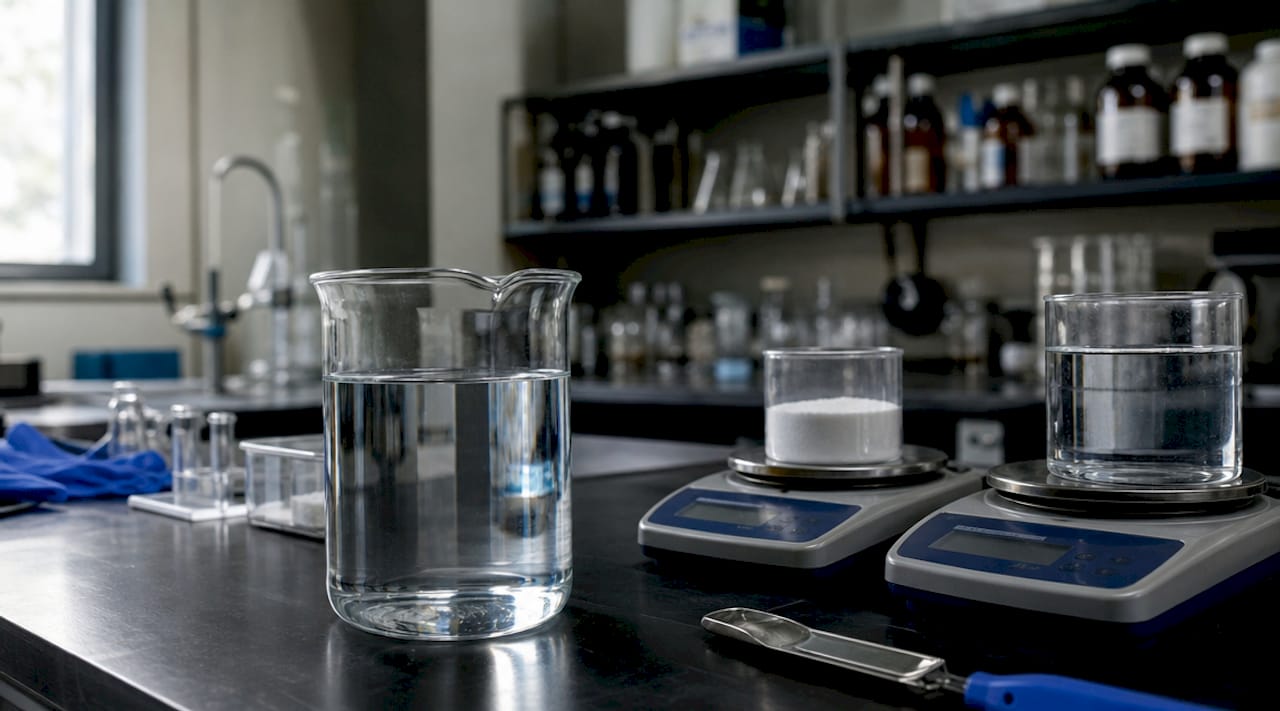
The formulation of DEF is not arbitrary. It is a precisely standardized 32.5% urea concentration mixed with 67.5% deionized water. This specific ratio is the eutectic point of the mixture, meaning it provides the lowest possible freezing point while maintaining the correct ammonia yield for SCR chemistry. Any deviation from this ratio degrades NOx conversion efficiency.
Dosing is not a fixed rate. The engine control module (ECM) adjusts DEF injection in real time based on exhaust gas temperature, engine load, and sensor feedback from both upstream and downstream of the catalyst. At lower exhaust temperatures, conversion efficiency drops and the system compensates by modifying dosing volume dynamically. This precision prevents both under-treatment of NOx and ammonia slip, which is excess ammonia escaping into the atmosphere.
Here is what happens inside the SCR system step by step:
- DEF is stored in a dedicated onboard tank, separate from the fuel system
- The dosing module injects DEF into the exhaust pipe ahead of the SCR catalyst
- Heat decomposes urea into ammonia and carbon dioxide
- Ammonia reacts with NOx on the catalyst surface
- The exhaust exits as nitrogen and water vapor
Pro Tip: Never mix DEF with diesel fuel or store it in metal containers. DEF is corrosive to copper, zinc, and most alloys. Use only high-density polyethylene (HDPE) containers and dedicated dispensing equipment to prevent contamination.
Regulatory background: why DEF became mandatory for diesel engines
The EPA’s 2010 heavy-duty emissions standards cut allowable NOx by roughly 90% compared to 2004 limits. No combustion-side modification alone could achieve that reduction. SCR with DEF was the technology that made compliance physically possible, and it became the industry standard across manufacturers including Cummins, Detroit Diesel, and PACCAR.
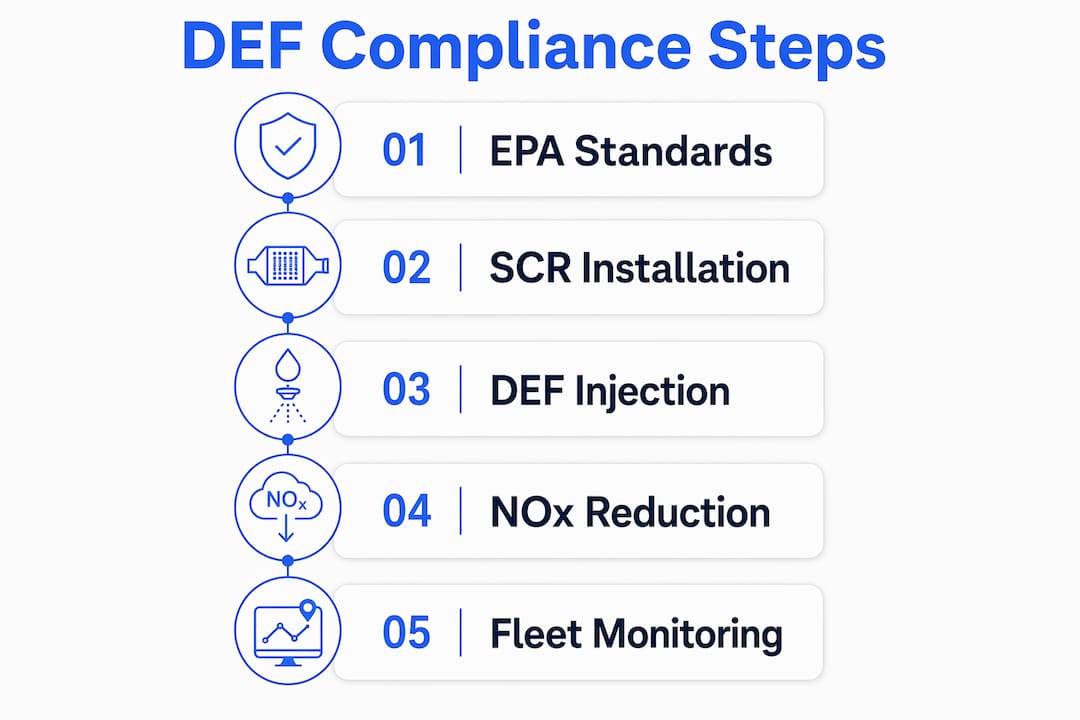
The results at scale are significant. SCR with DEF contributed to a 76% reduction in NOx from highway diesel engines by 2022, accounting for the majority of U.S. NOx emission decreases since 2010. That figure represents millions of tons of avoided pollution from freight trucks, construction equipment, and agricultural machinery operating across the country.
Compliance is enforced at the vehicle level, not just at the regulatory level. Modern diesel engines are equipped with sensors that continuously monitor DEF tank level and fluid quality. When those sensors detect a problem, the consequences are immediate and escalating:
- First warning: dashboard alert when DEF level drops below a threshold
- Second warning: audible alarm and reduced engine power
- Third stage: engine derate to 5 mph until DEF is refilled, enforced by EPA regulation
- Final stage: engine will not restart after shutdown if DEF is critically low or absent
This enforcement architecture means DEF management is not a maintenance preference. It is a hard operational constraint built into every compliant diesel engine.
Impact of DEF on diesel engine performance and fleet operations
DEF does more than satisfy regulators. It directly enables better engine performance. Because SCR handles NOx reduction in the exhaust aftertreatment system, engine designers can tune combustion for power and fuel efficiency rather than sacrificing both to reduce in-cylinder NOx. Engines running with properly functioning SCR systems run hotter and leaner, which translates to measurable fuel economy gains compared to pre-SCR designs that used exhaust gas recirculation (EGR) as the primary NOx control strategy.
For fleet operators, the practical implications of DEF management break down into four operational areas:
- Uptime protection. A truck that runs out of DEF on a highway haul does not just slow down. It becomes a liability. The mandatory derate to 5 mph means a loaded semi is effectively immobilized until DEF is sourced and added. One missed delivery can cost more than an entire month of DEF supply.
- Fuel budget accuracy. DEF consumption runs between 2% and 5% of diesel fuel consumption, varying with engine load and ambient temperature. A fleet burning 10,000 gallons of diesel per month should budget for 200 to 500 gallons of DEF. Heavier loads and hotter operating conditions push consumption toward the higher end.
- Engine longevity. Properly functioning SCR systems reduce the thermal and chemical stress that older EGR-heavy engines experienced. Fewer deposits in the combustion chamber and lower soot loading on the diesel particulate filter (DPF) translate to longer service intervals.
- Maintenance scheduling. DEF dosing system components, including the injector, pump, and filter, require periodic inspection. Neglecting these components leads to injector clogging and dosing failures that trigger fault codes and derates even when the DEF tank is full.
Pro Tip: Track DEF consumption per vehicle in your fleet management software. A sudden spike in DEF usage on a specific unit often signals a dosing system fault or a leak before a fault code appears. Catching it early avoids a roadside derate.
DEF quality, storage, and maintenance best practices
DEF quality is not a secondary concern. Contaminated or improperly stored DEF can crystallize inside injectors, poison the SCR catalyst, and cause irreversible system damage. Catalyst poisoning is particularly costly because the SCR catalyst cannot be cleaned. It must be replaced, and replacement costs on a Class 8 truck can run into thousands of dollars.
The governing standard for DEF quality is ISO 22241, which specifies acceptable urea concentration, water purity, and permissible contaminant levels. Purchasing DEF that carries the American Petroleum Institute (API) certification mark confirms it meets ISO 22241 requirements. Using uncertified DEF to save a few cents per gallon is one of the most expensive mistakes a fleet can make.
The table below compares the consequences of proper versus improper DEF handling:
| Condition | Consequence |
|---|---|
| Correct 32.5% urea concentration | Full NOx conversion, no fault codes, normal engine operation |
| Diluted or low-concentration DEF | Reduced NOx conversion, SCR fault codes, potential derate |
| Contaminated DEF (minerals, metals) | Injector clogging, catalyst poisoning, costly component replacement |
| DEF stored above 86°F for extended periods | Urea degradation, reduced shelf life, concentration drift |
| Frozen DEF without tank heater active | Dosing interruption, SCR faults, possible engine derate |
Cold weather introduces a specific challenge. DEF freezes at approximately 12°F (minus 11°C). Most modern diesel engines include integrated tank heaters that thaw DEF before the engine reaches operating temperature, so brief freezing does not damage the fluid itself. The problem arises when DEF is stored in external tanks or totes without heating provisions. Repeated freeze and thaw cycles can trigger SCR faults and derates even when the DEF itself is uncontaminated, because the dosing system cannot draw fluid until the tank heater completes its thaw cycle.
Key storage and maintenance practices every fleet should follow:
- Store bulk DEF in HDPE tanks away from direct sunlight and heat sources
- Keep storage temperature between 12°F and 86°F for maximum shelf life (approximately two years under ideal conditions)
- Use dedicated DEF dispensing equipment. Never use hoses or fittings that have contacted diesel, oil, or other fluids
- Verify DEF concentration with a refractometer when quality is in question
- Inspect DEF injectors, filters, and pump lines during scheduled preventive maintenance intervals
- Check the SCR system sensors and electronic controls during diagnostics to catch dosing faults before they escalate
For fleets operating in San Antonio, Austin, Dallas, or Salt Lake City, on-site DEF delivery from Anytime Fuel Pros removes the logistics burden of sourcing and transporting bulk DEF, reducing contamination risk and storage management overhead.
Get reliable DEF supply and technical resources for your fleet
Keeping your fleet compliant starts with sourcing DEF that meets ISO 22241 standards from a supplier you can count on.
Defsales.com provides fleet operators and diesel technicians with the technical information needed to manage DEF systems correctly, from storage guidelines to SCR troubleshooting. For procurement, the DEF resources and delivery options available through Anytime Fuel Pros cover bulk supply, on-site delivery, and wet-hosing service for fleets of all sizes. If your team needs a deeper technical reference, the DEF system walkthrough for technicians on Defsales covers dosing components, fault code interpretation, and maintenance procedures in detail. When you are ready to schedule delivery or set up a recurring supply agreement, Anytime Fuel Pros serves fleets across San Antonio, Austin, Dallas, and Salt Lake City with nationwide partner coverage.
Key takeaways
Diesel engines require DEF because SCR technology, which depends entirely on urea chemistry, is the only proven method for meeting EPA NOx standards that took effect in 2010 and remain in force today.
| Point | Details |
|---|---|
| DEF enables SCR chemistry | Urea in DEF converts to ammonia, which neutralizes NOx into nitrogen and water on the catalyst. |
| Regulatory compliance is non-negotiable | EPA 2010 standards cut NOx limits by 90%, making SCR and DEF mandatory for all heavy-duty diesels. |
| Running out triggers hard derates | Low or absent DEF causes a mandatory engine derate to 5 mph, enforced by onboard sensors and EPA regulation. |
| DEF quality directly affects system health | Contaminated or diluted DEF causes injector clogging and irreversible catalyst poisoning under ISO 22241 standards. |
| Consumption requires active budgeting | DEF usage runs 2% to 5% of diesel consumption, varying with load and temperature across fleet operations. |
FAQ
What is DEF and why do diesel engines need it?
DEF is a solution of 32.5% high-purity urea and 67.5% deionized water injected into diesel exhaust to enable SCR systems to convert NOx into nitrogen and water. Diesel engines built since 2010 require it to comply with EPA heavy-duty emissions standards.
What happens if a diesel truck runs out of DEF?
The engine control system triggers a mandatory power derate, reducing vehicle speed to 5 mph until DEF is refilled. This derate is enforced by EPA regulation and cannot be bypassed without violating federal emissions law.
How much DEF does a diesel engine use?
DEF consumption typically runs between 2% and 5% of diesel fuel consumption, depending on engine load, size, and operating temperature. A truck burning 1,000 gallons of diesel in a month will use roughly 20 to 50 gallons of DEF.
Can DEF freeze, and does freezing damage it?
DEF freezes at approximately 12°F (minus 11°C), but freezing does not permanently damage the fluid. Most diesel engines include tank heaters that thaw DEF before operation. Problems arise when external storage tanks lack heating, causing dosing interruptions and SCR fault codes.
What is the ISO 22241 standard for DEF?
ISO 22241 is the international standard specifying DEF’s urea concentration, water purity, and maximum contaminant levels. Purchasing API-certified DEF confirms it meets this standard and protects SCR components from contamination damage.