DEF compliance requirements for diesel operators
Every diesel engine manufactured after 2010 in the United States is legally required to use Diesel Exhaust Fluid to meet EPA Tier 4 emissions standards. Non-compliance carries serious consequences — from engine limp mode and equipment downtime to EPA fines and warranty voidance. This guide covers everything fleet managers, construction operators, and equipment owners need to know to stay compliant.

What is EPA Tier 4 and who does it apply to?
EPA Tier 4 is the most stringent emissions standard ever imposed on diesel engines in the United States. Introduced by the Environmental Protection Agency, Tier 4 requires a dramatic reduction in nitrogen oxide (NOx) and particulate matter (PM) emissions from non-road diesel engines — the engines powering construction equipment, agricultural machinery, generators, and industrial equipment.
Tier 4 standards were phased in between 2008 and 2015 depending on engine horsepower class. All new non-road diesel engines sold in the US after 2015 must meet Tier 4 Final standards, which mandates SCR technology and therefore DEF use in all engines above 25 horsepower.
For on-road diesel trucks and commercial vehicles, equivalent standards are enforced under EPA's heavy-duty highway rule, requiring SCR and DEF use in all vehicles manufactured after January 1, 2010.
2008 — Tier 4 Interim introduced
First phase of Tier 4 standards applied to larger engines (175+ hp). SCR systems begin appearing in heavy equipment.
2010 — On-road trucks require DEF
All new on-road diesel trucks must meet EPA 2010 standards, mandating SCR systems and DEF use across the commercial trucking industry.
2012–2015 — Tier 4 Final phased in
Tier 4 Final applied progressively to all non-road engine sizes. By 2015, all new non-road diesel engines above 25 hp must meet Tier 4 Final, including DEF requirements.
Today — Full enforcement
All Tier 4 Final engines require DEF to operate legally. Tampering with SCR systems or operating without DEF constitutes a federal Clean Air Act violation.
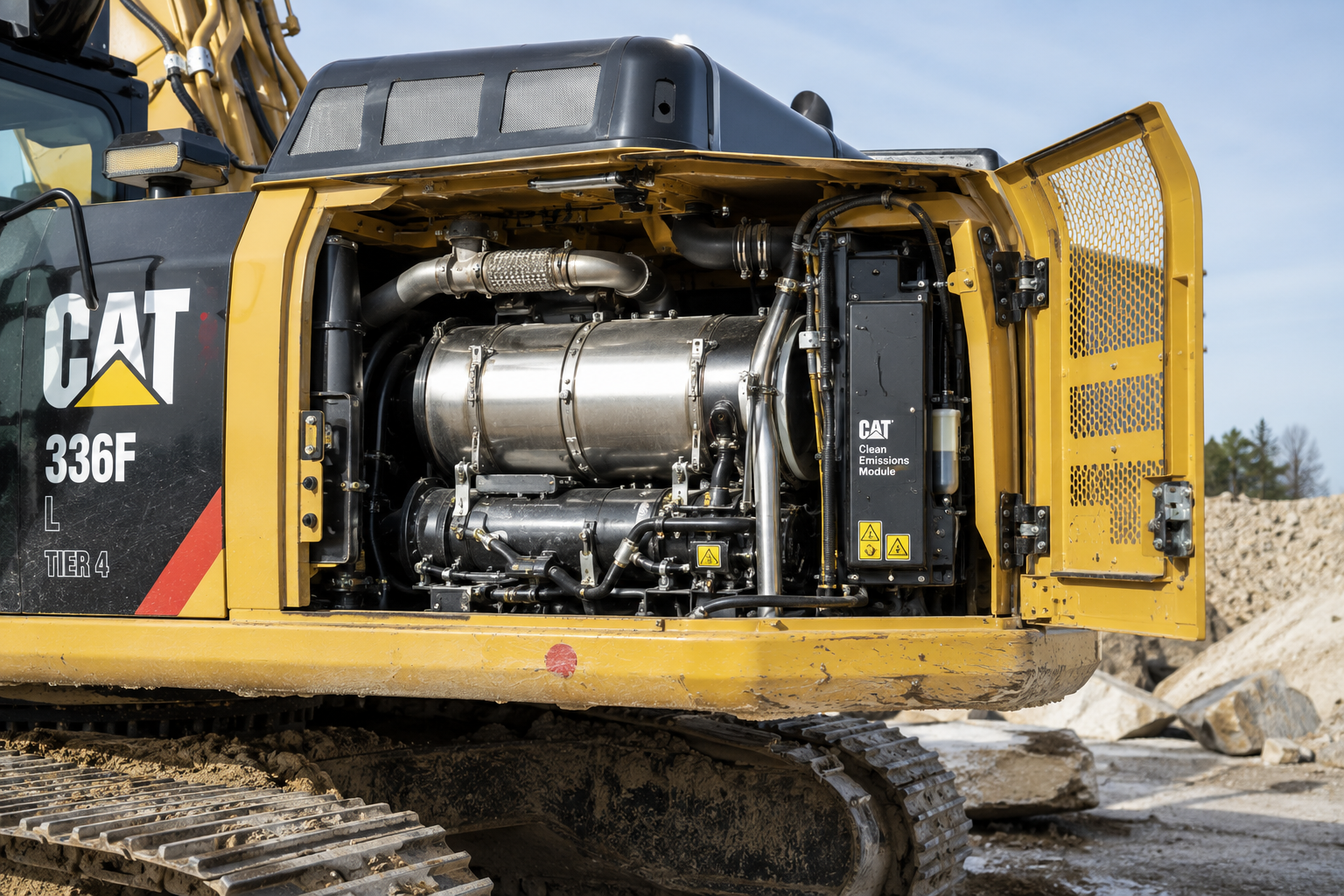

SCR system and DEF compliance requirements
Operating a Tier 4 diesel engine without DEF is a violation of the federal Clean Air Act. Engine manufacturers are required by EPA to build fail-safes into SCR systems that prevent operation without DEF. Beyond the hardware requirements, operators have ongoing legal obligations to maintain DEF supply and system integrity.
Maintaining a reliable bulk DEF delivery service is one of the most effective ways fleet managers and construction operators can ensure continuous compliance without operational disruption.
Maintain DEF supply at all times — Operating with an empty DEF tank is non-compliant. Federal regulations require SCR systems to be operational whenever the engine is running.
Use ISO 22241-compliant DEF only — Only DEF meeting ISO 22241 purity specifications may be used. Using off-spec fluid or substitutes constitutes tampering with emissions controls.
Do not tamper with SCR systems — Disabling, bypassing, or modifying SCR systems is a federal Clean Air Act violation carrying penalties up to $44,539 per day per violation.
Maintain DEF quality standards — Degraded or contaminated DEF that reduces SCR effectiveness may constitute non-compliance even if the tank is full.
Penalties for DEF and SCR non-compliance
Non-compliance with EPA emissions regulations carries serious financial, operational, and legal consequences. Here is what operators and fleet managers need to know.
EPA Civil Penalties
EPA can impose civil penalties of up to $44,539 per day for each Clean Air Act violation. For fleet operators with multiple non-compliant vehicles, penalties can accumulate rapidly. Knowingly tampering with emissions systems can result in criminal charges.
Equipment Downtime
EPA-mandated limp mode and no-start conditions mean non-compliant equipment simply stops working. On a construction site or in a commercial fleet, unexpected downtime translates directly to lost revenue, missed deadlines, and contract penalties.
Warranty Voidance
Running an SCR-equipped engine without DEF, or with off-spec DEF, voids the manufacturer warranty on the SCR system and potentially the entire engine. SCR catalyst replacement alone can cost $5,000–$15,000 or more depending on equipment size.
Failed Inspections
Commercial vehicles are subject to roadside DEF system inspections. A failed inspection can result in an out-of-service order, pulling the vehicle from revenue service until repairs are completed and the system is verified compliant.
Reputational Damage
EPA enforcement actions and violations become part of the public record. For contractors bidding on government or municipal projects, a compliance violation history can disqualify bids or damage relationships with clients who require environmental compliance certification.
SCR System Damage
Operating without DEF or with contaminated DEF causes irreversible damage to SCR catalysts, dosing injectors, and NOx sensors. These repairs are expensive and time-consuming — and they are entirely preventable with a reliable DEF delivery service near you.
DEF limp mode explained: what happens at each stage
Every SCR-equipped diesel engine sold in the United States after 2010 is programmed with a progressive fail-safe system that activates as DEF levels drop. This is not a manufacturer option — it is an EPA mandate. Understanding the sequence helps operators take action before equipment is immobilized.
The fail-safe is designed to make it economically impractical to operate without DEF — which means ignoring low DEF warnings is never a viable strategy for fleet operators or construction site managers.
Warning indicator activates
Dashboard DEF warning light illuminates. Engine performance is unaffected. Operator has time to source DEF delivery before restrictions begin.
Audible and visual alerts escalate
Warning becomes more urgent. Some systems begin logging fault codes. Engine performance may begin to show minor restrictions depending on manufacturer.
Engine power reduction begins
Engine enters limp mode — power output is reduced to approximately 25–40% of rated capacity. Equipment can still move but cannot perform at full capacity.
Engine shuts down — will not restart
Once DEF is completely depleted and the engine is shut off, most systems will not allow the engine to restart until DEF is added and the system is reset.
Tampering detected — permanent fault
If the system detects SCR tampering or defeat devices, permanent fault codes are logged, warranty is voided, and EPA notification may be triggered automatically.
ISO 22241 — the DEF quality standard
ISO 22241 is the international standard governing DEF quality, handling, and testing. Using non-compliant DEF is itself a compliance violation — quality matters as much as quantity.
ISO 22241-1: Requirements
Defines the chemical composition of DEF — 32.5% urea (±0.7%) in deionized water. Sets limits on contaminants including metals, aldehydes, and insoluble matter.
ISO 22241-2: Test Methods
Specifies the laboratory test methods used to verify DEF composition and purity. Includes procedures for urea concentration, water content, and contaminant testing.
ISO 22241-3: Handling
Covers requirements for DEF transportation, storage, and dispensing equipment. Specifies materials compatibility, labeling, and container requirements for DEF handling.
ISO 22241-4: Refilling
Defines requirements for on-vehicle DEF refilling interfaces, including fill port dimensions and labeling — which is why DEF nozzles are a different size than diesel nozzles.
DEF compliance checklist for fleet managers
Practical steps every fleet manager and equipment operator should have in place to maintain continuous DEF and SCR compliance.
Establish a DEF reorder threshold Set a minimum DEF level that triggers a reorder — typically 20–25% of tank capacity — to ensure you never approach limp mode conditions.
Source DEF from ISO 22241-certified suppliers Only use DEF delivery services that can certify their product meets ISO 22241. Request certification documentation from your supplier.
Train operators on DEF warning indicators Every equipment operator should know what DEF warning lights mean and what action to take before limp mode activates.
Use DEF-dedicated storage and dispensing equipment Never share containers, pumps, or nozzles between DEF and other fluids. Label all DEF equipment clearly.
Schedule regular SCR system inspections Include SCR component checks in preventive maintenance schedules. Address fault codes immediately — do not clear and ignore.
Document DEF purchases and deliveries Maintain records of DEF deliveries, supplier certifications, and consumption. Documentation is essential in the event of an EPA audit or inspection.
Set up a scheduled bulk DEF delivery service Eliminate the risk of running out by partnering with a reliable on-site DEF delivery service near you. Scheduled deliveries remove DEF management from your daily operations.
Monitor DEF storage conditions Ensure bulk tanks and containers are stored within ISO 22241 temperature ranges. Check expiration dates and rotate stock using FIFO methodology.
DEF compliance frequently asked questions
Common compliance questions from fleet managers, equipment operators, and site supervisors.
Never risk non-compliance — get bulk DEF delivered
The most effective way to maintain continuous DEF and SCR compliance is eliminating the risk of running out. If you've been searching for DEF delivery near me or a trusted bulk diesel exhaust fluid supplier, Anytime Fuel Pros provides nationwide on-site DEF delivery service to fleet yards, construction sites, and job locations. Scheduled deliveries, ISO 22241-certified DEF, same-day and next-day service available — no contracts required.