

A diesel truck DEF system walkthrough is a structured inspection of every component in the Selective Catalytic Reduction (SCR) system, from the DEF tank and dosing pump to the catalyst and NOx sensors, designed to prevent emissions failures and costly engine derates. DEF, or Diesel Exhaust Fluid, is a precisely formulated solution that your SCR system injects into the exhaust stream to convert harmful nitrogen oxides into nitrogen and water. Without a functioning DEF system, your truck faces progressive power restrictions that can bring a loaded rig to a crawl. This guide walks you through every component, every inspection step, and every troubleshooting strategy you need to keep your SCR system running clean and compliant in 2026.
What are the key components of a diesel truck DEF system?
Understanding what you are inspecting before you touch a wrench is the difference between a productive walkthrough and a wasted afternoon. The DEF system is not a single unit. It is a chain of interdependent components, and a failure anywhere in that chain triggers faults across the rest of the system.
| Component | Function |
|---|---|
| DEF tank and level sensors | Stores fluid and signals remaining volume to the ECM |
| Supply lines and heating elements | Moves DEF to the pump; heating prevents freezing below 12°F |
| DEF pump and pressure module | Pressurizes DEF for precise delivery to the dosing injector |
| Dosing injector | Sprays DEF into the exhaust pipe upstream of the SCR catalyst |
| SCR catalyst and housing | Converts NOx to nitrogen and water using the urea reaction |
| NOx sensors (upstream and downstream) | Measure conversion efficiency and trigger fault codes when readings diverge |
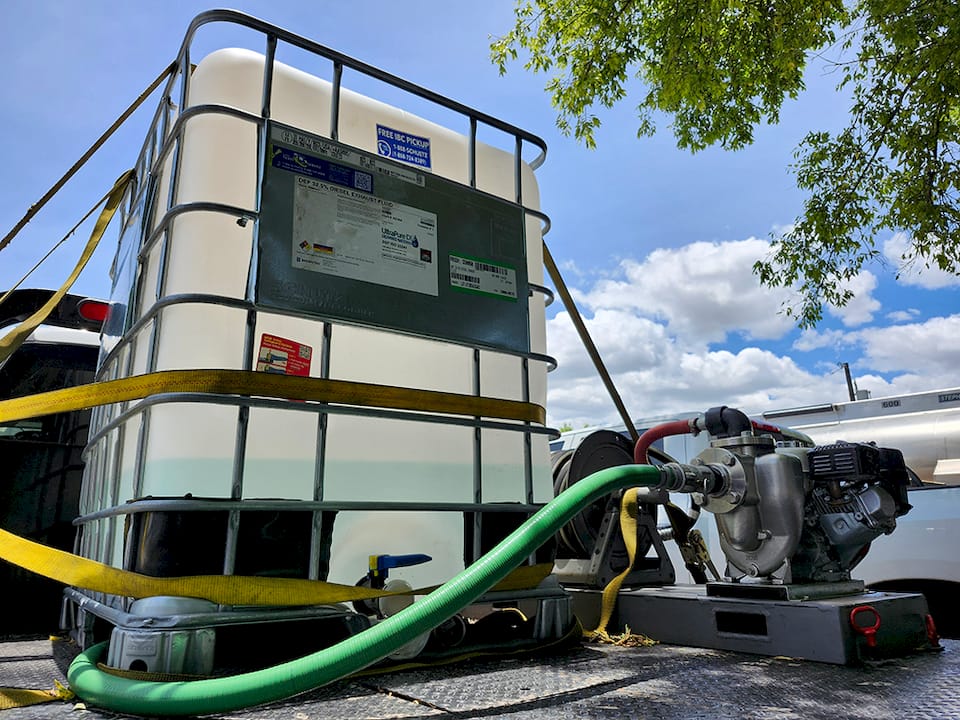
Each component feeds the next. The tank sensor tells the ECM how much fluid is available. The pump delivers that fluid under pressure. The injector atomizes it into the exhaust stream. The catalyst does the chemical work. The NOx sensors confirm the result. When any link breaks, the ECM logs a fault and begins the derate countdown.
Key areas to watch during any DEF fluid injection overview include the dosing injector tip and the NOx sensor bungs. Both are exposed to extreme heat and exhaust gases, making them the most common failure points on high-mileage trucks. Crystallization of DEF residue at the injector inlet is a recurring issue that restricts flow and distorts spray patterns, often mimicking a failing pump on diagnostic scans.
How to perform a diesel truck DEF system walkthrough step by step
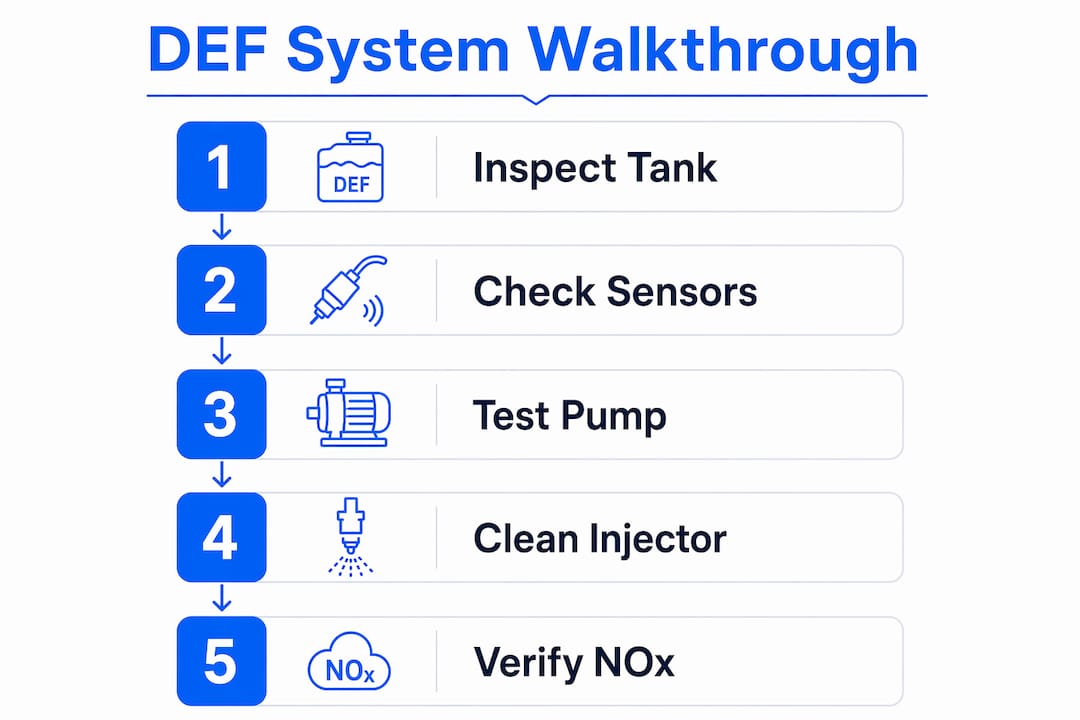
A thorough inspection follows a logical sequence from fluid quality outward to electronic controls. Skipping steps or jumping straight to fault codes is the fastest way to replace a part that was not the root cause. According to inspection interval guidance, technicians should target every 10,000 to 15,000 miles for standard duty, with more frequent checks for trucks operating in extreme heat, heavy haul, or stop-and-go urban cycles.
Pre-inspection setup
-
Pull the vehicle’s fault code history using a scan tool capable of reading SCR-specific PIDs, not just generic OBD-II codes. Note any active or pending codes before clearing anything.
-
Check the DEF tank level and record it. A truck that consistently reads low despite regular fills points to a sensor or wiring fault, not an actual fluid shortage.
-
Review the vehicle’s service history for recent DPF regenerations, DEF fills, and any prior SCR repairs.
Component inspection sequence
-
DEF tank: Inspect the exterior for cracks, discoloration, or impact damage. Remove the cap and check the filler screen for crystalline deposits or debris. A white or yellowish crust around the filler neck is a reliable sign of contamination or improper filling practices.
-
Supply lines: Trace each line from the tank to the pump. Look for cracks, kinks, or loose fittings. Squeeze rubber sections to feel for brittleness. Verify that heating element connectors are seated and corrosion-free.
-
DEF pump: With the ignition on and engine off, command the pump through your scan tool and listen for consistent operation. Erratic cycling or no response indicates internal wear or a pressure module fault.
-
Dosing injector: Remove the injector and inspect the tip for crystallization or carbon buildup. A clogged or partially blocked tip produces an irregular spray pattern that the SCR catalyst cannot process efficiently.
-
SCR catalyst: Check the housing for physical damage, cracks, or exhaust leaks at the inlet and outlet flanges. A catalyst that has been exposed to contaminated DEF may show elevated downstream NOx readings even after the fluid issue is corrected.
-
NOx sensors: Compare upstream and downstream NOx readings at operating temperature. A healthy system shows a significant drop across the catalyst. Readings that converge suggest catalyst degradation or a dosing shortfall.
Pro Tip: Document every inspection step with photos and written pass/fail notes. A photo of crystallization at the injector inlet is worth more than a written description when explaining a repair to a fleet manager or warranty administrator.
| Inspection item | Pass criteria | Fail indicator |
|---|---|---|
| DEF tank and filler | Clean screen, no cracks, clear fluid | Crystalline deposits, discoloration, debris |
| Supply lines | Flexible, no leaks, connectors seated | Brittleness, cracks, loose fittings |
| Dosing pump | Consistent pressure on command | No response, erratic cycling |
| Dosing injector | Clean tip, uniform spray | Crystallization, restricted or irregular spray |
| NOx sensors | Significant upstream/downstream drop | Converging readings, slow response |
Best practices for DEF fluid handling and storage
DEF quality is the single most controllable variable in SCR system health. ISO 22241 compliance requires a precise 32.5% urea and 67.5% deionized water formulation. Any deviation from that ratio reduces NOx conversion efficiency and accelerates deposits in the dosing hardware. This is not a guideline. It is the specification that determines whether your SCR system works or fails.
Follow these practices every time you handle DEF:
-
Use only API-certified fluid with a visible ISO 22241 certification mark on the container.
-
Clean the filler area before opening the cap. Even a small amount of dirt or diesel contamination entering the tank can trigger dosing faults within days.
-
Use dedicated blue-colored DEF equipment. Never share funnels, hoses, or containers with diesel or any other fluid.
-
Fill slowly to avoid foaming, which traps air and causes inaccurate level sensor readings.
-
Wipe up spills immediately. DEF dries into a white crystalline residue that contaminates the filler area and eventually works its way into the tank.
-
Store DEF between 50 and 77°F to preserve fluid quality and extend shelf life beyond 24 months. Temperatures above that range degrade the urea concentration rapidly, producing fluid that passes a visual check but fails chemically.
Pro Tip: Never interrupt a DPF regeneration cycle. A forced shutdown mid-regen leaves unburned hydrocarbons in the aftertreatment system that contaminate the SCR catalyst and create the exact conditions that trigger false NOx sensor faults.
Two mistakes show up repeatedly in diesel vehicle DEF issues. The first is putting the wrong fluid in the DEF tank. Diesel, coolant, or water all cause immediate and expensive damage to the pump, injector, and catalyst. The second is using DEF that has been stored improperly and has degraded past its effective concentration. Both mistakes produce fault codes that look like hardware failures, sending technicians down the wrong diagnostic path.
How to troubleshoot diesel truck DEF system issues effectively
Diesel truck emissions troubleshooting starts with understanding the failure chain, not the fault code list. Poor DEF quality causes dosing problems, dosing problems cause sensor errors, and sensor errors trigger catalyst and DPF faults. Chasing codes without validating fluid quality first wastes time and replaces parts that were not the root cause.
Common symptoms that indicate DEF system problems include:
-
DEF warning light with no other symptoms (early stage, fluid level or quality issue)
-
Reduced engine power or speed limiter activation (active derate in progress)
-
White crystalline residue around the DEF filler cap or injector area
-
Elevated downstream NOx readings that do not respond to DEF fills
-
Pump that cycles continuously without reaching target pressure
The 2026 EPA guidance gives heavy-duty trucks a warning period of up to 4,200 miles before a speed reduction to 25 mph takes effect. A mild derate begins at 650 miles or 10 hours after the initial fault, with normal operation preserved until that threshold. This extended window gives technicians more time to diagnose properly rather than rushing a repair under operational pressure.
Technician-grade diagnostics require real-time system data, not just fault codes. Monitor dosing commands, regen status, exhaust temperatures, and NOx sensor efficiency simultaneously. A truck showing a NOx efficiency fault with normal dosing commands and correct DEF quality points to a degraded catalyst, not a fluid or injector problem.
Real-time SCR diagnostics using scan tools that display current dosing rates, exhaust temperatures, and NOx conversion percentages give you a complete picture that generic OBD-II readers cannot provide. Brands like Cummins INSITE, Volvo VCADS, and Detroit Diesel Diagnostic Link each offer SCR-specific live data that makes the difference between a correct first diagnosis and a second repair visit.
When crystallization is the suspected cause, the repair does not end with cleaning the injector tip. Crystallization contamination spreads to the filler area, tank screen, supply line inlets, and injector seat. Clean every contact point, verify with a dosing test, and run a post-repair scan to confirm NOx efficiency has returned to normal before releasing the truck.
A systematic check sequence for any DEF fault looks like this: verify fluid quality first, then test pump pressure, then inspect the injector, then evaluate NOx sensor readings, and finally assess catalyst condition. That order prevents the most common misdiagnosis in SCR troubleshooting, which is replacing an expensive catalyst when a $15 fluid change would have solved the problem.
Key takeaways
A diesel truck DEF system requires systematic inspection of fluid quality, dosing hardware, and NOx sensors in sequence to prevent misdiagnosis and avoid unnecessary part replacements.
| Point | Details |
|---|---|
| Inspect in component order | Start at the tank and work outward to NOx sensors to catch root causes early. |
| Validate DEF quality first | ISO 22241-compliant fluid prevents the majority of dosing and sensor faults. |
| Use real-time scan data | Live dosing commands and NOx efficiency readings outperform fault codes alone. |
| Know the 2026 derate window | Heavy-duty trucks have up to 4,200 miles before a 25 mph speed limit activates. |
| Clean crystallization completely | Partial cleaning leaves contamination that triggers repeat faults within weeks. |
Keep your DEF system running with the right fluid and resources
The most preventable DEF system failures trace back to fluid quality and handling errors, not hardware wear. Defsales is built specifically for diesel operators and technicians who need accurate DEF information and access to certified fluid that meets ISO 22241 standards. Whether you manage a single truck or a regional fleet, the guidance and DEF product resources at Defsales cover everything from storage best practices to bulk supply options. Using API-certified DEF from a trusted source is the lowest-cost maintenance decision you can make for your SCR system. Pair that with the inspection and troubleshooting practices in this guide, and you eliminate the majority of DEF-related downtime before it starts.
FAQ
What does a DEF system walkthrough include?
A DEF system walkthrough covers inspection of the tank, supply lines, dosing pump, injector, SCR catalyst, and NOx sensors using pass/fail criteria and scan tool data. Technicians should document findings with photos and test dosing performance at each step.
How often should a DEF system be inspected?
Inspection intervals run approximately every 10,000 to 15,000 miles under standard duty conditions, with more frequent checks for trucks in extreme heat or heavy-haul applications. Harsh operating conditions accelerate crystallization and component wear across the entire SCR system.
What causes DEF crystallization in the system?
DEF crystallization forms when fluid residue dries on the filler cap, injector tip, or supply line inlets, particularly after spills or improper filling. Cleaning every contact point and using dedicated DEF equipment prevents recurrence.
How does the 2026 EPA derate policy affect diesel operators?
Under 2026 EPA guidance, heavy-duty trucks receive a warning light first, with a mild derate beginning at 650 miles or 10 hours after the fault. Full speed restriction to 25 mph does not activate until approximately 4,200 miles, giving operators more time for proper diagnosis.
Should I replace the NOx sensor or the DEF fluid first?
Always validate DEF fluid quality before replacing any sensor or hardware component. Poor DEF quality causes a chain reaction of dosing faults and sensor errors that disappear once compliant fluid is in the system, making sensor replacement unnecessary in many cases.