

Wet hosing DEF means transferring diesel exhaust fluid directly from a delivery tanker into your site tanks, totes, or vehicle tanks through a closed hose system, with no drums, no jugs, no manual pouring. It’s the go-to method for high-use fleets, construction sites, and any operation that can’t risk a contamination-related SCR fault. The payoff is straightforward: less handling, fewer spills, and a fleet that keeps running instead of waiting on a part-time supply chain.
TL;DR:
- Wet hosing is cost-effective for fleets using over 200 to 300 gallons of DEF monthly, especially when manual handling causes contamination issues.
- Equipment must include a calibrated, closed-loop pump system with dedicated, DEF-specific hoses and fittings to prevent contamination.
- Delivery steps require thorough pre- and post-checks, proper connection, controlled transfer, and detailed documentation to ensure accuracy and quality.
- Regular inspection of fittings and maintaining containment measures are essential to prevent DEF contamination and environmental damage.
- Tank monitoring and forecasting based on diesel consumption help optimize delivery schedules and control wet-hosing costs effectively.
Table of Contents
- When Does Wet Hosing DEF Make Sense Versus Bulk Tanks or Totes?
- What Equipment Do You Need for a Wet-Hosing Setup?
- How Do You Perform a Wet-Hosing DEF Delivery Step by Step?
- How Do You Keep DEF From Getting Contaminated During Transfer?
- What Safety and Compliance Steps Does Wet Hosing Require?
- How Do You Forecast DEF Demand and Control Wet-Hosing Costs?
- What Should You Require From a Wet-Hosing Delivery Supplier?
- Ready to Set Up Wet-Hosing DEF Delivery for Your Fleet?
- Sources
When Does Wet Hosing DEF Make Sense Versus Bulk Tanks or Totes?
Wet hosing earns its cost when a site burns through DEF fast enough that packaged jugs become a labor problem rather than a convenience. If your fleet is consuming a substantial volume of DEF monthly, the math tends to favor bulk delivery. Bulk delivery offers the best cost per gallon for high-volume fleets, while packaged DEF still makes sense for smaller operations or backup supply.
The trade-off isn’t just about volume. Wet hosing requires site infrastructure, tank access, and a supplier that runs a genuinely closed-loop process. Totes and drums need less setup but cost more per gallon and add labor every time someone hauls, lifts, or pours.
Run through this before committing to a wet-hosing program:
- Are you using more than 200 to 300 gallons of DEF monthly across your fleet or site?
- Do you have safe tanker access and adequate space for a delivery vehicle to park and connect hoses?
- Is contamination risk from manual pouring already causing SCR issues or derates?
- Would locking into weekly or biweekly deliveries fit your operational schedule better than ad hoc tote swaps?
If you answered yes to most of those, wet hosing is likely the more efficient move. If your usage is sporadic or your site lacks reliable tanker access, tote exchanges or drums may still be the better fit.
What Equipment Do You Need for a Wet-Hosing Setup?
Before your first delivery, confirm both the truck’s equipment and your own site setup meet the standard. Closed-loop transfer, dedicated DEF-compatible materials, and clean fittings aren’t optional extras. They’re what keeps your fluid inside ISO 22241 spec from terminal to tank.
Run through this checklist with your supplier and your site crew:
- Confirm the delivery vehicle uses a closed-loop pump system with an accurate, calibrated meter.
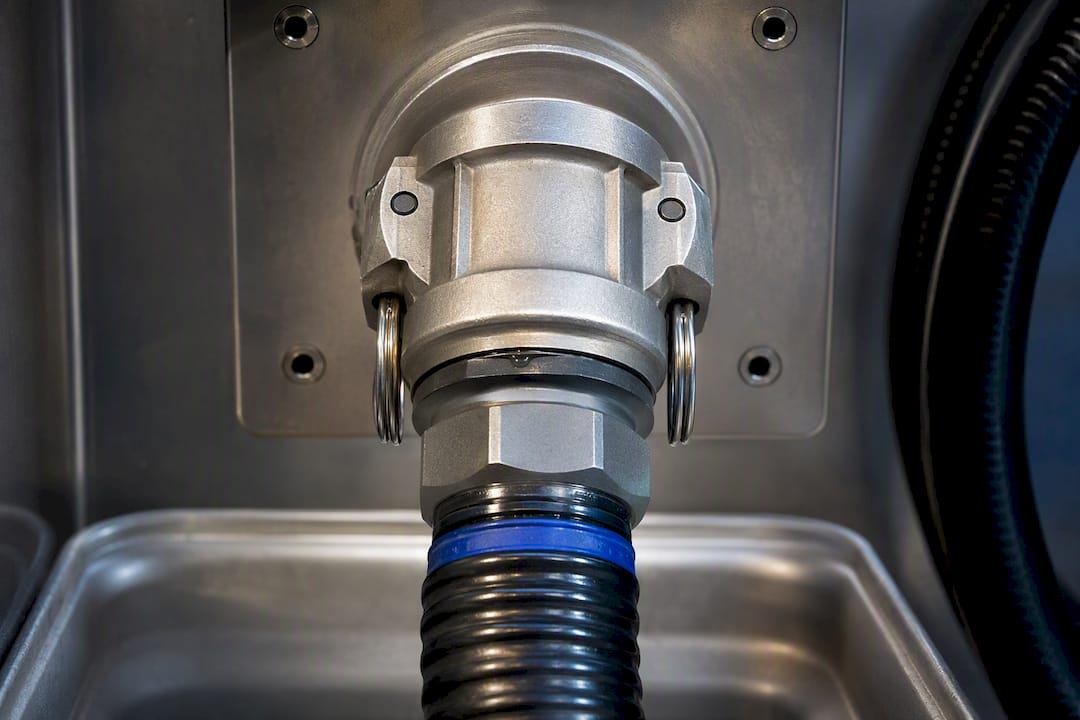
- Verify hoses and couplers are DEF-dedicated, made from stainless steel or compatible HDPE, and never shared with diesel or other fluids.
- Check that your site’s receiving fittings, dry-break couplers, and vents match the supplier’s connection standard.
- Confirm secondary containment is in place around the transfer point in case of a coupling failure.
- Make sure transfer points and tanks are clearly labeled to prevent a technician from cross-connecting DEF and diesel lines.
- Ask your supplier what documentation they provide: digital meter tickets, batch numbers, and proof-of-delivery records.
Closed-loop systems eliminate air exposure during transfer, which is the single biggest factor in keeping DEF free of dust, dirt, and moisture during a wet-hose job.
Pro Tip: Walk your receiving fittings once a quarter. A worn dry-break coupler is one of the most common, and most overlooked, sources of small drips that eventually contaminate a whole tank.
How Do You Perform a Wet-Hosing DEF Delivery Step by Step?
A wet-hosing delivery has four phases, and skipping any one of them is how fleets end up with a bad batch in a $10,000 SCR system. Here’s the sequence operators should run every time:
- Pre-delivery check. Confirm tank cleanliness, verify the supplier’s paperwork shows ISO 22241 compliance, and request a sample if the last delivery raised any flags.
- Connection. Match dry-break couplers, confirm hose integrity, and open the closed-loop system only after both ends are secured.
- Transfer. Start the pump at a controlled rate, watch the meter, and record the starting and ending readings for each tank being filled.
- Verification. Inspect all connection points for leaks immediately after disconnection, and log the delivered volume against the meter ticket.
- Post-delivery. File the ticket, update your tank inventory records, and flag any tank for lab sampling if there was any deviation from a normal delivery.
| Step | Primary risk | Operator action |
|---|---|---|
| Pre-delivery | Contaminated receiving tank | Inspect and clean before connection |
| Connection | Cross-contamination with diesel lines | Confirm dedicated, labeled fittings |
| Transfer | Under or over-delivery | Monitor meter continuously |
| Verification | Undetected leaks | Visual inspection at every joint |
| Post-delivery | Recordkeeping gaps | Retain digital meter ticket |
Itemized digital meter tickets and per-tank metered delivery give you a paper trail for every gallon, which matters when you’re reconciling invoices across a multi-tank site.
How Do You Keep DEF From Getting Contaminated During Transfer?
Contaminated DEF is the fastest way to trigger an SCR derate, and most contamination happens during handling, not storage. Dust, tap water, diesel fuel, and even the wrong metal alloy in a fitting can throw the urea concentration outside the 32.5% window that ISO 22241 requires.
- Require closed-loop transfer with no open pouring at any point in the process.
- Confirm hoses, pumps, and fittings are DEF-dedicated and never shared with diesel equipment.
- Keep a refractometer on-site for a quick concentration check, and send a sample to a lab if a reading looks off.
- Rotate inventory on a first-in, first-out basis to avoid holding fluid past its usable shelf life.
Closed-loop transfer, dedicated DEF hoses, and compatible materials are the standard defense against contamination during wet hosing, and they cost far less than a single injector replacement caused by bad fluid.
What Safety and Compliance Steps Does Wet Hosing Require?
A wet-hosing program needs the same rigor you’d apply to a fuel delivery, even though DEF isn’t hazardous the way diesel is. Spilled DEF corrodes concrete and metal surfaces over time and creates a slip hazard, so containment matters.
- Keep a dedicated DEF spill kit near every transfer point, separate from your fuel spill supplies.
- Never let DEF and diesel transfer equipment share a hose, pump, or fitting, even temporarily.
- Log every delivery with volume, tank ID, and technician initials to support audit trails.
- Inspect containment berms and transfer pads on a regular schedule, not just after a visible spill.
Running a fleet dry or delivering fluid that fails spec both lead to the same outcome: SCR derates that can idle a truck or piece of equipment for days. Good recordkeeping is what lets you prove, after the fact, that the fluid you received met spec when it went into the tank.
How Do You Forecast DEF Demand and Control Wet-Hosing Costs?
Forecasting starts with your diesel consumption. DEF use typically runs at a small percentage of diesel burned, so pulling your fleet’s fuel records gives you a workable baseline. From there, many providers recommend triggering a reorder around 30% remaining tank capacity to avoid an emergency call.
- Calculate expected DEF use from your diesel-per-week figures, then build in a buffer for seasonal spikes.
- Schedule deliveries weekly or biweekly for high-use sites, since that cadence keeps most fleets ahead of shortages.
- Compare your all-in cost per gallon, delivery fees plus tank amortization, against packaged DEF’s higher per-gallon price and labor cost.
- Use a DEF consumption calculator to model your specific ratio before committing to a delivery contract.
The math usually favors wet hosing once labor savings from eliminated tote handling are factored into the comparison, not just the price per gallon on the invoice.
What Should You Require From a Wet-Hosing Delivery Supplier?
Not every supplier runs a true closed-loop operation, so your service agreement should spell out exactly what you expect. Put these items in writing before you sign anything:
- Closed-loop transfer equipment with calibrated metering on every truck.
- Digital, itemized meter tickets and proof-of-delivery documentation for each tank filled.
- A stated sampling and quality policy, along with current insurance and safety data sheets on file.
- Defined lead times for standard deliveries and a real emergency or on-call option for unplanned shortages.
- Integration with your tank monitoring setup so reorder points trigger automatically rather than by guesswork.
A good DEF delivery services guide walks through how these service items typically get structured across bulk, tote, and wet-hosing contracts, which is worth reviewing before your first vendor call.
Ready to Set Up Wet-Hosing DEF Delivery for Your Fleet?
DEFSales.com built this guide to help you understand exactly what a wet-hosing delivery should look like before you ever sign a service agreement, and we link readers to Anytime Fuel Pros for the actual on-site delivery. DEF delivery services offer closed-loop wet-hosing and bulk DEF delivery for fleets and job sites, with local and nationwide coverage available through partner networks.
Before you request a quote, have a few numbers ready: your current tank or tote capacity, roughly how much DEF your fleet uses per week, what’s left in inventory right now, and any site access constraints a delivery driver would need to know about (gate codes, tanker clearance, parking). That short list is usually enough for a supplier to quote accurately on the first call.
If you’re still working out your numbers, run them through the DEF fleet guides page first, then reach out to schedule a wet-hosing or bulk delivery that fits your site’s actual usage pattern instead of a generic delivery schedule.
Sources
- Diesel Exhaust Fluid Delivery Guide for Fleets
- Bulk DEF Fluid Delivery vs Packaged DEF: Factors Compared