

ISO 22241 defines the exact quality, chemical composition, and handling standards for Diesel Exhaust Fluid (DEF) required to protect Selective Catalytic Reduction (SCR) systems in modern diesel fleets. For fleet procurement specialists, this standard is the foundation of every sourcing decision. Getting it wrong means SCR catalyst damage, voided OEM warranties, and costly downtime. This guide covers the chemical requirements, supplier verification methods, storage protocols, and procurement strategies that keep your fleet compliant and your costs under control.
What are the chemical quality requirements of ISO 22241 for DEF?
ISO 22241 sets precise chemical boundaries that DEF must meet before it enters your fleet’s SCR system. The standard mandates a urea concentration of 31.8%–33.2%, with 32.5% as the nominal target. That narrow window exists because SCR catalysts are calibrated to a specific urea dose. Fluid outside that range reduces NOx conversion efficiency and can trigger engine derates.
The standard also sets strict contaminant limits that protect the SCR catalyst from irreversible damage:
- Biuret: Maximum 0.3% — biuret forms when urea degrades and deposits on catalyst surfaces
- Aldehydes: Maximum 5 mg/kg — aldehyde contamination accelerates catalyst aging
- Metals (copper, iron, chromium): Trace limits in the low parts-per-million range — metal ions poison SCR catalysts permanently
- pH range: 9.0–11.0 — outside this range, the fluid becomes corrosive to system components
- Water purity: Deionized water only — tap water introduces calcium, magnesium, and chloride ions that foul injectors
Each of these parameters connects directly to SCR durability. A single batch of off-spec DEF can cause catalyst poisoning that no software reset will fix. The repair cost for an SCR catalyst on a Class 8 truck routinely exceeds the annual savings from buying cheaper fluid.
Pro Tip: Review the DEF quality basics page on Defsales before finalizing any supplier contract. It maps each ISO 22241 parameter to the specific SCR failure mode it prevents.
How to verify ISO 22241 compliance from DEF suppliers
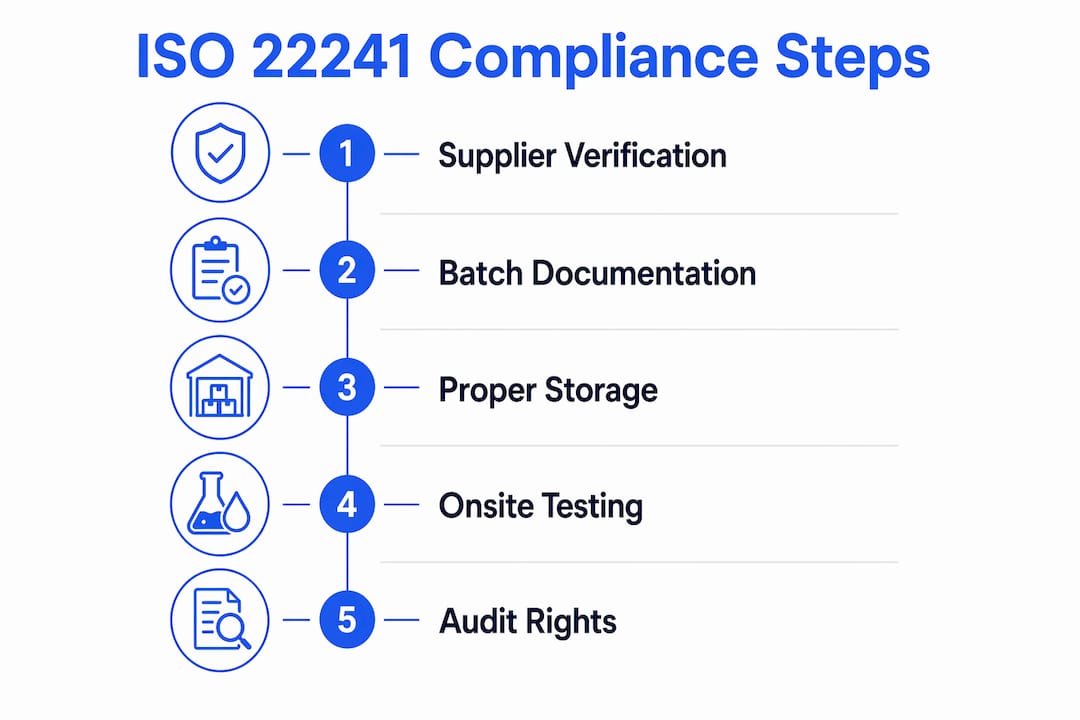
Supplier verification is where most fleet procurement programs fall short. A supplier’s claim of ISO 22241 compliance means nothing without documentation and independent testing. The verification process has four layers, and skipping any one of them creates risk.
Certificates of Analysis for every batch
A batch-specific Certificate of Analysis (CoA) is the minimum acceptable documentation for any DEF delivery. The CoA must show urea concentration, biuret content, aldehyde level, pH, and conductivity results from an accredited laboratory. A generic CoA covering an entire production run is not sufficient. Each delivery batch carries its own contamination risk, so each batch needs its own test results.
AdBlue trademark and VDA licensing
The AdBlue trademark is licensed by the VDA (Verband der Automobilindustrie), the German automotive industry association. Suppliers who carry VDA licensing have passed third-party audits confirming their manufacturing processes meet ISO 22241 guidelines. For fleet procurement, VDA licensing is a reliable proxy for quality when you cannot audit the production facility yourself. You can verify VDA licensees through the VDA’s published registry. Learn more about AdBlue and VDA licensing and what the trademark means for procurement decisions.
Onsite spot testing
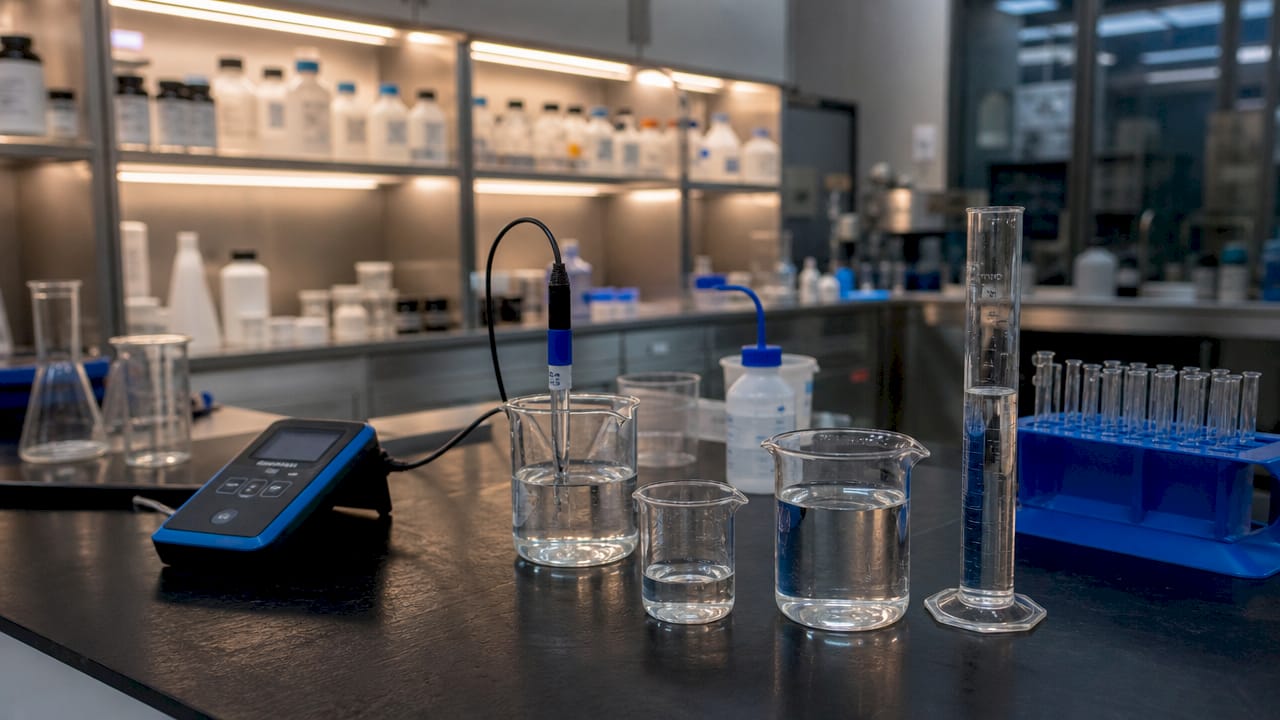
Documentation alone is not enough. Onsite refractometer testing lets you verify urea concentration before a bulk delivery is offloaded into your storage tank. A refractometer costs under $100 and gives a reading in under a minute. Conductivity meters add a second data point, catching ionic contamination that a refractometer will miss. Both tools together form an effective first line of defense against off-spec deliveries.
- Refractometer: Confirms urea concentration is within the 31.8%–33.2% ISO 22241 range
- Conductivity meter: Detects dissolved salts and metal ions not visible to the naked eye
- Visual inspection: Clear, colorless fluid only — any yellow tint or cloudiness signals contamination
Pro Tip: Keep a compliance checklist at every DEF delivery point. Train drivers and site staff to run a refractometer check before signing off on any bulk delivery.
Supply chain transparency and audit rights
Reputable suppliers provide full supply chain documentation: source of urea, water treatment process, and manufacturing facility certifications. Selecting a vendor based only on lowest price risks SCR damage and warranty voidance. The best suppliers offer audit rights, meaning your team can inspect their facility or review third-party audit reports on request.
What are the best practices for DEF storage and handling in fleet operations?
Proper storage is where ISO 22241 compliance either holds or breaks down. Fluid that leaves the manufacturer in perfect condition can become off-spec before it reaches your SCR system if storage is handled incorrectly.
Approved storage materials
Storage tanks must use HDPE (high-density polyethylene) or 316L stainless steel. These are the only materials ISO 22241 approves for DEF contact. Carbon steel, copper, zinc, and galvanized surfaces all leach metal ions into DEF. Metal contamination from non-compliant tanks irreparably damages SCR catalysts. This is one of the most common and costly mistakes in fleet DEF infrastructure.
| Storage material | ISO 22241 compatible | Risk if used |
|---|---|---|
| HDPE | Yes | None |
| 316L stainless steel | Yes | None |
| Carbon steel | No | Iron contamination, catalyst damage |
| Copper fittings | No | Catalyst poisoning |
| Zinc-coated tanks | No | Zinc contamination, SCR failure |
Temperature and shelf life controls
DEF has a shelf life of approximately 12 months under proper conditions. Storage above 35°C or in direct sunlight accelerates urea decomposition and shortens that window significantly. Outdoor tanks in hot climates need insulation or shade structures. Bulk storage tanks should hold at least 3–4 weeks of fleet consumption to maintain delivery flexibility without holding excess stock that degrades before use.
Dedicated dispensing equipment
DEF dispensing equipment must be dedicated and never shared with diesel fuel or any other fluid. Cross-contamination from diesel residue destroys DEF quality instantly and can cause SCR system failure within hours of use. Color-code your DEF nozzles and hoses (blue is the industry standard) and physically separate DEF dispensing points from diesel fueling stations. Review your full storage compliance checklist to confirm your depot meets every ISO 22241 handling requirement.
What procurement strategies balance cost and ISO 22241 compliance?
Fleet procurement teams face constant pressure to reduce DEF costs without compromising quality. The good news is that the highest-quality sourcing channel is also the most cost-effective at scale.
Bulk delivery versus retail packaging
Fleet managers can reduce DEF expenditure by up to 50% by switching from retail jugs to bulk on-site delivery with verified ISO 22241 compliant suppliers. That cost reduction comes from eliminating packaging, retail markup, and the labor cost of handling individual containers. Bulk delivery also reduces the risk of using expired or improperly stored retail stock.
- Calculate your monthly DEF consumption using your fleet’s diesel consumption data and a standard DEF-to-diesel ratio. This sets your minimum bulk order size.
- Qualify at least two ISO 22241 certified suppliers to maintain supply continuity if one experiences a shortage or delivery delay.
- Negotiate integrated supply contracts that include batch CoA delivery with every shipment, not just on request.
- Set minimum stock thresholds at your depot to trigger automatic reorders before you reach a critical low point.
- Audit supplier performance quarterly against delivery accuracy, CoA completeness, and fluid test results from your onsite spot checks.
Evaluating suppliers beyond price
True DEF partners offer supply chain transparency and compliance support beyond a low price per liter. When evaluating suppliers, score them on four criteria: ISO 22241 certification documentation, batch CoA availability, delivery reliability, and audit transparency. A supplier who cannot provide batch CoAs on demand fails the minimum standard, regardless of price. ISO 22241 is technically a voluntary standard, but OEM warranties effectively require compliance. Using non-compliant DEF voids the SCR warranty on most major truck and equipment brands.
Defsales: DEF compliance resources for fleet procurement
Defsales is built for fleet procurement specialists who need accurate, operator-focused information on DEF quality, ISO 22241 guidelines, and bulk sourcing decisions. The site covers every aspect of fleet procurement standards, from reading a Certificate of Analysis to setting up compliant bulk storage at your depot. For fleets ready to source bulk DEF with verified compliance documentation, Anytime Fuel Pros handles on-site delivery in San Antonio, Austin, Dallas, and Salt Lake City, with nationwide reach through their partner network. Get the full picture on why diesel engines need DEF and how ISO 22241 compliance protects your operation from the ground up.
Key Takeaways
ISO 22241 compliance in fleet DEF procurement requires verified chemical specifications, batch-level documentation, approved storage materials, and supplier contracts that prioritize quality over price.
| Point | Details |
|---|---|
| Chemical specification | DEF must contain 31.8%–33.2% urea with strict limits on biuret, aldehydes, and metals. |
| Batch CoA requirement | Request a Certificate of Analysis for every delivery batch, not just the first order. |
| Storage materials | Use only HDPE or 316L stainless steel tanks; carbon steel and copper cause catalyst damage. |
| Bulk cost savings | Switching from retail to bulk delivery can reduce DEF expenditure by up to 50%. |
| Supplier evaluation | Score suppliers on CoA availability, VDA licensing, delivery reliability, and audit transparency. |
FAQ
What does ISO 22241 require for DEF urea concentration?
ISO 22241 requires DEF to contain between 31.8% and 33.2% urea by weight, with 32.5% as the standard target. Fluid outside this range reduces SCR efficiency and can trigger engine derates.
Is ISO 22241 certification mandatory for fleet DEF suppliers?
ISO 22241 is a voluntary standard, but most OEM warranties require compliance, making it effectively mandatory. Using non-certified DEF voids SCR system warranties on most major diesel equipment brands.
How do I verify DEF quality before offloading a bulk delivery?
Use a refractometer to confirm urea concentration falls within the ISO 22241 range before offloading. Follow up with a conductivity meter check to detect ionic contamination that a refractometer alone will not catch.
What storage materials does ISO 22241 approve for DEF?
ISO 22241 approves only HDPE and 316L stainless steel for DEF contact. Carbon steel, copper, zinc, and galvanized surfaces all introduce metal contamination that permanently damages SCR catalysts.
How long does DEF last in bulk storage?
DEF has a shelf life of approximately 12 months when stored below 35°C and away from direct sunlight. Exposure to heat or sunlight shortens that window and can push the fluid out of ISO 22241 specification before it is used.