

ISO 22241 is the international standard that defines the chemical composition, quality requirements, and handling procedures for Diesel Exhaust Fluid (DEF), ensuring it works correctly in Selective Catalytic Reduction (SCR) systems. Fleet managers and procurement professionals who skip this standard risk engine derates, voided warranties, and NOx violations. This guide covers the ISO 22241 standard explained in full, from chemistry specs to supplier verification, so you can protect your fleet and stay compliant.
What does the ISO 22241 standard cover?
ISO 22241 is not a single document. It is a four-part standard series covering every stage of DEF’s life cycle. Part 1 covers quality requirements, Part 2 defines test methods, Part 3 addresses handling, storage, and transportation, and Part 4 specifies the refilling interface. That structure matters because a DEF batch can meet Part 1 chemistry specs at the plant and still arrive contaminated if Part 3 handling rules were ignored in transit.
The product governed by ISO 22241 is commonly called AUS 32 (Aqueous Urea Solution 32.5%) or AdBlue in European markets. In North America, the same fluid is sold as DEF. All three names refer to the same 32.5% urea solution mixed with deionized water. The 32.5% concentration is not arbitrary. It is the point at which the urea-water mixture has the lowest freezing point, roughly 12°F, which balances cold-weather performance with SCR reaction efficiency.
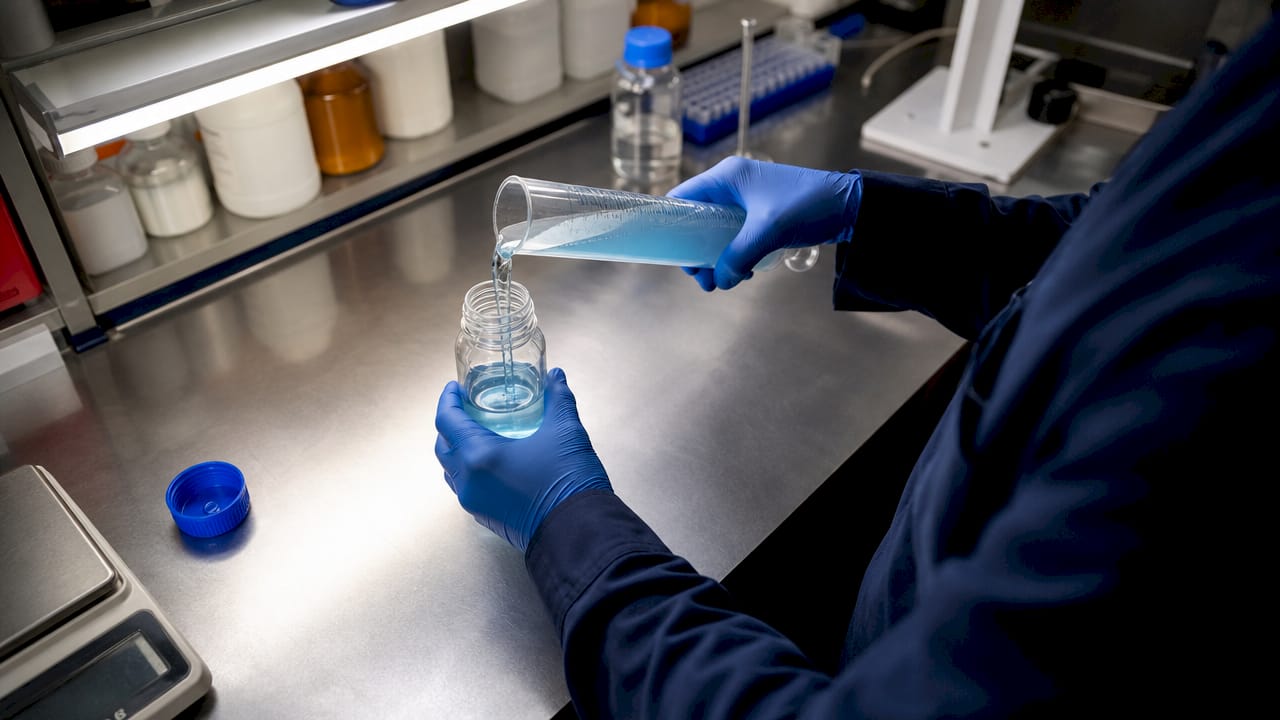
Understanding ISO 22241 also means recognizing what it protects. SCR systems inject DEF into the exhaust stream, where heat converts it into ammonia. That ammonia reacts with NOx gases to produce harmless nitrogen and water. If the DEF chemistry is off, the reaction fails, NOx spikes, and the engine management system triggers a derate or shutdown.
What are the chemical quality requirements in ISO 22241-1?
ISO 22241-1 sets the exact chemical parameters that every compliant DEF batch must meet. The urea concentration range is 31.8–33.2% by weight, with 32.5% as the nominal target. Deviations outside that range reduce SCR conversion efficiency. A batch at 30% urea delivers less ammonia than the engine expects. A batch above 33.2% can crystallize in injectors and damage SCR components.
The standard also caps biuret at 0.3% by mass. Biuret is a byproduct of urea decomposition. High biuret levels poison the SCR catalyst over time, reducing its ability to convert NOx. pH must fall between 9.0 and 11.0. Outside that range, the fluid becomes corrosive to metal components or loses chemical stability.
Water quality is non-negotiable. ISO 22241-1 requires deionized water only. Tap water or well water introduces minerals, chlorides, and metals that contaminate the SCR catalyst. Even trace amounts of copper, zinc, or aluminum can degrade catalyst performance permanently.
| Parameter | Specification |
|---|---|
| Urea concentration | 31.8–33.2% by weight |
| Nominal target | 32.5% |
| Biuret content | Max 0.3% by mass |
| pH range | 9.0–11.0 |
| Water type | Deionized only |
| Metals (Cu, Zn, Al) | Strictly limited |
Pro Tip: If a supplier cannot tell you the exact urea concentration and biuret level from a recent Certificate of Analysis, treat that as a disqualifying red flag. Compliant suppliers document these numbers batch by batch.
Off-spec DEF does not just reduce emissions performance. Engine manufacturers tie warranty coverage to ISO 22241-compliant fluid. A single contaminated fill can void the SCR system warranty on a truck worth six figures. The chemistry requirements in Part 1 are the foundation that everything else in the standard builds on.
How does ISO 22241 govern DEF handling, storage, and transport?
ISO 22241-3 sets the rules for keeping DEF compliant after it leaves the production facility. The standard specifies approved materials for all equipment that contacts DEF. Stainless steel and certain approved plastics, such as high-density polyethylene (HDPE), are acceptable. Copper, zinc, and aluminum are prohibited because they react with the urea solution and introduce metallic contaminants.
Key handling and storage requirements under ISO 22241-3 include:
- Dedicated equipment only. Use separate hoses, pumps, and fittings exclusively for DEF. Never share equipment with diesel, coolant, or any other fluid.
- Temperature control. Store DEF between 23°F and 95°F. Prolonged exposure above 95°F accelerates urea decomposition and shortens shelf life. Direct sunlight degrades the fluid faster.
- Sealed containers. Keep DEF in closed, labeled containers to prevent airborne contamination and evaporation of the water component.
- Contamination avoidance. Even a small amount of diesel fuel or engine oil introduced into a DEF tank can destroy the SCR catalyst. Label all fill points clearly.
- Refilling interface compliance. ISO 22241-4 standardizes the nozzle and fill port dimensions to prevent accidental misfueling with diesel.
Pro Tip: Set up a custody log for every DEF delivery and transfer at your facility. Record the batch number, delivery date, equipment used, and the name of the person who handled the transfer. If a contamination event occurs, that log tells you exactly where the chain of custody broke down.
Cross-contamination is the most common cause of DEF quality failures in fleet operations. A single diesel-contaminated hose used once on a DEF transfer can ruin an entire storage tank. For more on preventing this, the DEF cross-contamination guide on Defsales covers the specific failure points fleet managers encounter most often.
What compliance measures should fleet managers implement?
Compliance with ISO 22241 is not a one-time supplier check. It requires a repeatable process that covers every batch from delivery to consumption. The EPA’s 2026 guidance frames DEF quality as an adjustable parameter, meaning operators share responsibility for maintaining compliant fluid throughout the supply chain. That framing places the burden squarely on fleet managers, not just suppliers.
A practical compliance program follows these steps:
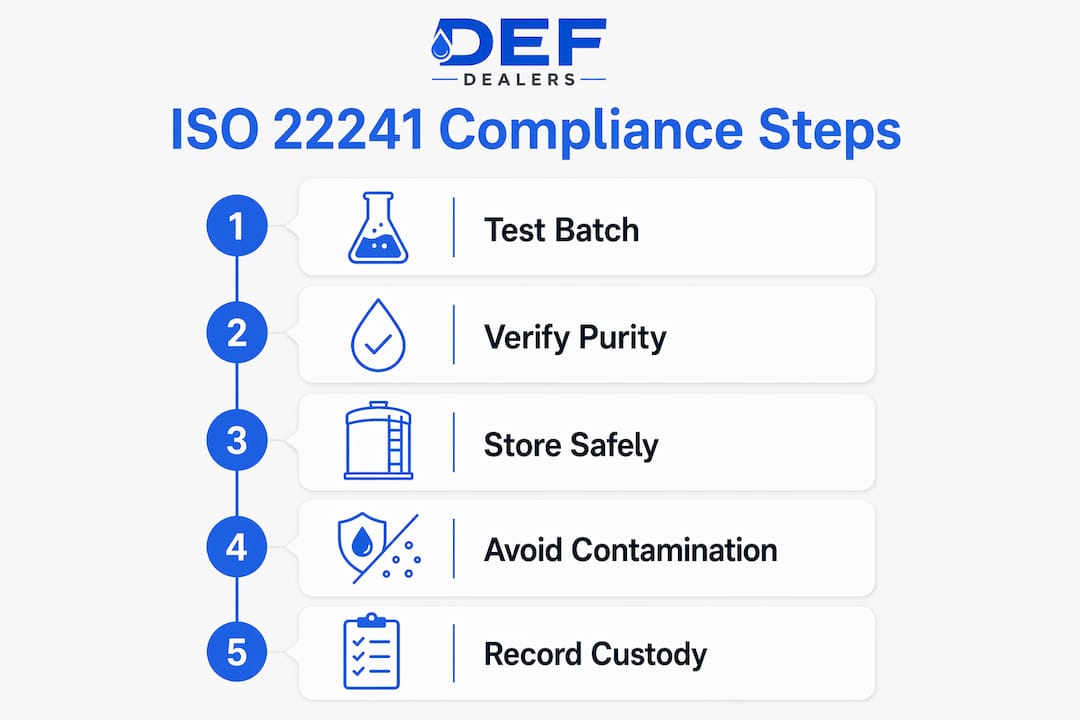
- Require a Certificate of Analysis (COA) for every batch. The COA from an accredited lab must show urea concentration, pH, biuret content, and contaminant levels. Reject any delivery that arrives without one.
- Vet suppliers before the first order. Ask for documentation of their production process, handling audits, and ISO 22241 certification. A reputable supplier provides this without hesitation.
- Establish batch traceability. Link each delivery lot to its COA results and the specific storage tank it entered. If a quality issue surfaces, you can isolate the affected batch immediately.
- Spot-check on receipt. Refractometers provide quick verification of urea concentration at the point of delivery. A reading outside the 31.8–33.2% range is grounds to reject the load before it enters your tank.
- Audit storage conditions quarterly. Check tank temperatures, container integrity, and equipment labeling. Document findings and correct any deviations immediately.
Pro Tip: Buy a quality refractometer calibrated for urea solutions and keep it at every DEF storage point. A 60-second check on receipt catches off-spec batches before they reach your SCR systems. The cost of the tool is trivial compared to one SCR catalyst replacement.
The ISO 22241 compliance checklist on Defsales translates these steps into a ready-to-use field document for procurement and operations teams.
How does ISO 22241 connect to EPA regulations and fleet costs?
ISO 22241-compliant DEF is the chemical foundation of EPA Tier 4 emissions compliance for off-road equipment and EPA heavy-duty on-road standards for trucks. The EPA’s guidance explicitly recommends ISO 22241-1 compliant fluid to prevent NOx emission increases from off-spec DEF. Non-compliant DEF does not just risk a fine. It can trigger an engine derate that stops a truck mid-route or shuts down a generator at a critical moment.
The cost comparison between compliant and non-compliant DEF use is not close.
| Scenario | Compliant DEF | Non-Compliant DEF |
|---|---|---|
| SCR catalyst life | Full rated life | Premature failure |
| Engine warranty | Maintained | Potentially voided |
| NOx emissions | Within legal limits | Above legal limits |
| Regulatory risk | Low | High, including fines |
| Unplanned downtime | Minimal | High risk of derates |
| Long-term cost | Predictable | Unpredictable and high |
Quality DEF costs more per gallon than off-brand fluid with no documentation. That premium is the cost of avoiding a catalyst replacement that can run several thousand dollars per vehicle, plus the regulatory exposure from a NOx violation. For fleets operating under EPA Tier 4 rules, using non-compliant DEF is not a cost-saving move. It is a deferred liability.
The SCR system overview on Defsales explains exactly how catalyst degradation from bad DEF shows up in engine performance, which helps fleet managers connect quality failures to specific symptoms they may already be seeing.
Key Takeaways
ISO 22241 compliance protects SCR systems, maintains EPA emissions standards, and prevents costly engine derates by requiring DEF to meet strict chemical specifications and handling protocols at every stage.
| Point | Details |
|---|---|
| Four-part standard | ISO 22241 covers quality, test methods, handling, and refilling interface across four parts. |
| Urea concentration | DEF must contain 31.8–33.2% urea by weight, with 32.5% as the nominal target. |
| Handling materials | Use only stainless steel or approved HDPE equipment. Never use copper, zinc, or aluminum. |
| COA requirement | Demand a Certificate of Analysis from an accredited lab for every DEF batch you receive. |
| Spot-check on receipt | Use a refractometer to verify urea concentration before any delivery enters bulk storage. |
Trusted DEF supply starts with verified compliance
Fleet managers who understand ISO 22241 still need a supplier who actually follows it. Anytime Fuel Pros delivers ISO 22241-compliant bulk DEF with full documentation, serving fleets in San Antonio, Austin, Dallas, and Salt Lake City, with nationwide reach through a partner network.
Defsales provides the educational resources to help you verify what you are buying. The fleet DEF delivery guide covers how to evaluate suppliers, what documentation to request, and how to set up on-site storage that keeps your DEF in spec from delivery to the fill point. Use the DEF calculator to size your bulk order based on your fleet’s actual consumption, so you are never storing excess fluid past its shelf life. When you are ready to schedule delivery, contact Anytime Fuel Pros directly for fleet-tailored supply programs.
FAQ
What is ISO 22241 in simple terms?
ISO 22241 is the international standard that defines what DEF must contain and how it must be handled to work correctly in diesel SCR systems. It specifies the 32.5% urea concentration and sets limits on contaminants that would damage the SCR catalyst.
What happens if you use DEF that does not meet ISO 22241?
Off-spec DEF reduces SCR efficiency, increases NOx emissions, and can damage the SCR catalyst permanently. It also risks voiding the engine warranty and triggering regulatory violations under EPA Tier 4 and heavy-duty emissions rules.
How do I verify that my DEF supplier is ISO 22241 compliant?
Request a Certificate of Analysis from an accredited laboratory for every batch. The COA must show urea concentration, pH, biuret content, and contaminant levels. Supplement COA review with a refractometer check on receipt to catch any discrepancies before the fluid enters your storage tank.
What materials are approved for DEF storage under ISO 22241?
ISO 22241-3 approves stainless steel and certain plastics, specifically HDPE, for all equipment that contacts DEF. Copper, zinc, and aluminum are prohibited because they react with the urea solution and introduce contaminants that degrade SCR performance.
Does ISO 22241 apply to both on-road trucks and off-road equipment?
Yes. ISO 22241 applies to any diesel engine using an SCR system, including on-road heavy-duty trucks governed by EPA standards and off-road equipment subject to EPA Tier 4 rules. The standard is the chemical and handling baseline for DEF compliance across all diesel applications.