

Selective Catalytic Reduction (SCR) is an exhaust aftertreatment technology that reduces nitrogen oxide (NOx) emissions by injecting Diesel Exhaust Fluid (DEF) into a diesel engine’s exhaust stream. Every Class 3 through Class 8 diesel truck built after 2010 uses this system to meet EPA emissions standards. Understanding the SCR system explained simply means knowing what DEF does, how the catalyst converts toxic gases into harmless byproducts, and what maintenance your trucks actually need to stay compliant and on the road.
1. How the SCR system works step by step
The SCR process begins the moment your engine reaches operating temperature and exhaust starts flowing through the aftertreatment system. Here is the sequence, broken down into plain terms.
- DEF injection. A dosing pump pulls DEF from the onboard tank and sprays it through an injector nozzle into the exhaust pipe, upstream of the SCR catalyst. The spray mixes with hot exhaust gases as they travel toward the catalyst.
- Thermal decomposition. Heat from the exhaust breaks DEF down into ammonia (NH3) and carbon dioxide. This happens in a section called the decomposition tube or mixing pipe. Exhaust temperature must range roughly between 200°C and 450°C for this reaction to work efficiently. Outside that window, conversion rates drop sharply.
- Catalytic reaction. Ammonia enters the SCR catalyst and reacts with NOx on the catalyst surface. The output is nitrogen gas and water vapor, both harmless. Nothing toxic exits the tailpipe.
- Sensor feedback loop. NOx sensors sit before and after the catalyst. The engine control unit (ECU) reads both sensors continuously. If post-catalyst NOx is too high, the ECU increases DEF dosing. If ammonia is detected slipping past the catalyst, dosing is reduced. This closed-loop system keeps conversion efficiency at its peak.
Pro Tip: If your post-catalyst NOx sensor reads high while DEF consumption looks normal, suspect a fouled injector or a catalyst that has lost surface area. Do not assume the sensor itself is wrong before checking those components first.
2. Core components of an SCR system explained simply
Understanding each part helps you diagnose problems faster and communicate clearly with your technicians.
- DEF tank. Typically mounted separately from the diesel tank, it holds the urea solution. DEF is standardized at 32.5% urea and 67.5% deionized water. That specific ratio is not arbitrary. It is the eutectic mixture that freezes at approximately 12°F, which is the lowest possible freezing point for any urea-water blend.
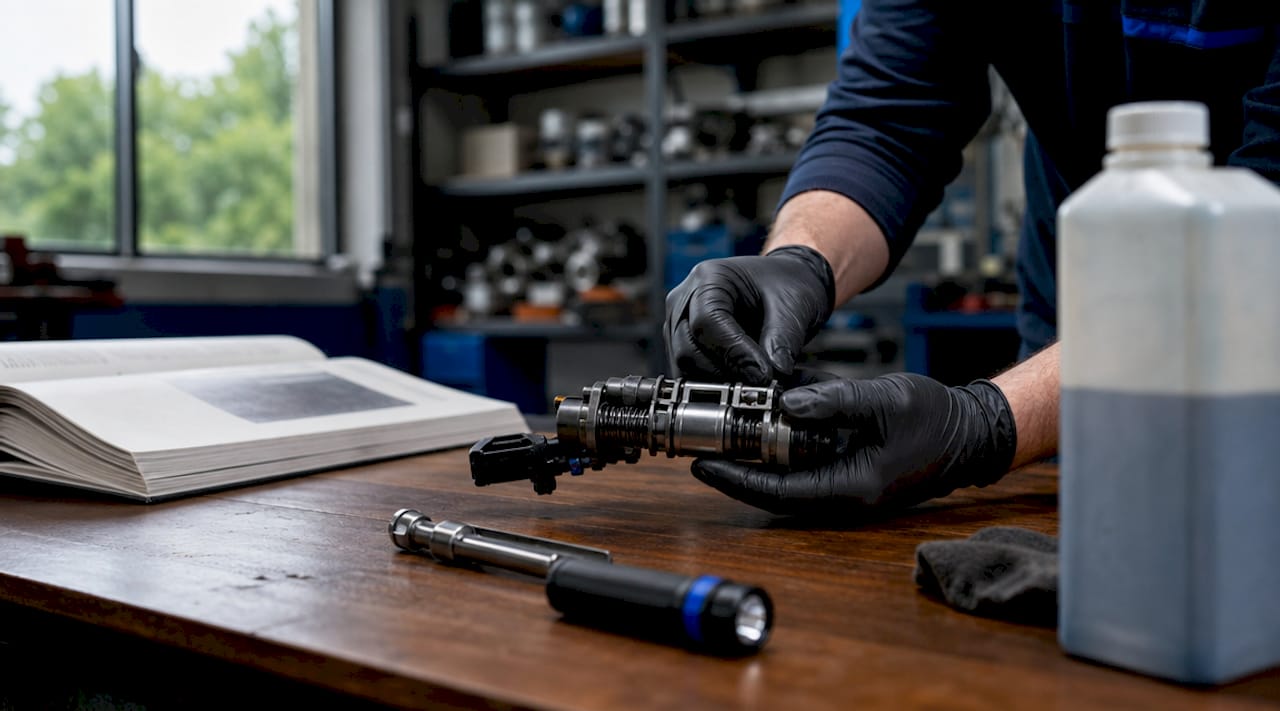
- DEF dosing pump and injector. The pump draws fluid from the tank and pressurizes it. The injector atomizes DEF into a fine mist inside the exhaust pipe. Precise atomization is critical. Poor spray patterns cause uneven ammonia distribution and reduced NOx conversion.
- Decomposition tube. This section of exhaust pipe gives DEF time and heat to convert into ammonia before reaching the catalyst. Length and design vary by manufacturer, but the function is the same.
- SCR catalyst. The catalyst uses a ceramic honeycomb coated with precious metals or zeolites to maximize chemical surface area. More surface area means more contact between ammonia and NOx, which drives higher conversion efficiency.
- NOx sensors. One sensor upstream, one downstream. Together they give the ECU a real-time picture of how well the catalyst is performing.
- Freeze protection heaters. SCR systems include electric heaters for the DEF tank and supply lines. These activate during cold starts to keep DEF in liquid form and maintain continuous dosing.
| Component | Function |
|---|---|
| DEF tank | Stores the 32.5% urea solution for dosing |
| Dosing pump and injector | Delivers atomized DEF into the exhaust stream |
| Decomposition tube | Converts DEF into ammonia using exhaust heat |
| SCR catalyst | Reacts ammonia with NOx to produce nitrogen and water |
| NOx sensors | Monitor conversion efficiency and adjust dosing |
| Freeze protection heaters | Prevent DEF from freezing in cold operating conditions |
Pro Tip: Deionized water is non-negotiable in DEF. Tap water contains minerals that deposit on the catalyst and injector over time. If you are ever tempted to top off a DEF tank with anything other than certified fluid, do not. The repair bill will cost far more than the convenience.
You can find a detailed breakdown of each component and how they interact in the DEF system walkthrough published by Defsales, which is written specifically for technicians and operators.
3. Benefits of SCR systems for fleets and owner-operators
SCR is not just a compliance checkbox. It delivers measurable operational advantages that directly affect your bottom line.
- Fuel economy gains. Diesel engines with SCR achieve 3% to 5% better fuel economy compared to older engines without the technology. For a fleet consuming 15,000 gallons of diesel annually per truck, that translates to 450 to 750 gallons saved per vehicle each year.
- Near-zero NOx output. SCR reduces nitrogen oxide emissions to levels that meet EPA Tier 4 and current on-highway standards. This is not a marginal improvement. Pre-SCR diesel engines produced NOx at levels that modern regulations prohibit entirely.
- Engine tuning flexibility. SCR technology enables engines to be tuned for higher combustion efficiency. Manufacturers can optimize combustion for power and economy rather than sacrificing both to manage in-cylinder emissions. The aftertreatment system handles the NOx cleanup downstream.
- Reduced thermal stress. Engines running with SCR do not need to run as hot or use as much exhaust gas recirculation (EGR) to meet emissions targets. Lower thermal loads extend component life across the engine, including pistons, rings, and turbochargers.
- Regulatory compliance. Operating without a functioning SCR system exposes you to EPA fines, failed roadside inspections, and potential out-of-service orders. Compliance is not optional for commercial operators.
4. SCR system maintenance schedule and best practices
Neglecting SCR maintenance is the fastest way to trigger an engine derate. A derate is the ECU’s response to a detected emissions system fault. It limits engine power or speed until the issue is resolved. Here is what a sound maintenance program looks like.
- Weekly visual inspections. Check around the DEF tank cap, supply lines, and injector area for white crystalline deposits. Urea crystallization is the most common early sign of a dosing problem or a slow leak. Catching it early costs almost nothing to fix.
- Injector and decomposition tube cleaning at 50,000 miles. Cleaning the DEF dosing injector and decomposition tube at roughly 50,000-mile intervals prevents the kind of buildup that causes complete injector failure. This is a low-cost service that avoids a high-cost repair.
- DEF supply module filter replacement. DEF supply module filters require replacement every 4,500 engine hours. A clogged filter starves the dosing pump, which leads to under-dosing, elevated NOx readings, and eventually a derate.
- NOx sensor monitoring. Predictive maintenance using NOx sensor data detects gradual performance decline well before a fault code appears. If your fleet management software tracks sensor values, set alerts for trends rather than waiting for a hard fault.
- Proper shutdown procedure. Allow the SCR system to complete its DEF draining cycle after engine shutdown. Operators should wait 30 to 60 seconds before cutting main power after parking. Cutting power immediately traps DEF in the lines and injector, where it crystallizes overnight.
- DEF quality and storage. Exposure to temperatures above 86°F degrades DEF quality and can foul injectors. Store DEF in a cool, shaded location and use it within its shelf life. Degraded DEF is one of the leading causes of SCR system failures.
| Maintenance task | Interval |
|---|---|
| Visual inspection for crystallization | Weekly |
| Injector and decomposition tube cleaning | Every 50,000 miles |
| DEF supply module filter replacement | Every 4,500 engine hours |
| NOx sensor value review | Monthly or via fleet telematics |
| Full SCR system inspection | At each major service interval |
5. Common mistakes and misconceptions about SCR and DEF
Even experienced operators make errors with SCR systems. These are the ones that cause the most damage.
- SCR deletes are illegal and counterproductive. Attempts to bypass or delete SCR systems result in heavy EPA fines, insurance complications, and fuel economy losses. The fuel savings SCR provides are real. Removing the system to avoid DEF costs eliminates those gains while adding legal exposure.
- Ammonia slip from over-dosing. If the ECU or a faulty sensor causes the system to inject more DEF than the catalyst can process, excess ammonia passes through the catalyst and exits the exhaust. This is called ammonia slip. It is both a regulatory violation and a sign of a system that needs immediate attention.
- Using off-spec or contaminated DEF. DEF is sensitive to contamination from metals, minerals, and other fluids. Even a small amount of diesel or coolant in the DEF tank can destroy the catalyst. Always use ISO 22241-certified DEF from a verified source and use dedicated dispensing equipment.
- Cutting power too quickly after shutdown. As noted above, skipping the post-shutdown drain cycle is one of the most common causes of injector crystallization. It takes less than a minute to let the system drain properly. Skipping it repeatedly leads to injector replacement.
- Ignoring shelf life. DEF does not last indefinitely. Stored correctly, it has a shelf life of roughly one to two years. Old DEF loses its urea concentration, which means the system injects fluid that cannot produce enough ammonia for full NOx conversion.
Keep your SCR system running with the right DEF supply
A well-maintained SCR system depends on a consistent supply of certified, high-quality DEF. Defsales is the go-to educational resource for fleet managers and operators who need accurate information on DEF composition, storage, and system compatibility. For fleets in San Antonio, Austin, Dallas, and Salt Lake City, Anytime Fuel Pros provides on-site DEF delivery and bulk supply to keep your trucks compliant and your SCR systems protected. Whether you manage five trucks or five hundred, sourcing DEF from a verified supplier is one of the simplest ways to protect your aftertreatment investment. Visit Defsales for additional resources on DEF standards, storage best practices, and SCR system guidance.
Key takeaways
SCR systems reduce diesel NOx emissions to near-zero levels by converting Diesel Exhaust Fluid into ammonia, which reacts with exhaust gases inside a ceramic catalyst to produce harmless nitrogen and water.
| Point | Details |
|---|---|
| SCR requires certified DEF | Use ISO 22241-standard DEF at 32.5% urea to maintain catalyst performance and avoid injector damage. |
| Fuel economy improves with SCR | Engines with SCR achieve 3% to 5% better fuel economy than older non-SCR diesel engines. |
| Maintenance prevents derates | Weekly inspections and 50,000-mile injector cleaning stop crystallization before it triggers engine power limits. |
| Shutdown procedure matters | Wait 30 to 60 seconds after parking to let the DEF drain cycle complete and prevent line crystallization. |
| Deletes carry serious consequences | Bypassing SCR is illegal under EPA regulations and eliminates the fuel economy benefits the system provides. |
FAQ
What is an SCR system on a diesel truck?
An SCR system is an exhaust aftertreatment system that injects Diesel Exhaust Fluid into the exhaust stream to convert nitrogen oxides into nitrogen and water vapor. It is required on all Class 3 through Class 8 diesel trucks manufactured after 2010.
How often does DEF need to be refilled?
DEF consumption typically runs at about 2% to 6% of diesel fuel consumption, so a truck burning 100 gallons of diesel will use roughly 2 to 6 gallons of DEF over the same distance. Most trucks have a DEF warning light that activates when the tank reaches a low level.
What happens if you run out of DEF?
The ECU will trigger a derate, limiting engine speed or power output until DEF is refilled and the system confirms proper dosing. Continued operation without DEF can result in a complete engine shutdown on some platforms.
Can DEF freeze in cold weather?
DEF freezes at approximately 12°F. Modern SCR systems include electric heaters on the tank and supply lines that thaw DEF during cold starts, so freezing does not damage the system as long as the heaters are functional.
Why does DEF quality matter so much?
Low-quality or contaminated DEF can foul the dosing injector, degrade the SCR catalyst, and cause the system to under-dose NOx, triggering fault codes and derates. Always use DEF that meets the ISO 22241 standard from a verified supplier.