

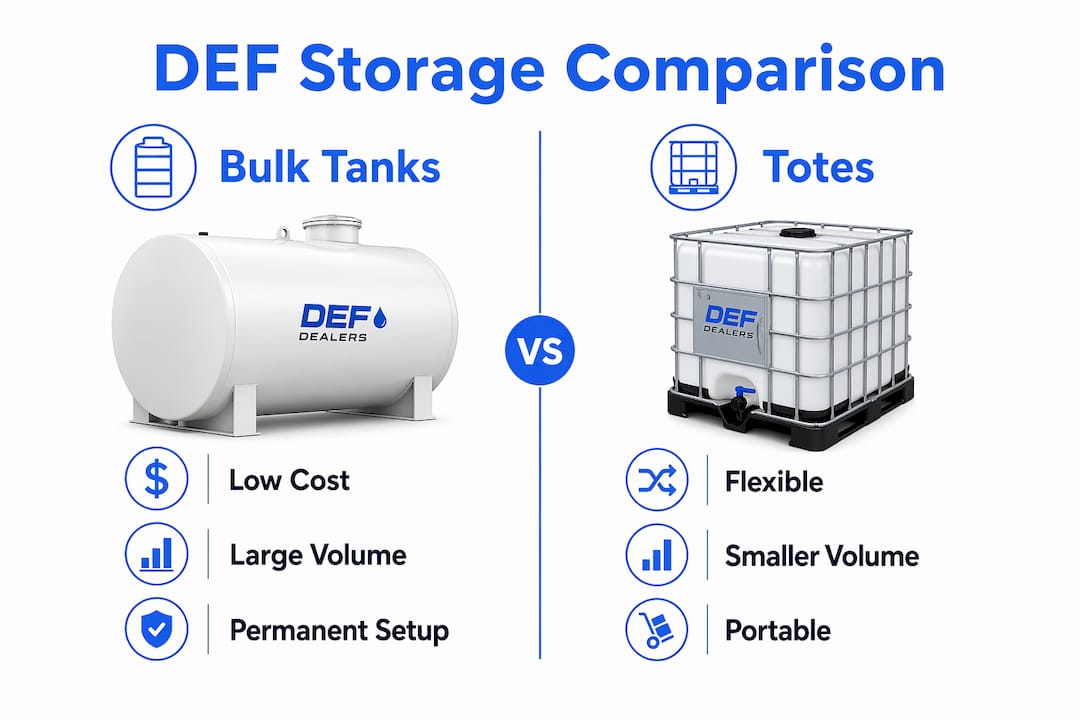
Bulk Diesel Exhaust Fluid (DEF) is defined as a 32.5% urea solution delivered in quantities of 2,000 gallons or more directly into on-site storage tanks, while DEF totes are intermediate bulk containers (IBCs) holding 275–330 gallons each. The choice between bulk DEF vs totes for fleets is the single biggest lever fleet managers have over DEF costs. Switching from retail jugs to totes or bulk storage can cut DEF expenditure by up to 50%, a difference that compounds fast across a large fleet. Both formats must meet ISO 22241 quality standards, which govern urea concentration, storage conditions, and container materials.
What fleet size fits bulk DEF vs totes?
Fleet size is the first filter every fleet manager should apply. The right DEF storage format depends almost entirely on how much fluid your trucks consume each month.
Small fleets (fewer than 10 trucks) rarely justify the overhead of totes or bulk tanks. Retail fuel card discounts at truck stops often deliver better value than managing containers, scheduling deliveries, and maintaining dedicated dispensing equipment. The logistics cost eats the savings.
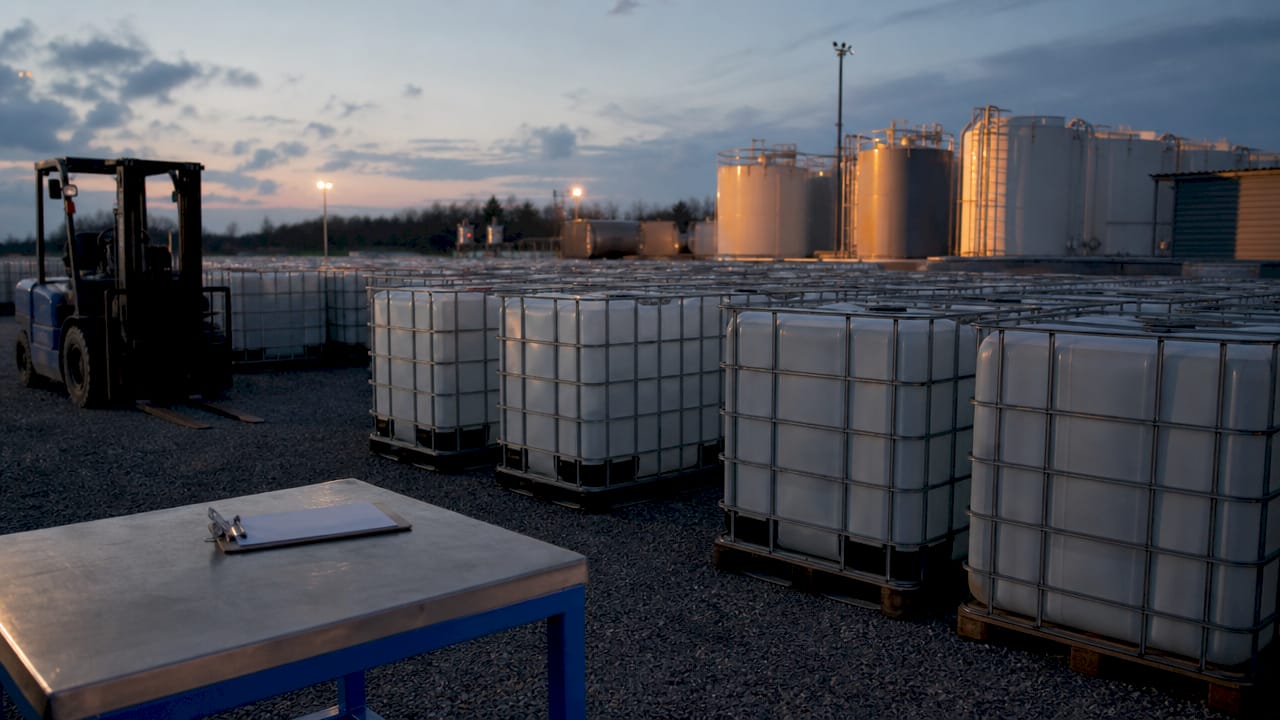
Mid-sized fleets (10–25 trucks) hit the sweet spot for totes. A single 330-gallon IBC tote delivers enough volume to reduce per-gallon cost meaningfully without requiring a permanent bulk tank installation. Tote pricing runs $1.50–$2.50 per gallon delivered, compared to retail prices that can exceed $5 per gallon. That gap adds up fast when you are running 15 trucks.
Large fleets (25 or more trucks) get the most from bulk tank systems. Bulk DEF pricing in 2026 ranges from $0.80 to $1.80 per gallon depending on volume and delivery frequency. At that rate, large fleets can save over $80,000 annually compared to retail purchasing. A single truck’s yearly savings can exceed $1,600 when you compare retail to bulk rates.
- Small fleets (under 10 trucks): use retail DEF with fuel card discounts
- Mid-sized fleets (10–25 trucks): totes (275–330 gallons) offer the best balance of cost and simplicity
- Large fleets (25+ trucks): bulk tanks deliver the lowest per-gallon cost and scale with growth
Pro Tip: Use the DEF consumption calculator at Defsales to estimate your monthly gallons before committing to a storage format. Knowing your exact volume prevents over-investing in infrastructure you do not need.
How to store DEF properly to protect quality
DEF quality degrades faster than most fleet managers expect. Proper storage is not optional. It is the difference between a compliant SCR system and a costly engine derate.
Temperature requirements
DEF must be stored between 23°F and 77°F to maintain quality per ISO 22241 storage standards. Freezing begins at 12°F, but DEF recovers fully after a single freeze-thaw cycle without losing potency. The real threat is heat. Temperatures above 86°F accelerate urea breakdown and shorten DEF shelf life from the standard 12–18 months down to weeks.
Approved tank materials
Not every container is safe for DEF. ISO 22241 requires tanks, fittings, and gaskets to be made from stainless steel or high-density polyethylene (HDPE). Zinc, copper, and carbon steel all react with DEF’s urea solution and introduce contaminants that damage SCR sensors and catalysts. This is why purpose-built IBC totes and bulk tanks are not interchangeable with standard chemical containers.
Inventory rotation and shelf life
- Label every tote or bulk delivery with the receipt date.
- Always dispense from the oldest stock first. This is the FIFO (first in, first out) method.
- Inspect stored DEF for cloudiness or discoloration before dispensing. Clear fluid is good fluid.
- In hot climates, strict FIFO rotation is critical. Heat degrades urea concentration and triggers SCR sensor errors even when the tank reads full.
- Rotate tote stock every 6 months in summer conditions to stay within the 12–18 month shelf life window.
| Storage condition | Effect on DEF quality |
|---|---|
| 23°F–77°F | Optimal. Full 12–18 month shelf life. |
| Below 12°F | Freezes. Recovers after thaw with no quality loss. |
| Above 86°F | Accelerated degradation. Shelf life drops significantly. |
| Direct sunlight | Speeds urea breakdown. Use opaque or shaded tanks. |
Pro Tip: In Texas summers, store totes in a shaded or covered area. Ambient temperatures inside an uncovered yard can push well above 86°F, cutting your DEF shelf life to a fraction of the rated window.
Operational considerations: pumps, handling, and contamination
The biggest hidden cost in DEF management is contamination. A single cross-contaminated batch can damage an SCR catalyst beyond repair, turning a $50 fluid mistake into a five-figure repair bill.
Dedicated pump systems
Closed-loop dedicated pump systems are the standard for both totes and bulk tanks. These systems use pumps, hoses, and nozzles that never contact any other chemical. Sharing a pump between DEF and diesel, coolant, or any other fluid introduces trace contaminants that the SCR system cannot tolerate. Every tote setup and bulk tank installation should include a pump dedicated exclusively to DEF.
- Use color-coded nozzles and hoses (blue is the DEF industry standard) to prevent accidental cross-use.
- Never use a funnel or container that has held any other chemical.
- Train every driver and fueling technician on the dedicated-equipment rule before they touch the DEF system.
- Inspect pump seals and fittings monthly. Worn seals introduce contamination gradually, making the problem hard to trace.
Totes vs bulk tanks: handling logistics
Totes are easier to deploy but require more frequent management. A 330-gallon tote on a 15-truck fleet lasts roughly one to two weeks depending on mileage. That means regular delivery scheduling, tote swaps, and empty container returns. Bulk tanks eliminate the swap cycle entirely. Bulk tank systems support centralized storage with integrated pumps and monitoring, scaling easily as your fleet grows. The trade-off is upfront installation cost and a fixed site requirement.
Pro Tip: If your yard has space for a 500-gallon or larger bulk tank, the labor savings from eliminating weekly tote swaps typically pay back the installation cost within 12–18 months on a fleet of 20 or more trucks.
What does bulk DEF vs totes actually cost?
Cost is where the decision gets concrete. The per-gallon price difference between retail, totes, and bulk DEF is significant at every fleet size.
Per-gallon pricing in 2026
| DEF format | Price per gallon (2026) | Best for |
|---|---|---|
| Retail jugs (2.5 gal) | $4.00–$5.00+ | Fleets under 10 trucks |
| IBC totes (275–330 gal) | $1.50–$2.50 | Fleets of 10–25 trucks |
| Bulk delivery (2,000+ gal) | $0.80–$1.80 | Fleets of 25+ trucks |
The spread between retail and bulk is not subtle. A fleet paying $5.00 per gallon at retail and switching to bulk at $1.20 per gallon saves $3.80 on every gallon consumed. A 30-truck fleet burning 500 gallons per month saves $1,900 per month, or $22,800 per year, from that single change alone.
Infrastructure and break-even
Bulk tanks carry upfront costs that totes do not. A permanent above-ground bulk DEF tank with pump, monitoring, and installation typically runs several thousand dollars depending on capacity. Totes require no installation. You pay per delivery and return the empty container. For fleets in the 10–25 truck range, totes often deliver 80% of the cost savings of bulk with none of the capital expenditure. That makes totes the lower-risk entry point for fleet managers who want to move off retail without committing to a full bulk infrastructure build.
For a detailed breakdown of how DEF format costs compare across fleet sizes, the true cost analysis at Defsales walks through the numbers by vehicle count and monthly consumption.
Defsales resources for your DEF supply decisions
Defsales publishes fleet-specific guides, storage compliance checklists, and a DEF consumption calculator to help fleet managers make the right call before spending a dollar on infrastructure.
The fleet guide library covers bulk tank sizing, tote management, ISO 22241 compliance, and storage temperature requirements in one place. Fleet managers in San Antonio, Austin, Dallas, and Salt Lake City can connect with Anytime Fuel Pros through Defsales for on-site bulk DEF delivery scheduled around your fueling cycle. Use the DEF storage compliance checklist to audit your current setup before your next delivery. Getting the storage right protects your SCR systems and keeps your fleet compliant without surprises.
Key Takeaways
The right DEF storage format for your fleet depends on vehicle count, monthly consumption, and available infrastructure, with bulk delivering the lowest per-gallon cost and totes offering the best balance for mid-sized operations.
| Point | Details |
|---|---|
| Fleet size drives format choice | Fleets under 10 trucks use retail; 10–25 trucks use totes; 25+ trucks use bulk tanks. |
| Bulk pricing beats retail significantly | Bulk DEF costs $0.80–$1.80/gal vs retail at $4.00–$5.00+/gal in 2026. |
| ISO 22241 governs storage materials | Tanks must be stainless steel or HDPE; other metals contaminate DEF and damage SCR systems. |
| Temperature control is non-negotiable | Store DEF between 23°F and 77°F; heat above 86°F degrades quality and shortens shelf life. |
| Dedicated pumps prevent costly damage | Cross-contamination from shared pumps can destroy SCR catalysts and trigger irreversible engine damage. |
FAQ
What is the difference between bulk DEF and totes?
Bulk DEF is delivered in quantities of 2,000 gallons or more into a permanent on-site tank, while totes are 275–330 gallon intermediate bulk containers that are swapped out after use. Bulk offers a lower per-gallon cost; totes require no fixed installation.
Is bulk DEF cheaper than totes?
Yes. Bulk DEF runs $0.80–$1.80 per gallon in 2026, while totes cost $1.50–$2.50 per gallon delivered. Both formats are significantly cheaper than retail jugs, which can exceed $5 per gallon.
How long does DEF last in a tote or bulk tank?
DEF stored between 23°F and 77°F has a shelf life of 12–18 months. Heat above 86°F and direct sunlight shorten that window considerably, so temperature-controlled or shaded storage is critical.
What materials are safe for DEF storage?
ISO 22241 requires stainless steel or HDPE tanks and fittings. Zinc, copper, and carbon steel react with DEF’s urea solution and introduce contaminants that damage SCR sensors and catalysts.
How do I choose between bulk DEF and totes for my fleet?
Count your trucks and estimate monthly DEF consumption. Fleets of 10–25 trucks typically get the best return from totes, while fleets of 25 or more trucks save the most with bulk tank systems. Use the DEF calculator at Defsales to run the numbers for your specific operation.