

Urea concentration in Diesel Exhaust Fluid is defined as the precise ratio of urea to deionized water required for Selective Catalytic Reduction (SCR) systems to convert NOx emissions into harmless nitrogen and water vapor. The urea concentration importance in DEF centers on one number: 32.5% urea by mass, mixed with 67.5% deionized water. This ratio is not a suggestion. It is the chemical foundation that every SCR-equipped diesel engine, from Cummins to Detroit Diesel to Caterpillar, depends on to stay compliant and operational. Get it wrong, and you face warning lights, engine derates, injector failures, and EPA violations.
1. defining urea concentration importance in DEF
Urea concentration significance starts with understanding what DEF actually does inside an SCR system. DEF, also known internationally as AUS 32 or AdBlue, is a precisely engineered fluid. The 32.5% urea concentration is not arbitrary. It represents the lowest freezing point achievable in a urea-water solution, which sits at approximately 12°F. That matters for cold-weather fleet operations across regions like Salt Lake City or Dallas where overnight temperatures drop hard.
The ISO 22241 standard governs DEF manufacturing globally and specifies an acceptable urea concentration range of 31.8–33.2% by mass. This narrow band is the compliance window every certified DEF supplier must hit. Anything outside it puts your SCR system at risk. For fleet managers, this means sourcing DEF from suppliers who provide a Certificate of Analysis (COA) with every batch, not just a label claim.
2. how the 32.5% ratio drives SCR chemistry
The SCR process is a closed-loop chemical dosing system, and the 32.5% urea concentration is the exact chemistry that dosing is calibrated around. When DEF is injected into the hot exhaust stream, the urea decomposes under high temperature into ammonia. That ammonia then reacts with NOx molecules on the SCR catalyst surface, converting them into nitrogen gas and water vapor.
Urea decomposes into ammonia only when the exhaust temperature and fluid concentration align correctly. If the urea percentage is too low, the system generates less ammonia than the dosing algorithm expects. The result is incomplete NOx conversion, meaning your truck or piece of equipment is releasing more nitrogen oxides than EPA Tier 4 standards allow.
If the concentration is too high, the excess urea does not fully decompose. It deposits as crystalline solids on injector tips and catalyst surfaces. Those deposits restrict flow, reduce dosing accuracy, and eventually require expensive component replacement. The SCR system has no way to compensate for either scenario on its own.
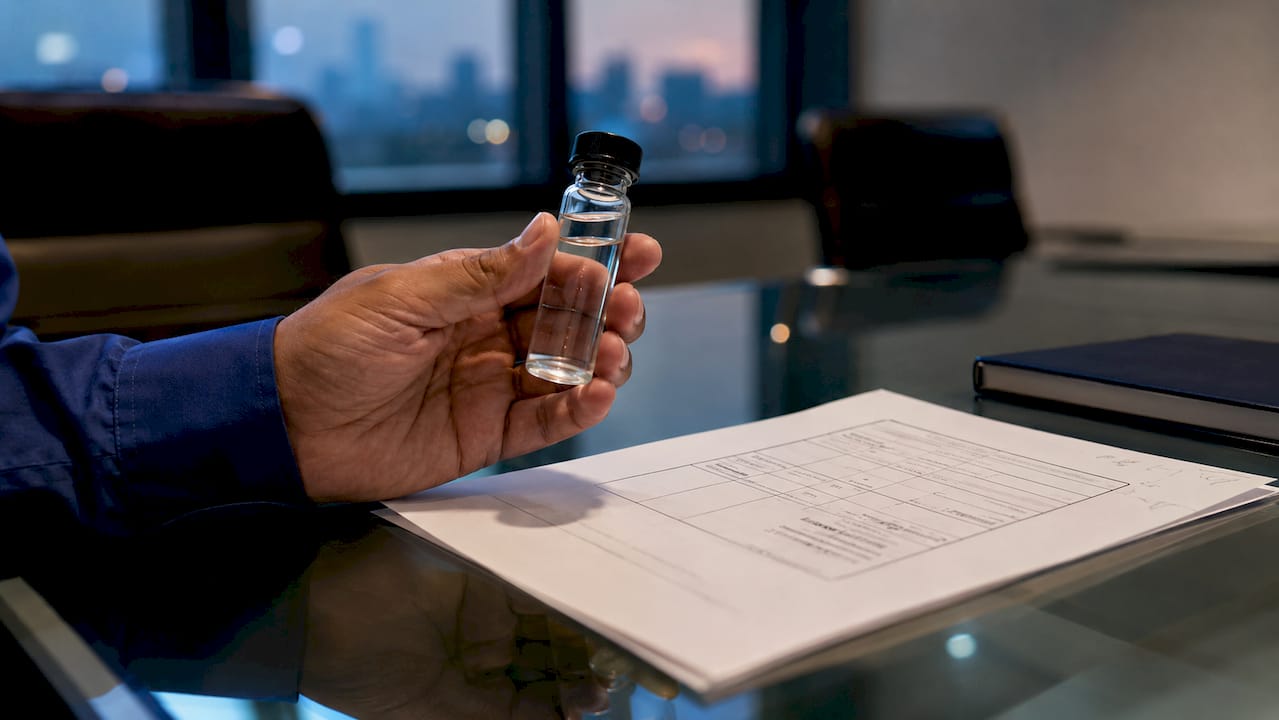
Pro Tip: If you are unsure whether a DEF batch is in spec, a calibrated refractometer gives you a field-ready concentration reading in under two minutes. Keep one in your shop and check every new bulk delivery before it goes into your storage tank.
3. what happens when concentration is off
Wrong urea concentration creates two distinct failure paths, and both are costly. Understanding the effects of urea concentration on your fleet helps you catch problems before they cascade.
Over-concentration risks:
- Urea crystallization on injector tips and catalyst inlets
- Injector clogging that reduces dosing accuracy
- SCR catalyst surface damage from undissolved urea deposits
- Increased maintenance intervals and unplanned downtime
Under-concentration risks:
- Insufficient ammonia generation for full NOx conversion
- SCR quality fault codes and dashboard warning lights
- Engine performance derates as the ECU limits power to prevent emissions violations
- Potential regulatory noncompliance during roadside inspections
The DEF crystallization risk is particularly damaging because it compounds over time. A single off-spec batch does not always trigger an immediate fault. Instead, deposits build gradually until the injector fails mid-route or the catalyst requires cleaning. By then, the repair bill far exceeds the cost of proper quality control upfront.
Non-certified urea sources, specifically fertilizer-grade urea, contain impurities that are chemically incompatible with SCR catalyst materials. Using fertilizer urea to make a DIY DEF solution causes permanent catalyst poisoning. That damage is not reversible. A replacement SCR catalyst for a Class 8 truck runs into thousands of dollars.
Pro Tip: Never top off a DEF tank with tap water or well water to stretch supply. Tap water contains minerals and chlorides that contaminate the urea solution and damage the SCR system. Use only deionized or distilled water if you must dilute or mix on site, and only from a certified source.
4. how fleet managers can verify and maintain correct concentration
Maintaining proper urea levels across a fleet requires a systematic approach, not spot checks. Here is a practical framework for fleet managers.
-
Use a calibrated refractometer on every bulk delivery. Fleet quality control relies on measuring DEF density or specific gravity as a proxy for urea concentration. A refractometer reading outside the 31.8–33.2% window means the batch fails incoming inspection. Reject it before it enters your tank.
-
Require a COA from every supplier. ISO 22241-compliant suppliers provide batch-level Certificates of Analysis showing urea concentration, biuret content, and water purity. If a supplier cannot produce one, that is a disqualifying factor.
-
Never dilute DEF with tap or well water. Dilution errors are the most common source of under-concentration in fleet operations. Diluting DEF with tap water introduces minerals and chlorides that contaminate the solution and accelerate injector wear.
-
Plan resupply around your actual consumption rate. DEF consumption runs 2–6% of diesel fuel volume. For a long-haul truck burning 500 gallons of diesel per week, that means 10–30 gallons of DEF per week. Build that into your procurement schedule so tanks never run critically low, which is when operators are most tempted to use off-spec fluid.
-
Store DEF in dedicated, sealed containers. Cross-contamination from diesel, oil, or other fluids destroys DEF quality instantly. Use containers and dispensing equipment labeled and reserved exclusively for DEF. Review DEF storage requirements to keep your supply in spec between deliveries.
-
Audit your SCR fault log monthly. Recurring quality fault codes are often the first sign of a concentration problem in your supply chain. Catching a pattern early prevents a fleet-wide issue.
5. ISO 22241 DEF vs. off-spec alternatives: a direct comparison
The importance of urea levels becomes clearest when you compare certified DEF against the alternatives operators sometimes consider. The table below shows why there is no practical substitute for ISO 22241-compliant fluid.
| Factor | ISO 22241 Compliant DEF | Fertilizer-Grade Urea Mix | Diluted or Tap-Water DEF |
|---|---|---|---|
| Urea concentration | 31.8–33.2% | Uncontrolled, often higher | Below 31.8%, variable |
| Water type | Deionized only | Tap or industrial water | Tap or well water |
| Biuret content | Max 0.3% | Often exceeds limits | Varies |
| SCR catalyst impact | Safe, designed for SCR | Causes catalyst poisoning | Deposits and corrosion |
| Regulatory compliance | EPA Tier 4 compliant | Noncompliant | Noncompliant |
| Fleet risk | Minimal with proper storage | High, permanent damage possible | Moderate to high |
ISO 22241 standards set strict purity limits beyond just concentration. Biuret, a byproduct of urea degradation, must stay below 0.3% by mass. Even if the urea concentration matches specification, contaminants like biuret or metals can poison SCR catalysts over time. This is why purity and concentration are both non-negotiable, not one or the other.
Agricultural urea is produced for soil application, not precision chemical dosing. Its impurity profile is entirely different from pharmaceutical or technical-grade urea used in certified DEF. No amount of dilution or filtering makes fertilizer urea safe for SCR use. The SCR system explained for fleet operators covers this in more detail if you want to understand the catalyst chemistry behind these limits.
For fleets evaluating Tier 4 engine requirements, the compliance case is straightforward. Off-spec DEF does not just risk mechanical damage. It creates a direct path to EPA violations, failed emissions inspections, and potential fines. The cost of sourcing certified DEF is always lower than the cost of noncompliance.
Key takeaways
Correct urea concentration in DEF, held at 32.5% per ISO 22241, is the single most controllable factor in SCR system reliability and fleet emissions compliance.
| Point | Details |
|---|---|
| 32.5% is the required concentration | ISO 22241 allows 31.8–33.2% by mass; anything outside this range risks SCR failure. |
| Verify every bulk delivery | Use a calibrated refractometer to check concentration before DEF enters your storage tank. |
| Off-spec fluid causes permanent damage | Fertilizer-grade urea and tap-water dilution poison SCR catalysts and void warranties. |
| Consumption drives resupply planning | DEF runs at 2–6% of diesel volume; plan procurement around this rate to avoid emergency sourcing. |
| Purity matters as much as concentration | Biuret content must stay below 0.3%; always require a COA from your DEF supplier. |
Get certified DEF supply for your fleet
Defsales is the go-to resource for fleet managers who need accurate, operator-focused guidance on DEF quality, storage, and compliance. Every article on this site is built around the real-world decisions you face managing diesel equipment at scale. When you are ready to source ISO 22241-compliant DEF with batch-level quality documentation, Anytime Fuel Pros handles bulk and on-site DEF delivery across San Antonio, Austin, Dallas, and Salt Lake City. Use the DEF consumption calculator to size your resupply needs, or visit the fleet DEF guides to plan your full DEF management program. For immediate supply, schedule bulk DEF delivery with Anytime Fuel Pros directly.
FAQ
What is the correct urea concentration in DEF?
DEF requires 32.5% urea by mass mixed with 67.5% deionized water, per ISO 22241. The acceptable manufacturing range is 31.8–33.2%.
Why does urea concentration matter for SCR systems?
SCR dosing algorithms are calibrated to the 32.5% ratio. Deviations reduce ammonia generation, causing incomplete NOx conversion or urea crystallization on injector components.
What happens if DEF concentration is too low?
Under-concentration produces insufficient ammonia for NOx reduction. The SCR system triggers warning lights and engine derates to prevent emissions violations.
Can i use fertilizer-grade urea to make DEF?
No. Fertilizer-grade urea contains impurities that permanently poison SCR catalysts. Only ISO 22241-certified DEF from a verified supplier is safe for SCR use.
How do fleet managers check DEF concentration on site?
A calibrated refractometer measures DEF density and correlates it to urea concentration. This is the standard field method for incoming bulk delivery inspection.