

Diesel Exhaust Fluid (DEF) is defined as a 32.5% urea solution that feeds Selective Catalytic Reduction (SCR) systems to convert NOx emissions into harmless nitrogen and water vapor. Understanding how DEF affects fuel economy is critical for every fleet manager running EPA Tier 4 compliant diesel equipment. DEF does not mix with diesel or enter the combustion chamber. Instead, it works entirely in the exhaust stream, and that distinction is what makes modern diesel engines more fuel efficient than their predecessors. SCR systems allow a 3–5% increase in fuel efficiency by moving emissions control out of the engine and into the exhaust. That shift lets engineers tune combustion for maximum power and economy rather than for emissions compliance.
1. How DEF and SCR technology unlock better fuel economy
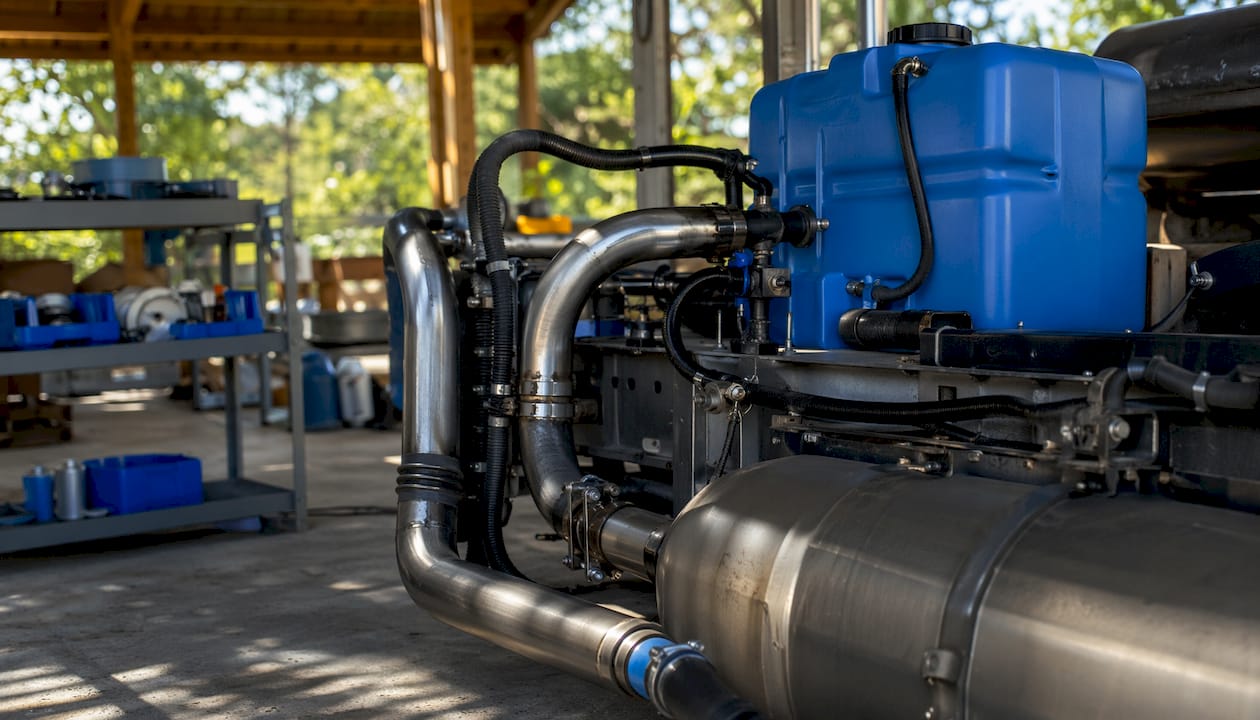
SCR technology moves emissions control downstream, away from the combustion chamber. Before SCR, engineers had to tune engines to burn cooler and leaner to limit NOx production inside the cylinder. That approach cost fuel economy. With SCR handling NOx in the exhaust, engines can be tuned for peak combustion efficiency without sacrificing emissions compliance.
The result is measurable. Modern diesel engines with SCR achieve 3–5% better fuel economy than older engines without the technology. On a truck running 100,000 miles per year at 6.5 mpg, that improvement translates to real savings at the pump.
| Engine type | Emissions control method | Fuel economy impact |
|---|---|---|
| Pre-SCR diesel (pre-2010) | In-cylinder combustion tuning | Lower mpg due to lean/cool burn |
| Modern SCR/DEF diesel | Post-combustion exhaust treatment | 3–5% mpg improvement |
Pro Tip: If you are evaluating older fleet units for replacement, the fuel economy gain from SCR-equipped engines alone can offset a significant portion of the upgrade cost over a multi-year operating cycle.
2. DEF consumption rates and what they cost your fleet
The standard DEF consumption rate is 2–3% of diesel fuel consumption. That means for every 100 gallons of diesel burned, your trucks use 2–3 gallons of DEF. A truck driving 100,000 miles at 6.5 mpg uses roughly 385 gallons of DEF annually. That is a predictable, manageable cost when you plan for it.
Several factors push DEF consumption above the standard ratio:
- Heavy hauling. Pulling maximum payload increases engine load and exhaust output, which raises DEF injection rates.
- Mountain terrain. Sustained grades force the engine to work harder, increasing both diesel and DEF burn.
- Extended idling. Idling keeps the SCR system active without covering miles, distorting your DEF-to-diesel ratio.
- Ambient temperature. Cold weather affects DEF dosing behavior and can alter consumption patterns.
Use the Defsales DEF calculator to model your fleet’s actual annual DEF spend based on mileage, load profile, and vehicle count. Knowing your number before you buy prevents both over-ordering and costly emergency resupply.
For a deeper breakdown of how DEF usage translates to fleet costs, real-world examples by vehicle class show where the biggest cost exposure sits.
3. Common myths about DEF and fuel mileage
The most persistent myth is that DEF improves fuel mileage by acting as a fuel additive or combustion enhancer. DEF operates exclusively in the exhaust system and never enters the engine cylinders. It has no direct effect on combustion power or fuel burn rates. The fuel economy benefits come from how SCR allows the engine to be tuned, not from the fluid itself.
A second myth is that deleting the SCR system improves fuel economy. Fleet operators who pursue DEF deletion expecting better mpg are often disappointed. The engine’s ECU is calibrated to work with SCR. Removing the system without recalibrating the engine does not restore the pre-SCR combustion tuning. It also exposes the fleet to significant regulatory and warranty risk.
Pro Tip: Fuel economy changes after a DEF system modification almost always trace back to ECU recalibration issues, not to the presence or absence of DEF fluid itself.
A third misconception is that any DEF will do. Contaminated or low-quality DEF causes SCR system faults that degrade sensors, dosing systems, and catalysts. Those faults reduce fuel economy and trigger costly repairs. ISO 22241 is the quality standard that governs DEF concentration, purity, and packaging. Only ISO 22241 compliant DEF protects your SCR system and the fuel economy gains it enables.
4. Troubleshooting DEF and SCR issues that hurt fuel economy
A fuel economy drop of 10–15% without any operational change is a reliable indicator of an SCR dosing fault. Engine computers compensate for SCR malfunctions by altering fuel injection timing, which degrades mpg. The engine is not broken, but it is running in a protective mode that costs fuel.
Follow this diagnostic sequence when you see unexplained fuel economy drops:
- Check DEF level and quality. Confirm the tank is filled with ISO 22241 compliant DEF. Contaminated fluid is a common first cause.
- Read fault codes. SCR-related fault codes (P20EE, P2BAD, and similar) point directly to dosing injector, NOx sensor, or catalyst issues.
- Inspect the DEF dosing injector. Clogged or failed injectors are a frequent cause of incorrect DEF delivery and subsequent engine derating.
- Check the NOx sensors. Upstream and downstream NOx sensors feed the ECU data that controls dosing. A failed sensor sends bad data and triggers protective fuel economy penalties.
- Review DEF consumption logs. A sudden spike or drop in DEF use relative to diesel signals a dosing system problem, not a driving behavior change.
- Schedule SCR catalyst inspection. A poisoned or degraded catalyst cannot convert NOx efficiently, forcing the ECU into derate mode.
Technicians treat DEF-related fuel economy drops as symptoms of system failure, not as evidence that DEF itself hurts performance. Routine SCR diagnostics alongside fuel system maintenance catches these issues before they become expensive.
5. What happens when DEF runs out
Running out of DEF triggers a progressive engine derate sequence. Some systems limit speed to 5 mph when the DEF tank is empty. That is not a warning. That is a full operational shutdown in everything but name. A truck crawling at 5 mph on a highway or job site is a safety hazard and a productivity loss.
The derate sequence typically follows this pattern: a low DEF warning light appears first, then a countdown to derate begins, then power and speed limits engage progressively as the tank empties. Refilling DEF clears the derate, but the time lost and the cost of roadside service add up fast. Emergency DEF supply and on-site delivery prevent this scenario entirely for fleets that plan ahead.
6. Best practices for managing DEF to protect fuel efficiency
Consistent DEF management is the simplest way to protect the fuel economy gains that SCR technology delivers. These practices apply to any fleet size.
- Buy ISO 22241 compliant DEF only. Off-spec fluid is the leading cause of SCR contamination and the sensor failures that trigger fuel economy penalties. Review DEF quality standards before approving any new supplier.
- Store DEF correctly. DEF degrades above 86°F and freezes at approximately 12°F. Proper storage preserves fluid quality and prevents dosing system damage. Follow the DEF storage temperature guide for tank and container requirements.
- Track DEF and diesel consumption together. Monitoring the DEF-to-diesel ratio across your fleet reveals dosing anomalies before they become fault codes. DEF consumption varies with load and terrain, so fleet-level tracking catches outliers that individual vehicle checks miss.
- Set minimum DEF level thresholds. Establish a refill trigger at 25% tank capacity. This eliminates the risk of hitting derate territory during a long haul or remote job.
- Plan bulk purchasing around usage data. Buying DEF in bulk reduces per-gallon cost and ensures supply continuity. Fleets running 10 or more vehicles benefit from on-site bulk storage paired with scheduled delivery.
- Schedule SCR system inspections quarterly. Catching a failing dosing injector or degraded catalyst early costs far less than diagnosing a fuel economy problem after the fact.
Pro Tip: Pair your DEF tracking with your diesel fuel logs in a single spreadsheet. The ratio should stay consistent week over week. Any deviation of more than 20% in either direction warrants an SCR system check.
Key Takeaways
DEF affects fuel economy indirectly by enabling SCR technology to handle NOx emissions in the exhaust stream, freeing modern diesel engines to run at peak combustion efficiency and deliver 3–5% better fuel economy than pre-SCR designs.
| Point | Details |
|---|---|
| DEF does not touch combustion | DEF works only in the exhaust stream and has no direct effect on fuel burn or power output. |
| SCR enables 3–5% fuel economy gains | Modern SCR-equipped engines outperform pre-SCR designs because combustion is tuned for efficiency, not emissions. |
| Standard DEF consumption is 2–3% of diesel | A truck at 100,000 miles per year uses roughly 385 gallons of DEF annually at 6.5 mpg. |
| Fuel economy drops signal SCR faults | A 10–15% mpg decline without operational changes points to dosing injector, sensor, or catalyst failure. |
| ISO 22241 compliance protects your system | Off-spec or contaminated DEF damages SCR components and triggers the fuel economy penalties you are trying to avoid. |
DEF supply and fleet resources from Defsales
Managing DEF well is not complicated, but it requires reliable supply, quality assurance, and the right information at the right time.
Defsales provides fleet managers with the educational resources to make confident DEF decisions, from consumption modeling to storage compliance. Use the fleet DEF guides to build a DEF management plan that matches your operation’s size and duty cycle. When you are ready to source bulk DEF or schedule on-site delivery, Anytime Fuel Pros handles supply and delivery for fleets in San Antonio, Austin, Dallas, and Salt Lake City, with nationwide reach through their partner network. Getting DEF to your site on a schedule eliminates the derate risk and keeps your fuel economy gains intact.
FAQ
Does DEF directly improve fuel mileage?
DEF does not directly improve fuel mileage. The fuel economy benefit comes from SCR technology, which DEF enables, allowing engines to be tuned for efficiency rather than emissions control.
How much DEF does a diesel truck use per year?
A truck driving 100,000 miles at 6.5 mpg uses approximately 385 gallons of DEF annually, based on the standard 2–3% DEF-to-diesel consumption ratio.
Can a bad DEF system cause poor fuel economy?
Yes. SCR dosing faults cause the engine ECU to alter fuel injection timing as a protective response, which produces fuel economy drops of 10–15% without any change in driving conditions.
What happens to engine performance when DEF runs out?
Running out of DEF triggers a progressive derate sequence. Some systems reduce vehicle speed to 5 mph until the DEF tank is refilled, causing significant operational downtime.
What DEF quality standard should fleet managers require?
Fleet managers should require ISO 22241 compliant DEF from every supplier. This standard governs urea concentration, purity, and packaging to protect SCR components and maintain fuel economy performance.