

A correctly mixed DEF sample reads at the commonly accepted urea concentration by weight. Distilled water gets you a valid daily zero, but it is not a traceable calibration. Only a certified standard or an accredited lab check gives you that.
TL;DR:
- Regularly verify a DEF refractometer with a certified 32.5% urea standard to ensure measurement accuracy within a tolerance of about ±0.1%.
- Always inspect, clean, and calibrate the prism with fresh distilled water before testing to prevent drift caused by residue or scratches.
- Conduct daily zero checks with distilled water and monthly verification against certified standards to maintain compliance with ISO 22241 standards.
- Avoid testing samples immediately after cold weather moves; allow 10 to 15 minutes for samples and devices to reach ambient temperature for accurate readings.
- Use properly mixed, certified DEF from reputable suppliers if testing reveals out-of-spec readings, and record calibration details for audit readiness.
Table of Contents
- How Do You Verify a DEF Refractometer in the Field?
- Step-by-Step Calibration for Portable Optical and Digital Refractometers
- When Do You Need Certified 32.5% Verification Standards?
- Why Does Your Refractometer Keep Drifting?
- How Often Should You Calibrate a DEF Refractometer?
- A Printable Calibration Log Operators Can Actually Use
- Where to Get Certified Verification Fluids and DEF Supply
- Sources
How Do You Verify a DEF Refractometer in the Field?
Run this sequence before every batch you’re unsure about, and treat it as routine, not an emergency step. The goal is catching a bad drum or a miscalibrated device before it reaches an SCR tank.
- Look and smell first. Good DEF is clear and colorless. Cloudy, yellow, or off-color fluid, or a sample with a sharp ammonia smell, means the fluid is likely degraded and should not be tested or used, according to John Deere’s DEF handling and testing guidance.
- Zero the instrument. Wipe the prism clean, place one or two drops of fresh distilled water on it, close the cover, and press the calibration button, or turn the adjustment screw on an optical model until the scale reads zero.
- Run a verification check. If you have a certified 32.5% urea standard, place a drop on the clean prism and compare the reading against the expected value, allowing for the manufacturer’s stated tolerance, often around ±0.1% on field-grade devices per the MISCO DEF-202 product specifications.
- Log everything. Note the device serial number, sample source, ambient temperature, and the reading itself.
- Act on out-of-spec results. Quarantine the batch, drain and refill the tank if contamination is confirmed, and contact your supplier before putting more fluid into service.
Skipping step 1 is the most common shortcut crews take, and it’s the one that costs the most. A cloudy tote that gets tested anyway can throw a reading off enough to mask real contamination.
Step-by-Step Calibration for Portable Optical and Digital Refractometers
Calibration is really two jobs: getting the instrument itself to zero correctly, and making sure the sample you’re reading is at the right temperature when you read it. Skip either one, and the number on the screen means nothing.
Start with the prism. Any residue left from a previous test bends light differently than clean glass does, and that shows up as drift on your next reading.
- Inspect the prism under good light for streaks, dried residue, or scratches.
- Clean it with a soft lens wipe, never a paper towel or shop rag, and let it dry fully.
- On optical models, adjust the diopter or focus ring before you calibrate, not after.
- On digital models, run the built-in self-check first if the device offers one.
- Use only fresh distilled water for the zero step. Tap or spring water carries dissolved minerals that shift the refractive index and throw off your baseline, a point Vehicle Service Pros makes clear in its review of the OTC 5025 DEF refractometer.
- Let the device and the sample sit at the same ambient temperature before you read anything. Refractive index shifts with temperature, which is why most pocket digital refractometers, including the Reichert DEF-Chek pocket digital refractometer, build in automatic temperature compensation referenced to 68°F (20°C). Compensation helps, but it doesn’t replace giving the fluid a few minutes to settle.
- Apply the correct sample volume, close the cover, wait the number of seconds the manufacturer specifies, then take your reading.
- Repeat once if the number looks off. A second read that matches the first tells you the instrument, not the sample, is behaving.
Optical and digital units differ in a few practical ways worth knowing. A basic optical refractometer typically uses a single-point water zero and relies on you reading a scale visually. Digital units, like those from Reichert or lab-grade instruments from Rudolph Research, often support two-point calibration and let you store a verification value in memory, so the same standard produces a repeatable number every time you check it.
Pro Tip: If you’re moving between a cold truck cab and a heated shop, don’t test immediately after the move. Give the device and the sample 10 to 15 minutes to equilibrate at the temperature where you’ll actually be reading, especially during winter deliveries.
When Do You Need Certified 32.5% Verification Standards?
Distilled water zeroing is fine for a daily shift check. It is not traceable, and it will not satisfy an ISO 22241 audit or a procurement quality requirement. That distinction matters more than most operators realize until an auditor asks for proof.
ISO 22241 sets the chemical specification for DEF, and ASTM D7821 defines the field refractometer test method operators actually use to check urea concentration on the ground.
To run a proper certified-standard check:
- Use a fresh, unopened standard fluid and record its batch or lot number.
- Compare the reading against the fluid’s stated expected value, allowing for your device’s manufacturer tolerance.
- Store the result alongside the batch number so you can trace it back if a dispute comes up later.
Send the instrument to an accredited calibration lab, ideally one that’s an ILAC signatory, once a year for full traceability, or sooner if you’ve dropped the unit, repaired it, or noticed readings drifting outside tolerance. Bellingham + Stanley supplies refractive index calibration and verification materials built for exactly this kind of lab-grade certification work, which is worth knowing about if your fleet needs documented proof for a customer or regulator.
Why Does Your Refractometer Keep Drifting?
Most drift traces back to something on the prism, not a failing instrument. Microscopic residue left after dozens of tests slowly changes how light bends across the surface, and you won’t see it without a close look.
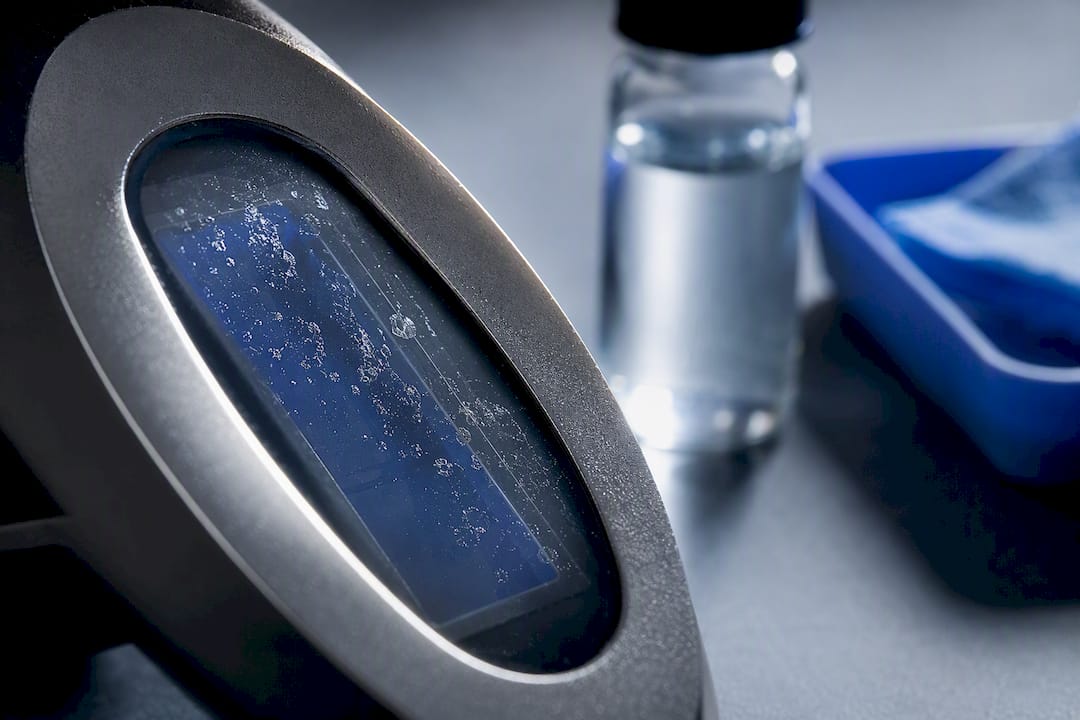
Clean the prism with a soft lens wipe and a minimal amount of fluid, then dry it completely before the next sample. Never submerge the instrument or force water into any port or seam. Partially dried DEF residue is a sneaky problem too: a film left on the prism from a rushed cleaning reads as a slightly different concentration than the fluid you’re actually testing.
A few common issues and what they usually mean:
- Reading won’t settle or fluctuates: the sample and device haven’t equilibrated to the same temperature yet. Wait and retest.
- Sample too small: most units need a full drop or two to cover the prism evenly. A thin, uneven film produces inconsistent readings.
- Result way outside expected range: repeat the test with a fresh sample before assuming the fluid is bad. One bad drop happens.
- Persistent unexplained drift after cleaning: this points to a scratched prism, internal condensation, or an optical component going out of alignment. That’s a service issue, not a cleaning issue.
Pro Tip: Keep a dedicated, labeled lens wipe just for refractometer duty. Shop rags pick up grit and diesel film that will scratch a prism faster than normal wear ever would.
How Often Should You Calibrate a DEF Refractometer?
Frequency depends on how much is riding on the number. A daily shift check protects your engine. A monthly certified check protects your paperwork.
- Every shift, or before any critical batch: zero with fresh distilled water.
- Monthly: run a verification check against a certified 32.5% standard for routine quality assurance, a cadence Rudolph Research recommends for ISO 22241 compliance work.
- Annually, or after any drop, repair, or unexplained drift: send the unit to an accredited lab for traceable calibration.
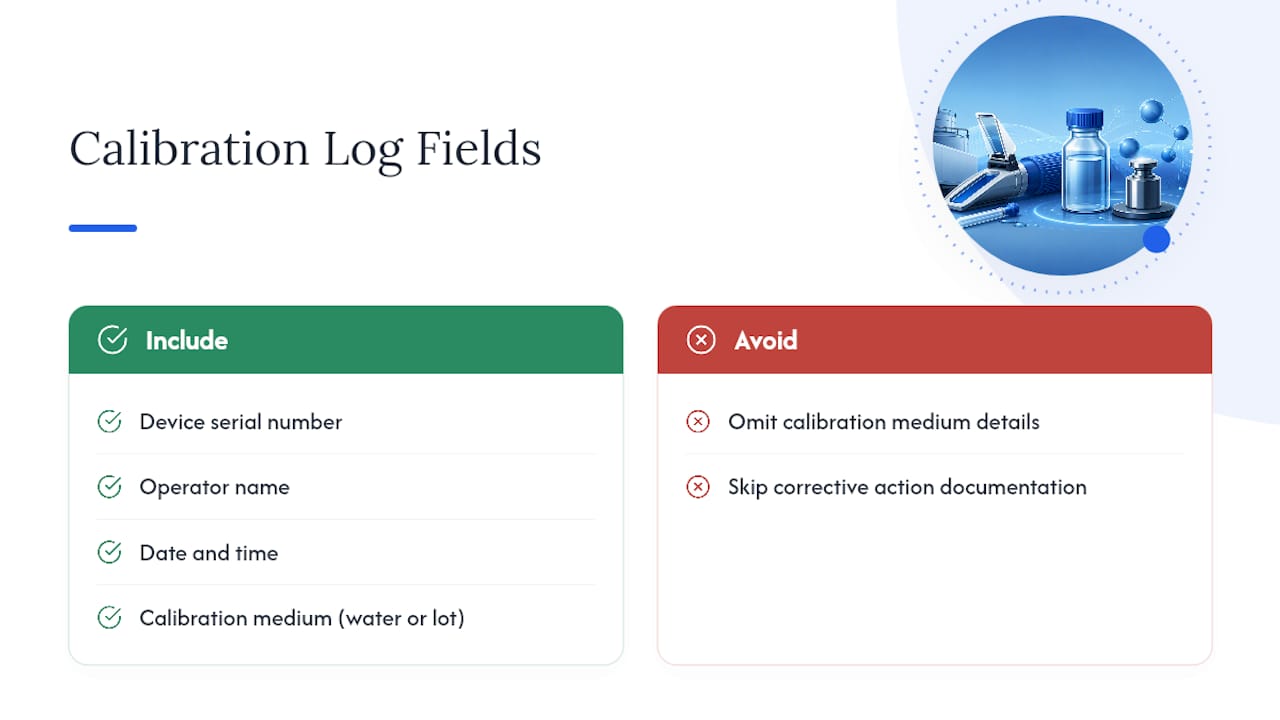
For every check, log the device serial number, the operator’s name, the calibration medium used (distilled water or a certified standard’s lot number), ambient temperature, the reading itself, and any corrective action taken. That log is what turns a quick field check into an audit-ready DEF quality record for fleet compliance. It’s also the same kind of documentation discipline fleets already apply to programs like DOT random drug testing compliance, where dated, attributable records are the whole point.
A Printable Calibration Log Operators Can Actually Use
Copy this into your maintenance log or shift sheet: device serial number, operator name, date and time, calibration medium (distilled water or certified standard lot number), ambient temperature, reading result, pass or fail against tolerance, and corrective action taken.
Running this checklist consistently catches contaminated totes and drifting instruments before they cause an SCR derate, not after. For deeper background on the standard behind the 32.5% number, see our breakdown of ISO 22241 basics for fleet professionals, and for help choosing the right testing equipment for your fleet’s size, the Fleet Buying Playbook for DEF Quality Sensors and Refractometer Tests walks through what to look for before you buy.
Where to Get Certified Verification Fluids and DEF Supply
A refractometer is only as good as what you’re testing it against, and a bad batch of DEF is the one thing calibration can’t fix after the fact. If your verification check flags a tote or bulk tank as out of spec, the fastest path back to compliant operation is fresh, properly mixed fluid from a supplier who can document it.
This resource is built around exactly this problem: giving fleet teams the technical grounding to test DEF correctly, then connecting them to real supply when a batch fails. For certified standards, procurement guidance, or a supply issue you need resolved today, our DEF delivery near me guide covers how bulk and on-site delivery works, and our DEF calculator helps you plan order volume so you’re not caught short between deliveries. When you need bulk DEF on-site fast, reach out to Anytime Fuel Pros to request a delivery quote or schedule service, and keep your fleet’s calibration log clean and your tanks full at the same time.
Sources
- Rudolph Research: DEF testing for ISO 22241 with refractometers & density meters
- Vehicle Service Pros: OTC DEF refractometer tool review