

No, straight water or diluted DEF is not an acceptable substitute. If you suspect water in your DEF tank, stop using the vehicle if you can, pull a fluid sample, and get it tested before adding anything else. A refractometer will confirm concentration in minutes, and any fluid that doesn’t meet ISO 22241 should be drained, not diluted further or topped off.
TL;DR:
- Water contamination in DEF causes warning lights, derates, and increased DEF consumption, risking costly hardware damage and system deposits.
- Contamination typically enters tanks through unsealed caps, faulty fittings, improper handling, or moisture buildup from temperature changes.
- Using distilled or deionized water instead of proper DEF formulation prevents effective NOx reduction and risks sensor detection and engine performance.
- Testing DEF quality regularly with a refractometer, inspecting storage and delivery sources, and requiring Certificates of Analysis can catch issues early.
- Switching to bulk or verified on-site delivery with proper documentation significantly lowers contamination risks and reduces overall maintenance costs.
Table of Contents
- What Happens When Water Contaminates DEF
- How Water Gets Into DEF Tanks
- Can You Use Water Instead of DEF?
- How to Test and Inspect DEF Quality
- Cleaning Contaminated DEF Tanks
- Preventing Water Contamination in DEF Storage
- Warranty Risk and When to Call a Professional
- Reduce Contamination Risk With Bulk and Wet-Hose Delivery
- Sources
What Happens When Water Contaminates DEF
Diesel exhaust fluid runs through some of the most sensitive hardware on a modern diesel engine. Once water gets into that fluid, the SCR system reacts fast, and usually not quietly.
The most common early warning is a dash light. Diluted or contaminated DEF throws off the dosing calculations your SCR system relies on, which typically triggers a check-engine light, a DEF quality fault, or an active derate warning. Ignore it long enough and most systems will step down engine power, sometimes to a crawl, until the fluid gets fixed. That’s not a bug. It’s a deliberate emissions safeguard, and it’s designed to get your attention before the damage spreads further.
Here’s what operators typically see once water has been sitting in the tank for a while:
- Check-engine or DEF-specific warning lights that won’t clear after a refill
- SCR derate or limp-mode engagement, cutting available horsepower
- Dosing system fault codes tied to concentration sensors
- Noticeably higher DEF consumption as the system over-doses to compensate for weak fluid
- Visible white crystal buildup around the injector nozzle or filler neck
The mechanical damage is where things get expensive. Diluted DEF throws off the urea concentration the dosing injector expects, and when the fluid evaporates or gets exposed to heat inside the SCR lines, it can leave behind hard, chalky urea deposits. Tap water minerals and ions can form solid deposits in injectors and the exhaust catalyst, and once those deposits calcify, they frequently require costly repairs and can void your manufacturer warranty outright.
Statistic Callout: Water contamination in bulk or vehicle DEF tanks doesn’t just cause product loss. According to Unity Fuel Solutions, it can lead to vehicle non-operation and crystallization severe enough that inspectors are advised to verify watertight storage conditions and request a Certificate of Analysis from suppliers before accepting delivery.
The operational fallout compounds from there. A debate truck sitting at a job site or on a route isn’t earning anything. Add in diagnostic time, injector replacement, and the very real risk of a denied warranty claim because the fluid wasn’t within spec, and a small contamination problem turns into a five-figure one fast. Fleet managers who catch the cross-contamination pattern early tend to spend a fraction of what it costs to wait for a derate to force the issue.
How Water Gets Into DEF Tanks
Contamination almost never happens on purpose. It creeps in through small gaps in handling, storage, and supply chain discipline that most operations don’t think to check until something already broke.
At the vehicle level, the paths are surprisingly mundane:
- An unsealed or damaged filler cap that lets moisture and debris in over time
- High-pressure car washes that force water past a compromised or worn seal
- Retail DEF jugs that have been opened, tampered with, and refilled with water by a previous handler
- Simple operator error, like grabbing the wrong jug or topping off with the wrong hose
Bulk storage introduces its own set of failure points, and they’re often harder to spot because the tank isn’t something a driver checks every day. Condensation is the quiet one. Temperature swings inside a partially full bulk tank create moisture that collects at the bottom and eventually works its way into the fluid. Faulty fittings, degraded gaskets, and worn seals on transfer lines are the next most common culprit, especially on older tanks that have been repurposed from other fluids without a proper rinse. Poor tank venting can also pull in ambient moisture over time, particularly in humid climates or coastal regions.
Then there’s the chain-of-custody problem, which is arguably the hardest one to control. Retail jugs are frequently tampered with and refilled with water, which is exactly why the industry increasingly recommends bulk or verified on-site delivery over packaged jugs whenever volume justifies it. A sealed jug from a reputable retailer is generally safe. A jug bought secondhand, found sitting open in a yard, or purchased from an unverified seller is a gamble every time you pour it into a tank that feeds a six-figure engine.
None of these pathways require negligence to happen. A worn gasket, a humid week, a jug that got left uncapped overnight. That’s the uncomfortable part. Contamination is usually the result of ordinary wear, not a dramatic failure, which is why routine inspection matters more than most fleets initially assume.
Can You Use Water Instead of DEF?
No, and the reason comes down to chemistry, not just contamination risk. DEF is a precise formulation, not a rough approximation you can improvise on a job site.
Diesel exhaust fluid is a 32.5% solution of high-purity urea in deionized water. The urea is the working ingredient. It’s what breaks down inside the SCR catalyst to convert harmful NOx emissions into nitrogen and water vapor. Water is simply the carrier. Remove or dilute the urea, and the entire emissions reaction falls apart, regardless of how clean the water itself is.
That’s why even distilled or deionized water, water with zero minerals, zero ions, essentially pure H2O, still isn’t a substitute. It carries none of the urea concentration the dosing system is calibrated to expect. Modern SCR systems use concentration sensors and quality checks specifically designed to catch improper fluid, so most engines will flag distilled water in the tank just as fast as they’d flag tap water.
Tap water is worse, though, and worth separating out because the damage mechanism is different:
- Minerals and dissolved ions in tap water don’t evaporate, they crystallize
- Those crystals build up inside the precision-machined dosing injector over repeated cycles
- The same mineral buildup can coat and damage the SCR catalyst itself
- Distilled water avoids the mineral damage but still fails on urea concentration and gets flagged by onboard sensors
Either way, the outcome is the same: a fluid that can’t do the one job DEF exists to do, paired with a real risk of hardware damage the longer it sits in the system.
How to Test and Inspect DEF Quality
You don’t need a lab on-site to catch most contamination problems. A handful of practical checks, done consistently, will catch the majority of issues before they turn into a derate.
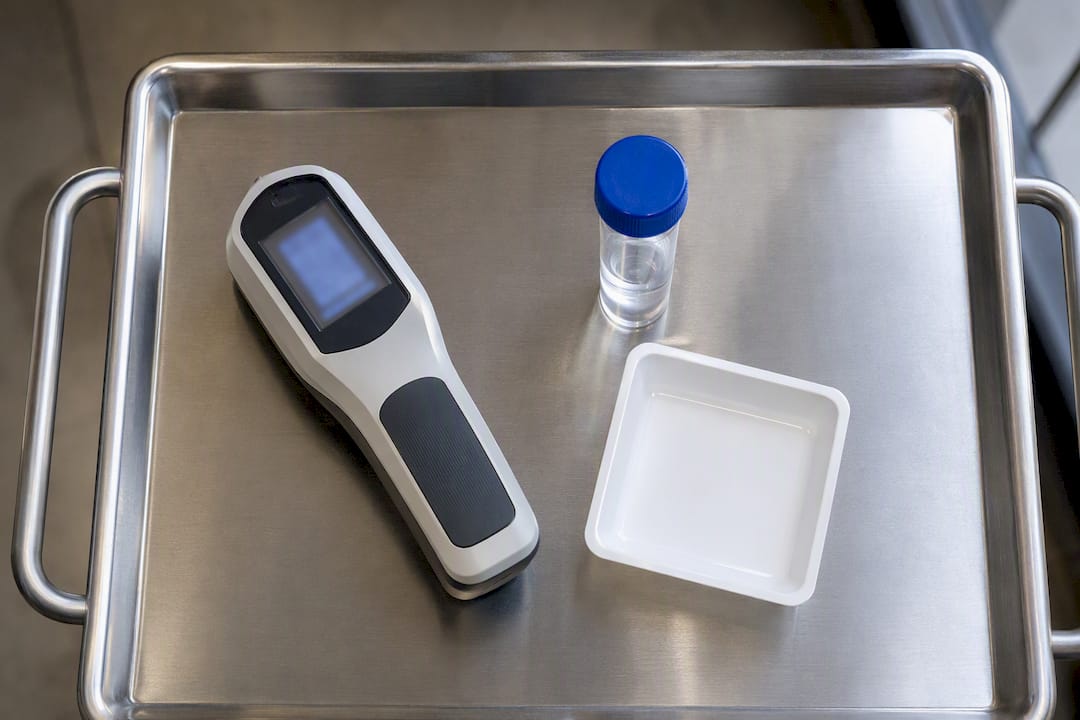
- Run a refractometer check first. A handheld refractometer gives you an on-site concentration reading in under a minute. DEF should read right around 32.5% urea concentration; anything noticeably lower is a red flag worth acting on immediately.
- Request a Certificate of Analysis on every bulk delivery. A CoA documents the concentration and purity of the batch you’re receiving, and it’s your paper trail if a supplier ever sends bad product. Requiring one on every delivery, not just when something seems off, is standard practice among fleets serious about ISO 22241 compliance.
- Send suspect samples out for ICP or XRF analysis. When a refractometer reading looks borderline or you’re seeing crystal deposits without a clear cause, ICP spectrometry or XRF testing can identify the specific mineral contaminants at play, which tells you whether you’re dealing with tap water, a corroded fitting, or something else entirely.
- Sample from the right location, and document everything. Draw your sample from the lowest point of the tank or from the pump suction line, since that’s where water and heavier contaminants settle first. Seal the sample, label it with the date, time, and lot number, and photograph exactly where you pulled it from.
That last step matters more than most operators realize. If contamination turns into a warranty dispute or an insurance claim down the line, a documented, chain-of-custody sample is the difference between a quick resolution and a drawn-out argument with a manufacturer’s claims department.
Pro Tip: Keep a small logbook near your DEF storage or dispensing point and record every refractometer reading, not just the ones that look wrong. A pattern of slowly drifting concentration over a few weeks is a much earlier warning sign than a single bad reading caught after the fact.
Cleaning Contaminated DEF Tanks
Once you’ve confirmed contamination, resist the urge to just drain and refill. A rushed flush can leave residual water or crystals behind, and you’ll be right back where you started within a few tanks of fuel.
- Contain and retain a sample before doing anything else. You’ll want proof of the contaminated fluid on hand in case you need it for a warranty claim later. Don’t dump the whole tank before pulling that sample.
- Drain the tank completely. Vehicle DEF tanks and bulk storage tanks both need a full drain, not a partial one, since sediment and mineral deposits tend to settle at the bottom.
- Flush with warm deionized water or fresh DEF. A warm rinse helps dissolve any lingering urea crystals clinging to the tank walls or fittings without introducing new contamination.
- Replace inline filters and any disposable components. Filters that were exposed to contaminated fluid can reintroduce the same problem into a freshly cleaned system.
- Dry the tank fully before reassembly. Trapped moisture defeats the entire purpose of the flush.
- Refill and retest before returning the vehicle to service. Run a refractometer check on the fresh fill to confirm concentration before the truck goes back out on a route.
- Inspect injectors and exhaust components for crystal residue. Flushing the tank doesn’t guarantee the dosing injector or catalyst came through clean.
That last inspection step is where a lot of fleets stop short, and it’s the wrong place to cut corners. Flushing alone often can’t remove calcified deposits that have already hardened inside a dosing injector or catalyst. If you’re seeing repeat fault codes after a clean refill, or if crystal buildup is visible around the injector tip, that’s your signal to stop troubleshooting in-house and get a technician or dealer involved.
Pro Tip: If a truck has thrown a DEF quality code more than once in a short window, don’t just clear the code and move on. Repeat faults after a clean refill almost always mean hardware damage, not a fluid problem, and continuing to run it risks turning a repair into a replacement.
Preventing Water Contamination in DEF Storage
The cheapest fix for water in DEF is never having to deal with it, and that comes down to a handful of procurement and storage habits most fleets can put in place without much cost.
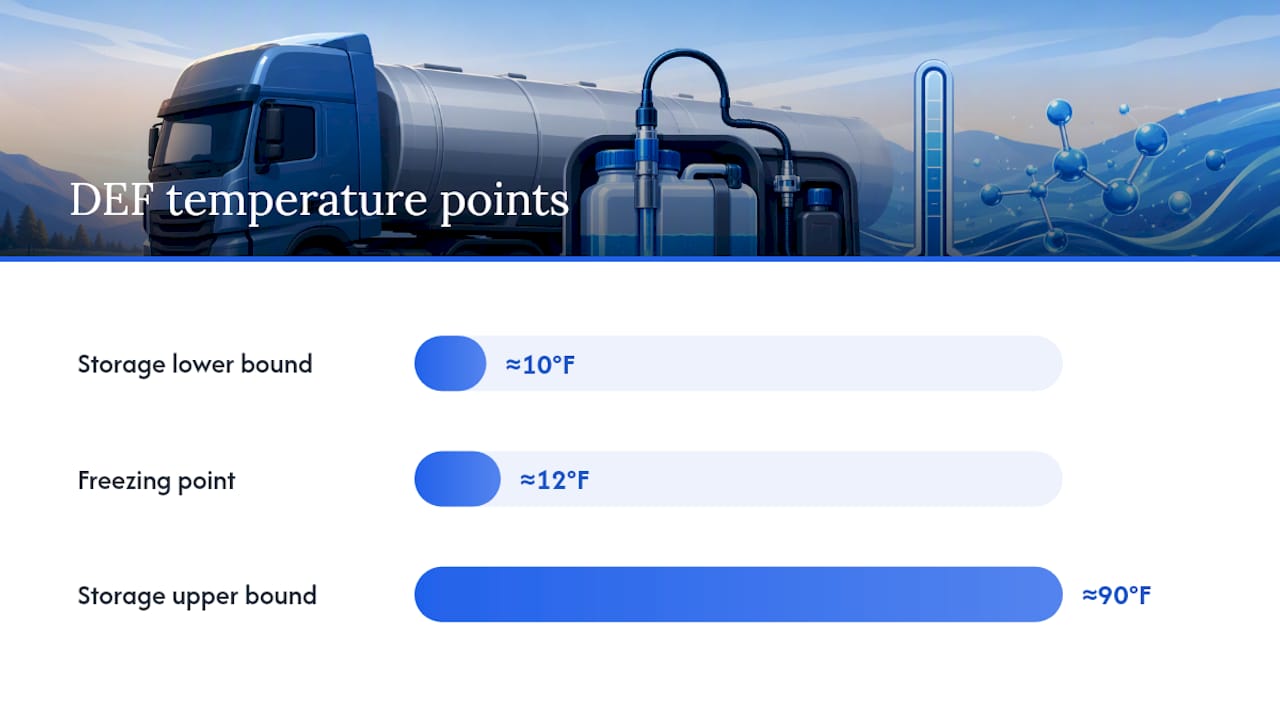
Start with the container itself. Cummins recommends approved storage materials like polyethylene, polypropylene, or stainless steel Grade 316, since DEF reacts poorly with a lot of common metals over time. Store fluid between roughly 10°F and 90°F for stability, and know that DEF’s freezing point sits around 12°F, which matters for anyone storing bulk tanks outdoors through a cold winter. Inspect seals and fittings on a set schedule rather than waiting for a problem to surface.
Statistic Callout: ISO 22241 remains the industry anchor for DEF quality, and fleets that build CoA requirements and sample testing into every delivery protect both their equipment and their warranty position at the same time.
Procurement choices matter just as much as the tank itself. Retail jugs are convenient, but they’re also the weakest link in the chain of custody. Tamper-evident seals are really the only protection packaged DEF has, and once a jug has been opened, there’s no reliable way to verify what’s inside it without testing. That’s the core reason more fleets are shifting toward bulk delivery and on-site wet-hosing, which cuts out the jug entirely and moves fluid straight from a verified supply source into your storage system.
A basic inspection routine catches most problems before they become expensive ones:
- Check filler caps and tank vents weekly for damage or improper sealing
- Inspect transfer nozzles and hoses for cracking, wear, or loose fittings
- Watch for condensation buildup inside partially full bulk tanks, especially after temperature swings
- Confirm every delivery arrives with a matching Certificate of Analysis before it’s accepted into storage
- Train staff on proper transfer protocols so nobody’s improvising with an unfamiliar hose or fitting
The training piece is easy to overlook, but it’s often where contamination actually starts. A new hire who doesn’t know the difference between a DEF nozzle and a diesel nozzle, or who tops off a tank with a jug that’s been sitting open in a truck bed for a week, creates the exact same problem as a cracked seal, just through a different door. Documented sampling procedures and clear purchase controls, buying only from verified suppliers and rejecting any jug that looks tampered with, close that gap for good.
Warranty Risk and When to Call a Professional
Mineral deposits don’t stay small. What starts as a slightly off refractometer reading can, left unaddressed, work its way into a full catalyst or injector replacement, and that’s where the real money is lost.
Most manufacturers are explicit in their service bulletins about DEF quality requirements, and running fluid outside ISO 22241 specifications is generally grounds for a denied warranty claim if it can be traced back to contamination. That’s exactly why documentation matters so much throughout this whole process.
In-house remediation makes sense for straightforward cases: a confirmed water dilution caught early, a tank that flushes clean, a refractometer reading that returns to spec after service. Once you’re dealing with repeat fault codes, visible crystal deposits inside the exhaust system, or a catalyst that isn’t responding the way it should after a clean refill, that’s dealer or professional service territory. Trying to push through it yourself at that point usually just delays a more expensive repair.
If you end up filing a warranty or insurance claim, have this ready:
- The contaminated fluid sample, sealed and labeled with date and lot number
- Any Certificate of Analysis tied to the delivery in question
- Photos of the sampling location and any visible crystal buildup
- Maintenance logs showing refractometer readings and inspection history leading up to the failure
Claims move faster, and get approved more often, when the paper trail is already built before you need it.
Reduce Contamination Risk With Bulk and Wet-Hose Delivery
Every failure point covered here traces back to the same weak link: fluid changing hands too many times before it reaches your tank. A sealed jug that’s already been opened once, a bulk tank refilled from an unverified source, a transfer done with the wrong hose. Bulk delivery and on-site wet-hosing remove most of those handoffs entirely by moving DEF directly from a verified supply source into your storage system, with no retail jug in the chain and no opportunity for someone else to tamper with it before you do.
That’s the model fleets are increasingly encouraged to adopt through verified suppliers: bulk and wet-hose delivery backed by Certificates of Analysis on every load, so you’re not just trusting the fluid, you’re verifying it. If you’re managing multiple vehicles or a busy job site, switching from jugs to scheduled bulk delivery cuts out the exact handling risks covered in this guide, and it typically costs less per gallon at real volume anyway. Check out the fleet DEF delivery guide to see how bulk and wet-hosing options compare for your operation, or use the DEF calculator to figure out how much fluid your fleet actually burns through before your next order. When you’re ready, request a quote and ask for CoA documentation on your next delivery. It’s the single easiest habit that keeps water out of your DEF tank for good.
Sources
- Diesel exhaust fluid contamination: forms, causes and consequences — Rislone
- Water in DEF Tank? Understand the Causes, Effects and Solutions — Unity Fuel Solutions
- Diesel Exhaust Fluid (DEF) | American Petroleum Institute (API)
- DEF transportation, storage, and handling guidance — Cummins technical bulletin