

Selective Catalytic Reduction (SCR) is defined as an emissions control technology that converts nitrogen oxides (NOx) into harmless nitrogen and water vapor using a urea-based fluid injected into the exhaust stream. SCR systems reduce NOx emissions by more than 90%, making them the primary tool for heavy-duty diesel fleets to meet EPA 2010 standards and every major regulation that followed. For fleet managers, the SCR system explained across this guide covers how the technology works, what it costs to run, how to maintain it, and what it means for your compliance posture and fuel budget in 2026.
How does an SCR system work in fleet vehicles?
SCR technology converts toxic exhaust gases through a precise chemical process. Understanding each step helps fleet managers diagnose problems faster and communicate clearly with technicians.
The system relies on five core components working in sequence:
- DEF tank: Stores the urea-water solution (32.5% urea, per ISO 22241) that feeds the dosing system.
- Dosing pump and injector: Meters and sprays DEF into the hot exhaust stream upstream of the catalyst.
- Decomposition tube: Provides the heat and residence time needed to convert DEF into ammonia gas through thermolysis.
- SCR catalyst chamber: The reactor where ammonia meets NOx and the conversion reaction occurs.
- NOx sensors: Positioned before and after the catalyst to monitor conversion efficiency and adjust dosing in real time.
When the engine runs, the dosing pump sprays DEF into exhaust gases at temperatures above 400°F. The fluid decomposes into ammonia, which then reacts with NOx molecules inside the catalyst chamber. The reaction produces nitrogen gas and water vapor, both harmless. The NOx sensors close the feedback loop, telling the engine control module whether to increase or decrease DEF injection to hit the target conversion rate.
Pro Tip: If your NOx sensor downstream of the catalyst reads close to the upstream value, your catalyst is losing efficiency. Do not wait for a fault code. Schedule an inspection immediately.
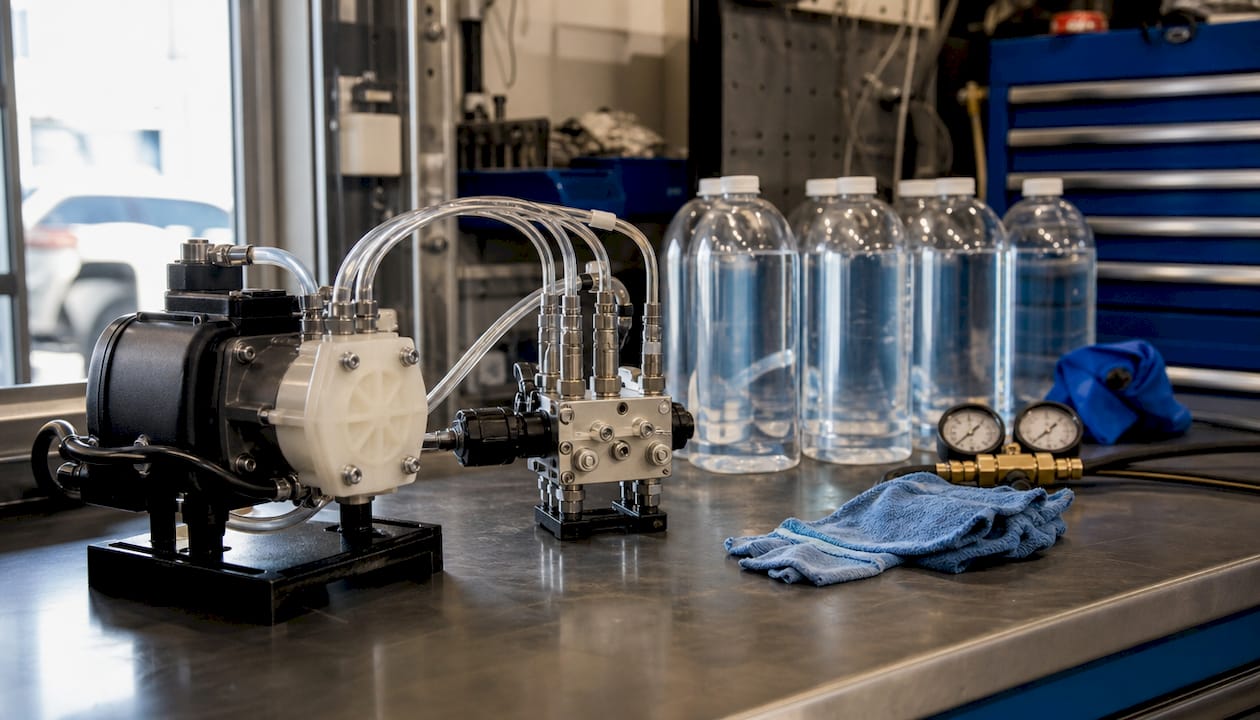
The sensor feedback loop is what separates SCR from older passive systems. It means the system self-corrects for load changes, temperature swings, and DEF concentration variations. For a deeper look at how each component interacts, Defsales covers SCR operation in detail for heavy-duty applications.
What are the operational costs of running SCR in fleets?
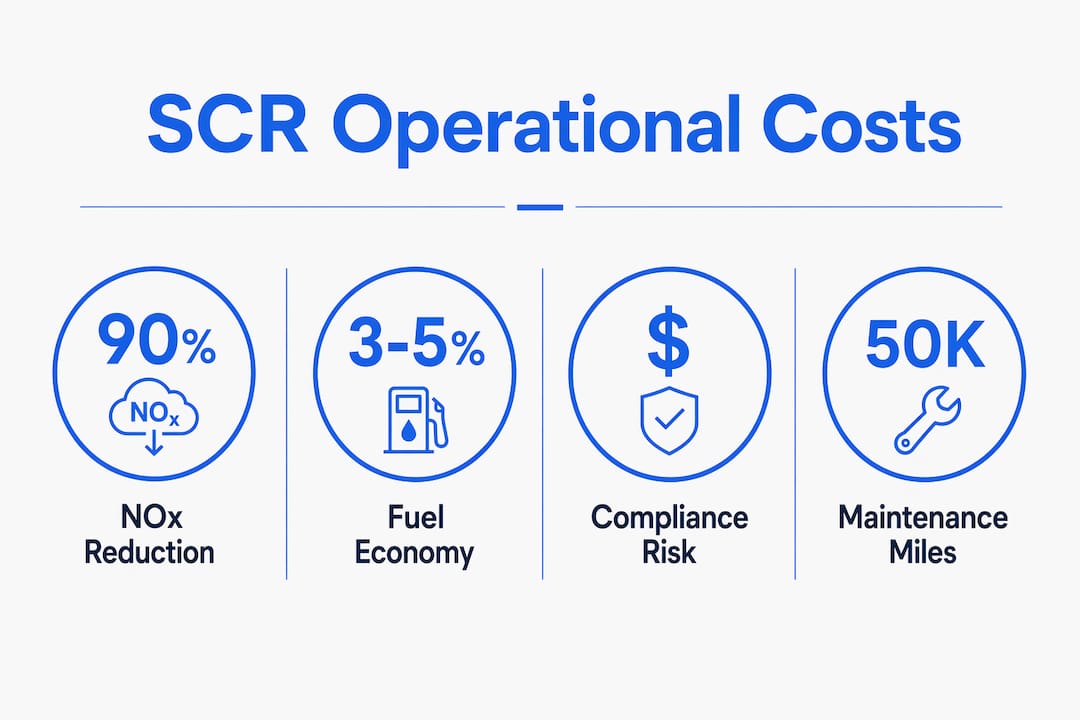
DEF consumption is the most direct operating cost SCR adds to your fleet budget. DEF usage runs 3–5% of diesel fuel volume, which is a predictable and manageable expense when planned correctly.
Here is how to translate that into real numbers for your operation:
- Calculate daily DEF demand. A truck burning 50 gallons of diesel per day consumes roughly 1.5 to 2.5 gallons of DEF. Multiply that across your fleet to size your storage and delivery schedule.
- Budget DEF as a fixed line item. Treat DEF the same way you treat diesel. Fluctuating spot purchases cost more than contracted bulk supply.
- Track DEF cost per mile. This metric lets you compare vehicles, identify outliers with dosing problems, and catch quality issues early.
- Plan for seasonal demand shifts. Cold weather affects DEF viscosity and storage. Factor in heated storage or insulated tanks if your fleet operates in freezing conditions.
- Audit DEF quality at intake. Poor-quality DEF triggers derate modes that restrict engine speed and power. A single contaminated batch can sideline a truck for hours.
The compliance risk is the cost most fleet managers underestimate. Running a DEF tank dry does not just cause an inconvenience. Federal regulations mandate speed and power restrictions on vehicles that exhaust their DEF supply. That means a truck hauling freight can be legally forced to crawl until the tank is refilled. Understanding DEF’s role in your fleet prevents these forced shutdowns from catching you off guard.
DEF quality deserves the same attention as DEF quantity. The ISO 22241 standard specifies a 32.5% urea concentration. Fluid outside that range causes inconsistent dosing, which the NOx sensors detect and respond to by triggering fault codes or derates. Treat DEF as a critical system fluid, not a commodity.
What maintenance practices keep SCR systems efficient?
Proactive SCR maintenance costs a fraction of what reactive repairs demand. The numbers make the case clearly: neglected dosing injectors cause urea crystallization that leads to excess fuel burn averaging $25–$30 per vehicle per day. Across a 50-truck fleet, that is $1,250–$1,500 in daily waste from deferred maintenance.
Cleaning intervals and inspection routines
The dosing injector is the most common SCR failure point. Clean it and the decomposition tube every 50,000 miles. Waiting for a fault code means the crystallization has already progressed far enough to affect dosing accuracy.
Weekly visual inspections catch problems before they escalate. Look for white crystalline deposits around:
- DEF tank caps and filler necks
- DEF line fittings and connections
- The dosing injector tip
- Decomposition tube joints
White crystal buildup signals a slow leak or ammonia slip. Both conditions damage downstream sensors if left uncorrected. A five-minute walk-around catches what a diagnostic scan misses.
Integrating SCR checks into your maintenance program
SCR health checks belong in every scheduled PM interval, not as a separate event. Add NOx sensor output review, DEF quality verification, and injector inspection to your existing 25,000-mile or 50,000-mile service checklist.
Predictive maintenance tools now detect aftertreatment degradation before it triggers a fault code. Telematics platforms that read NOx sensor delta values and DEF dosing rates give fleet managers an early warning system that paper-based PM schedules cannot match. The payoff is fewer roadside breakdowns, lower repair bills, and no compliance surprises.
Pro Tip: Log DEF consumption per vehicle weekly. A sudden increase in DEF use on a specific truck often signals a dosing injector stuck open or a catalyst losing efficiency. Catch it early and the fix is a cleaning. Catch it late and the fix is a replacement.
| Maintenance task | Interval | Risk if skipped |
|---|---|---|
| Dosing injector cleaning | Every 50,000 miles | Urea crystallization, derate |
| Decomposition tube inspection | Every 50,000 miles | Restricted flow, backpressure |
| Visual crystal buildup check | Weekly | Sensor damage, ammonia slip |
| NOx sensor output review | Every PM interval | Missed catalyst degradation |
| DEF quality verification | At every fill | Derate, fault codes |
Routine SCR maintenance programs that combine cleaning, inspections, and predictive diagnostics consistently improve compliance rates and reduce unplanned downtime. The data supports scheduling, not reacting.
How does SCR technology impact fleet performance and compliance?
SCR does more than cut emissions. It changes what engineers can do with engine tuning. Before SCR, manufacturers had to burn fuel cleaner inside the cylinder to meet NOx limits. That approach hurt fuel economy. SCR moves the emissions control outside the engine, which enables tuning for better fuel economy and performance that older standards made impossible.
The fuel economy benefit is real and measurable. Engines equipped with SCR achieve 3–5% better fuel economy compared to pre-SCR models. On a fleet running 100 trucks at 60,000 miles per year each, that gap translates to a significant reduction in total diesel spend annually.
The regulatory impact is equally significant. U.S. NOx emissions dropped 79% since 2010, with SCR adoption as the primary driver. That reduction reflects how completely the technology reshaped heavy-duty diesel emissions control across the country.
For fleet managers, the compliance picture breaks down into four practical areas:
- EPA standards: SCR is the accepted technology path for meeting EPA 2010 heavy-duty NOx limits and subsequent tightening rules. A functioning SCR system keeps your trucks legal.
- State regulations: California Air Resources Board (CARB) rules and similar state-level programs often exceed federal minimums. SCR health directly affects your ability to operate in regulated markets.
- Roadside inspections: Federal and state inspectors check SCR system fault codes during commercial vehicle inspections. Active derates or fault codes can result in out-of-service orders.
- Fleet telematics integration: Modern telematics platforms pull SCR-related fault codes, NOx sensor readings, and DEF levels in real time. Fleet managers who use this data proactively avoid the compliance failures that reactive shops experience.
A degraded SCR system wastes fuel through increased backpressure and forces inefficient regeneration cycles. The average excess fuel burn from failing aftertreatment runs $27 per vehicle per day. That cost is invisible until you measure it, which is exactly why telematics-driven SCR monitoring pays for itself quickly.
Defsales covers emissions compliance basics for fleet managers who need a clear picture of what regulations apply to their specific operation.
Defsales resources for fleet DEF management
Fleet managers who treat DEF supply as an afterthought pay for it in derates, downtime, and compliance failures. Defsales provides the tools and information to manage DEF correctly from the start.
The DEF calculator at Defsales lets you input your fleet size and average diesel consumption to get an accurate DEF volume estimate for budgeting and storage planning. For fleets evaluating on-site storage, the bulk DEF tank guide covers tank sizing, placement, and quality control procedures. When you are ready to schedule delivery, Anytime Fuel Pros handles bulk DEF delivery to fleet sites in San Antonio, Austin, Dallas, and Salt Lake City, with nationwide coverage through their partner network. Contact Anytime Fuel Pros to set up a reliable DEF supply schedule that keeps your SCR systems running clean.
FAQ
What is an SCR system in a diesel truck?
An SCR (Selective Catalytic Reduction) system reduces NOx emissions by injecting diesel exhaust fluid into the exhaust stream, where it converts to ammonia and reacts with NOx in a catalyst to produce nitrogen and water vapor.
How much DEF does a fleet truck use?
DEF consumption runs 3–5% of diesel fuel volume. A truck burning 50 gallons of diesel per day uses approximately 1.5 to 2.5 gallons of DEF.
What happens if a truck runs out of DEF?
Federal regulations mandate engine speed and power restrictions when DEF runs out. The truck will not shut down immediately, but it will be forced into a derate mode that limits performance until the tank is refilled.
How often should SCR systems be serviced?
Clean the dosing injector and decomposition tube every 50,000 miles. Perform visual inspections for urea crystal buildup weekly, and review NOx sensor output at every scheduled PM interval.
Does SCR improve fuel economy?
Yes. SCR-equipped engines achieve 3–5% better fuel economy than pre-SCR models because the technology allows engineers to tune the engine for efficiency rather than in-cylinder emissions control.
Key Takeaways
SCR systems reduce NOx emissions by more than 90% and improve fuel economy by 3–5%, making them the most effective emissions control technology available for heavy-duty diesel fleets.
| Point | Details |
|---|---|
| NOx reduction rate | SCR cuts NOx by more than 90%, meeting EPA 2010 and later heavy-duty standards. |
| DEF consumption rate | Expect 3–5% of diesel volume in DEF use; budget and store accordingly to avoid derates. |
| Maintenance interval | Clean the dosing injector and decomposition tube every 50,000 miles to prevent costly crystallization. |
| Fuel economy gain | SCR-equipped engines use 3–5% less fuel than pre-SCR models due to optimized engine tuning. |
| Compliance risk | Active SCR fault codes or derates can trigger out-of-service orders during roadside inspections. |