

EPA emissions regulations for trucks enforce strict nitrogen oxide (NOx) tailpipe limits while federal greenhouse gas (GHG) emission rules have been repealed, fundamentally redefining compliance for heavy-duty trucking fleets. The 2027 NOx standard remains fully intact and non-negotiable. Fleet operators and logistics managers face a split regulatory reality: GHG obligations are gone at the federal level, but NOx criteria pollutant rules are tightening. Understanding which rules still apply, and which have been removed, is the foundation of every smart procurement and compliance decision you make this year.
What are the current EPA emissions standards for heavy-duty trucks?
The 2027 NOx standard is the most consequential trucking emissions rule in force today. EPA mandates a 35 mg/hp-hr NOx limit effective january 1, 2027, down from the current 200 mg/hp-hr threshold. That is an 82.5% reduction in allowable NOx output. Every Class 7 and Class 8 truck sold after that date must meet this limit at the tailpipe.
This standard is a criteria pollutant rule, not a GHG rule. That distinction matters because the GHG repeal does not touch it. The NOx standard falls under traditional Clean Air Act authority, which remains legally intact regardless of the 2026 deregulatory actions on greenhouse gases.
Meeting the 35 mg/hp-hr threshold requires significant engine technology upgrades. Manufacturers must redesign combustion systems, improve aftertreatment hardware, and validate new calibration strategies. For fleet operators, that means the trucks you buy after january 1, 2027 will carry different engine architecture than what you run today.
How SCR systems and DEF fit into NOx compliance
Selective Catalytic Reduction (SCR) is the primary technology that makes NOx compliance possible. SCR systems inject Diesel Exhaust Fluid into the exhaust stream, triggering a chemical reaction that converts NOx into harmless nitrogen and water. Without DEF, the SCR system cannot function, and the truck cannot meet emissions limits.
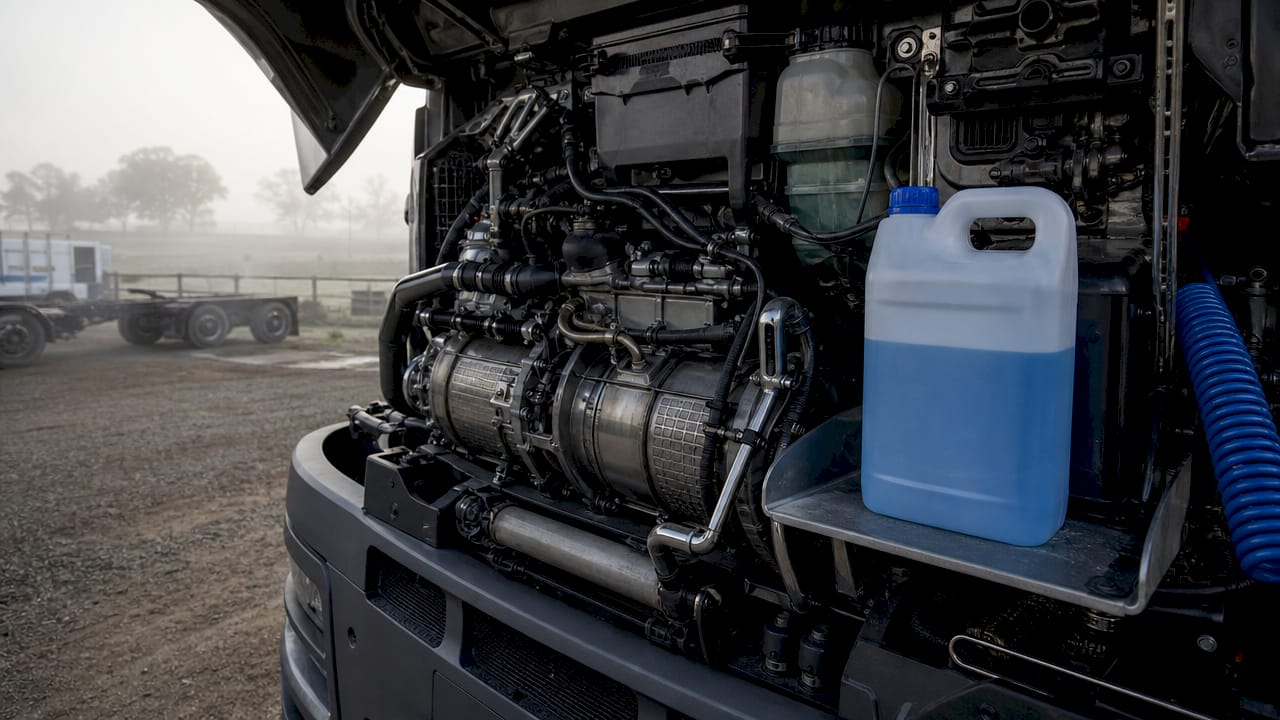
DEF sensors remain the most reliable NOx detection technology for 2027 compliance until alternative systems are validated. That means DEF quality and handling are not just operational preferences. They are compliance requirements. Contaminated or degraded DEF causes SCR failure, which triggers engine derates and potential regulatory violations. You can learn more about how these systems work in this SCR system overview from Defsales.
Key operational demands the 2027 NOx standard places on fleets:
- Engine maintenance intervals will tighten as aftertreatment systems become more sensitive to contamination and wear.
- DEF consumption monitoring becomes a daily compliance activity, not just a refueling task.
- DEF quality control under ISO 22241 is non-negotiable. Off-spec DEF degrades SCR catalyst performance and risks engine damage.
- Driver training on DEF warning lights and derate protocols reduces roadside compliance failures.
- Maintenance records for SCR systems will be scrutinized during audits and warranty claims.
Pro Tip: Source DEF that meets ISO 22241 specifications and verify quality at delivery. A single batch of contaminated DEF can damage an SCR catalyst that costs thousands of dollars to replace.
How has the EPA’s repeal of GHG rules changed fleet responsibilities?
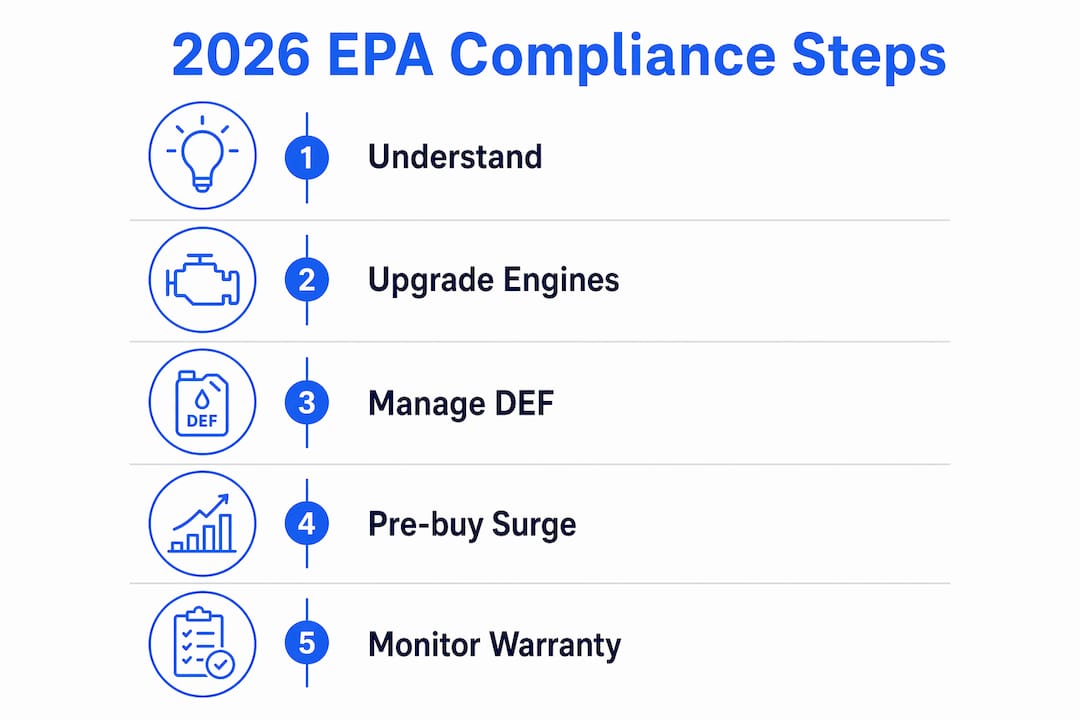
The EPA rescinded the 2009 GHG Endangerment Finding and repealed all federal GHG emission standards for vehicles as of february 2026. This action eliminated the federal legal basis for regulating carbon dioxide and other greenhouse gases from motor vehicles under the Clean Air Act. For truck manufacturers, it removed the obligation to meet federal CO2 fleet average targets.
The legal foundation for this repeal rests on recent Supreme Court rulings that limit federal agencies from imposing economically significant regulations without explicit congressional authorization. EPA applied that doctrine to argue its 2009 Endangerment Finding exceeded its statutory authority. The result is the largest deregulatory action in EPA history.
“The GHG rule repeal realigns EPA’s authority judicially without rolling back criteria pollutant rules.” The NOx standard, particulate matter limits, and other traditional air quality rules remain fully enforced.
The projected economic impact is substantial. This deregulatory action is projected to save Americans over $1.3 trillion across the economy. For truck manufacturers, the removal of CO2 fleet average compliance costs reduces the pressure to accelerate electric vehicle adoption on a federally mandated timeline.
For fleet operators, the practical effect is straightforward. You no longer face federal GHG compliance obligations tied to your truck purchases. Fuel economy decisions revert to pure economics rather than regulatory mandates. However, state-level GHG programs may still apply depending on where you operate. California’s Advanced Clean Trucks rule, for example, operates under separate state authority and is not automatically nullified by the federal repeal. Fleets operating in California or states that have adopted California’s standards should verify their state-specific obligations independently.
The critical takeaway: the GHG repeal simplifies one layer of federal compliance, but it does not reduce the urgency of NOx preparation. Those are two separate regulatory tracks.
What are the key uncertainties in warranty and regulatory details for 2027?
The 2027 NOx standard is confirmed, but several implementation details remain unresolved. An EPA Notice of Proposed Rulemaking (NPRM) expected in june 2026 will clarify warranty and useful life requirements. Until that NPRM is finalized, fleet managers face real uncertainty in purchase planning and total cost of ownership calculations.
The warranty and durability provisions are where the cost stakes are highest. Extended warranty mileage and durability requirements significantly increase truck prices. If EPA scales back those requirements in the june NPRM, the price premium for 2027-compliant trucks could be cut roughly in half. That is a material difference for a fleet buying dozens or hundreds of units.
Here is what fleet managers need to track as the NPRM process unfolds:
- Warranty duration and mileage thresholds. Current proposals include extended coverage periods for emissions-related components. Any reduction in required warranty length directly lowers manufacturer costs and, in turn, truck prices.
- Useful life definitions. EPA sets the mileage and hour thresholds over which a truck must remain compliant. Shorter useful life requirements reduce the durability burden on engine manufacturers.
- Compliance flexibility provisions. The NPRM may include phase-in percentages or averaging, banking, and trading provisions that give fleets and manufacturers more room to manage the transition.
- Medium-duty vehicle timelines. EPA has proposed delaying Tier 4 criteria pollutant standards for light- and medium-duty vehicles, extending Tier 3 standards through 2027–2028 with Tier 4 delayed until model year 2029. This directly affects medium-duty truck procurement planning.
- DEF system certification requirements. The NPRM will likely address how DEF sensor systems must be validated and certified for 2027 compliance, affecting aftertreatment supplier decisions.
Pro Tip: Do not finalize your 2027 truck procurement budget until the june NPRM is published. The warranty provisions alone could shift per-unit costs enough to change your financing strategy. Review the Tier 4 compliance checklist from Defsales to stay ahead of the requirements.
The cost of compliance with the 2027 NOx standard is split nearly equally between new engine design and material upgrades on one side, and warranty and durability obligations on the other. That means the NPRM outcome affects roughly half of the total price increase for compliant trucks. Fleets that wait for NPRM clarity before locking in orders will be better positioned to negotiate pricing.
How should fleet operators prepare for 2027 EPA compliance?
Preparation for the 2027 NOx standard starts now, not in late 2026. Fleet managers anticipate a pre-buy surge late in 2026 as carriers rush to purchase 2026 model trucks ahead of the compliance deadline. That surge will strain supply chains, extend lead times, and push prices up on pre-compliant inventory.
The pre-buy dynamic creates a genuine strategic decision. Buying 2026 models before the standard takes effect locks in lower per-unit costs but means your fleet will eventually need to transition to 2027-compliant engines. Buying 2027-compliant trucks at launch means paying a premium but starting with the new standard already met.
Operational preparation priorities for fleet managers:
- Audit your current DEF supply chain. Confirm your supplier meets ISO 22241 quality standards. Substandard DEF is the fastest path to SCR failure and compliance risk. Defsales provides detailed guidance on DEF quality standards for fleet professionals.
- Establish bulk DEF storage capacity. A pre-buy surge in trucks means higher DEF consumption across your fleet. Bulk storage reduces per-unit DEF cost and protects against supply disruptions.
- Train maintenance staff on 2027 engine systems. New aftertreatment architectures require updated diagnostic skills. Schedule training before trucks arrive, not after.
- Monitor the june NPRM closely. Warranty terms will directly affect your total cost of ownership calculations for 2027 purchases.
- Review state-level GHG obligations. If you operate in California or an adopting state, federal GHG repeal does not eliminate your state compliance requirements.
The financial planning dimension is equally important. Compliance costs for 2027-standard trucks will be higher than current models, with the exact premium depending on the NPRM outcome. Build a range into your capital expenditure forecast. A conservative estimate assumes full extended warranty requirements remain in place. An optimistic estimate assumes EPA scales them back significantly.
DEF management becomes a more critical operational function as your fleet transitions to 2027-compliant engines. Proper DEF storage temperature management preserves fluid quality and protects SCR systems. DEF degrades above 86°F and freezes at approximately 12°F. Both extremes compromise the 32.5% urea concentration that SCR systems require to function correctly.
Defsales resources for DEF compliance and fleet management
Fleet operators navigating the 2027 NOx transition need reliable DEF supply and quality management as a foundation for compliance. Defsales covers every aspect of DEF operations that affects your regulatory standing.
Defsales provides in-depth guides on DEF storage temperature requirements, shelf life management, and ISO 22241 quality standards. These resources are built specifically for fleet managers who need accurate, practical information, not generic product descriptions. For fleets evaluating bulk DEF options, the bulk DEF tank guide covers installation, capacity planning, and operational setup. When you are ready to schedule delivery, Anytime Fuel Pros handles bulk DEF supply and on-site delivery for fleets in San Antonio, Austin, Dallas, and Salt Lake City, with nationwide reach through a partner network.
FAQ
What is the 2027 EPA NOx standard for heavy-duty trucks?
The EPA’s 2027 standard requires heavy-duty trucks to emit no more than 35 mg/hp-hr of NOx, down from the current 200 mg/hp-hr limit. This standard takes effect january 1, 2027 and applies to all new Class 7 and Class 8 vehicles.
Did the EPA repeal all truck emissions regulations in 2026?
No. The EPA repealed federal GHG emission standards and rescinded the 2009 Endangerment Finding in february 2026, but NOx and other criteria pollutant standards remain fully in force. The GHG repeal does not affect NOx rules, which are governed by separate Clean Air Act authority.
Why does DEF quality matter for EPA compliance?
DEF quality directly determines SCR system performance. Off-spec DEF causes catalyst degradation, engine derates, and potential NOx emissions violations. The ISO 22241 standard defines the 32.5% urea concentration and purity requirements that DEF must meet to function correctly in compliant engines.
What is the pre-buy surge and how does it affect fleet purchasing?
The pre-buy surge refers to the anticipated rush by carriers to purchase 2026 model trucks before the 2027 NOx standard takes effect. This surge strains supply chains and increases lead times, meaning fleets that delay procurement decisions risk paying higher prices or facing inventory shortages.
When will EPA clarify warranty requirements for 2027-compliant trucks?
An EPA NPRM expected in june 2026 will address warranty duration, useful life definitions, and durability requirements for 2027-standard engines. The outcome of that rulemaking will significantly affect the price premium for compliant trucks and fleet total cost of ownership.
Key takeaways
EPA emissions regulations for trucks now operate on two separate tracks: federal GHG rules have been repealed, while the 2027 NOx standard at 35 mg/hp-hr remains fully in force and requires immediate fleet preparation.
| Point | Details |
|---|---|
| 2027 NOx standard is confirmed | Heavy-duty trucks must meet 35 mg/hp-hr NOx by january 1, 2027, regardless of GHG repeal. |
| GHG rules are repealed federally | The 2026 repeal eliminates federal CO2 obligations but does not affect state-level GHG programs. |
| DEF quality is a compliance requirement | ISO 22241-compliant DEF is mandatory for SCR systems to meet the 2027 NOx threshold. |
| Warranty details remain unresolved | The june 2026 NPRM will set warranty and useful life terms that directly affect truck pricing. |
| Pre-buy surge demands early action | Fleets that delay 2026 procurement risk supply shortages and higher prices as the deadline approaches. |