

A DEF storage compliance checklist is defined as a structured set of inspection, testing, and documentation steps that keep Diesel Exhaust Fluid pure, regulatory-compliant, and safe for Selective Catalytic Reduction (SCR) systems. DEF is a precise 32.5% urea solution governed by ISO 22241, and any deviation in storage conditions degrades that chemistry fast. Fleet managers and compliance officers operating under DOT, FMCSA, and EPA oversight need more than good intentions. They need a repeatable process that catches problems before a contaminated tank triggers a multi-thousand-dollar SCR failure or an environmental fine.
What are the essential DEF storage requirements every fleet manager must follow?
DEF storage requirements are not suggestions. They are defined by ISO 22241 and enforced through regulatory audits, and getting them wrong costs far more than getting them right.
Temperature control
DEF must be stored between 12°F and 86°F to maintain chemical purity. Shelf life runs approximately 12 months at or below 77°F. Push storage above 86°F and that window drops to roughly 6 months or less. That is not a minor inconvenience. It means you are rotating stock twice as fast and increasing your exposure to expired fluid reaching a vehicle tank.
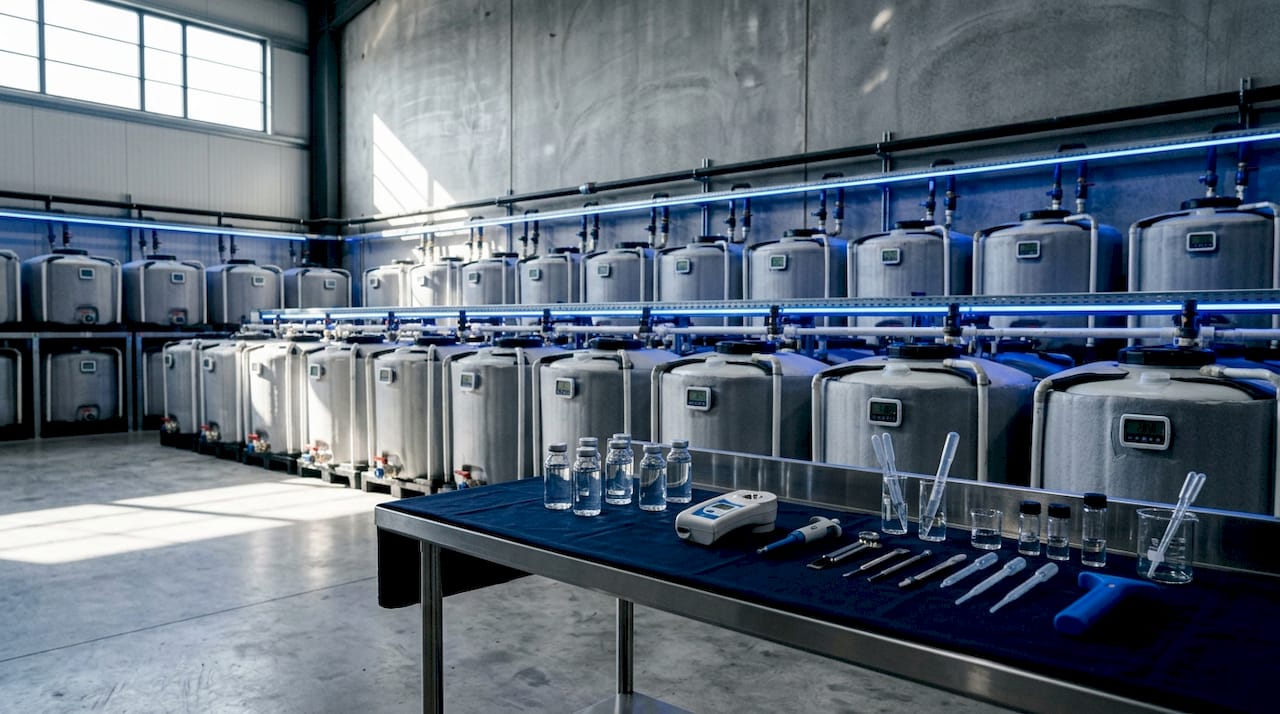
DEF freezes at approximately 12°F. Freezing does not permanently ruin DEF, but repeated freeze-thaw cycles stress containers and can introduce particulates. Store bulk tanks in shaded, ventilated enclosures to buffer against both heat and cold extremes.
Approved container materials
Material compatibility is one of the most misunderstood areas of DEF storage regulations. Only HDPE, XLPE, or 316 stainless steel are compliant for DEF contact surfaces. Carbon steel, copper, brass, aluminum, and galvanized metals are strictly prohibited. Those metals dissolve into DEF at trace levels, and even small concentrations of copper or zinc ions poison SCR catalysts irreversibly.
The practical implication: never repurpose a tank that previously held another fluid unless it is brand new and certified DEF-compatible. Fittings, valves, and pump components must all meet the same material standard. A single brass fitting in a bulk system can contaminate an entire tank.
Pro Tip: Audit every wetted component in your bulk storage system, not just the tank itself. Fittings, hoses, and pump heads are common sources of noncompliant metals that go unnoticed until SCR damage appears.
Key storage requirements at a glance:
- Store DEF between 12°F and 86°F; shade and ventilate all bulk tanks
- Use only HDPE, XLPE, or 316 stainless steel for all contact surfaces
- Prohibit carbon steel, copper, brass, aluminum, and galvanized metals
- Keep bulk tanks away from direct sunlight to slow urea degradation
- Inspect container integrity monthly for cracks, discoloration, or seal failure
How do you build an effective DEF inspection and testing routine?
A recurring inspection routine is the operational core of any compliance checklist for DEF. Testing confirms what visual checks cannot: that the fluid inside the tank still meets ISO 22241 specification.
Urea concentration testing
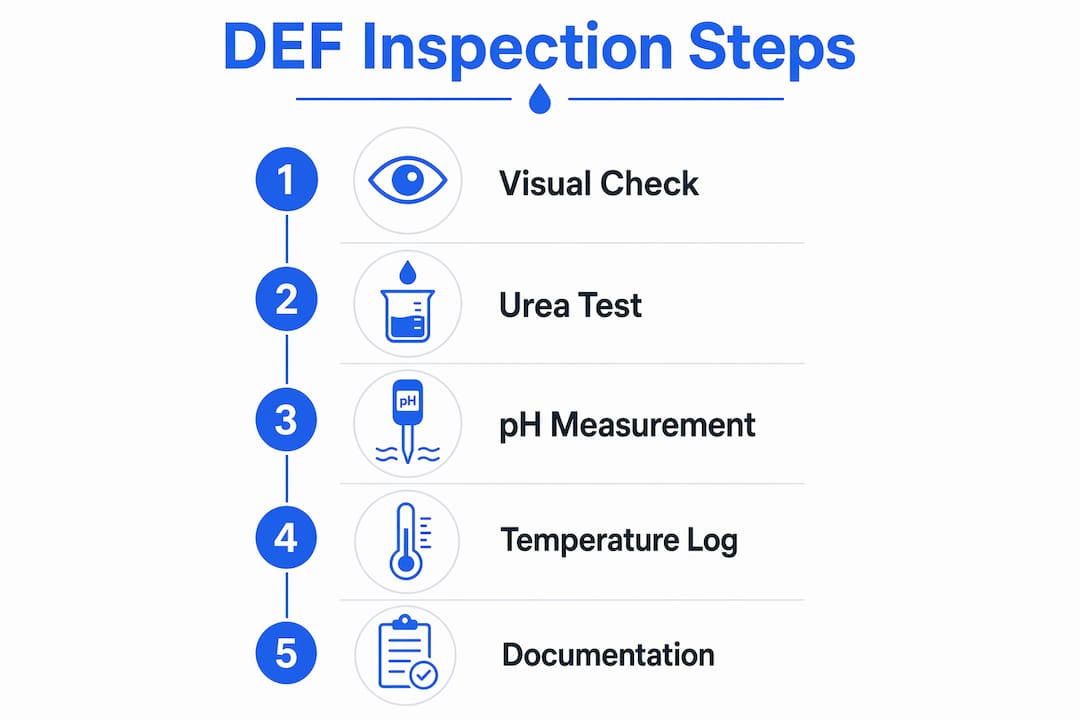
The target urea concentration is 32.5%, with ISO 22241 permitting a narrow tolerance band. A digital refractometer is the standard field tool for this test. It takes less than two minutes and gives you a direct reading. Fleet managers must perform refractometer tests on bulk storage regularly, not just at delivery. Concentration drifts over time, especially in tanks exposed to temperature swings.
Visual and chemical inspection steps
- Check fluid clarity. DEF should be colorless and clear. Cloudiness, floating particles, or discoloration indicate contamination or degradation.
- Verify pH level. Compliant DEF falls within a pH range of 8.0–10.0. A simple pH strip or meter confirms this in the field.
- Inspect API certification labels on all incoming deliveries. Confirm manufacture dates and calculate remaining shelf life before accepting stock.
- Check dispenser calibration. An out-of-calibration dispenser can underdose or overdose vehicles, affecting SCR performance and emissions compliance.
- Inspect outlet filters. Clogged or bypassed filters allow particulates to reach vehicle tanks directly.
- Log all results. Record the date, tester name, concentration reading, pH result, and any corrective actions taken.
The table below shows a practical inspection frequency framework:
| Inspection task | Recommended frequency |
|---|---|
| Urea concentration test | Weekly for bulk tanks; at every delivery |
| Visual clarity check | Weekly |
| pH verification | Monthly |
| Dispenser calibration check | Monthly |
| Temperature log review | Weekly |
| API certification and date check | At every delivery |
Pro Tip: Keep a printed inspection log inside the storage enclosure, not just in a digital system. Auditors from DOT or FMCSA often request on-site records during unannounced inspections.
Documentation is not optional. Temperature logs, test results, and delivery records form the audit trail that protects your operation during regulatory reviews. A DEF shelf life guide can help you correlate storage temperature data with expected fluid viability across your inventory.
What are best practices to prevent DEF contamination and cross-contamination?
Contamination is the leading cause of SCR system failure, not chemical corrosion from normal use. Dedicated equipment prevents contamination more effectively than any other single measure. The moment a DEF nozzle touches a diesel fill point, or a shared hose carries residual fuel into a DEF tank, the fluid is compromised.
Dedicated equipment and color coding
Blue color coding of DEF caps, nozzles, and hoses is the industry-recognized standard for preventing mix-ups in busy fleet yards. Blue is not just a convention. It is a fail-safe that works even when workers are rushed or fatigued. Every DEF contact point in your yard should be blue: fill caps, hose ends, pump handles, and storage tank labels.
Never share DEF dispensing equipment with diesel or any other fluid. Even “clean” recycled tanks can harbor metallic contaminants from prior use. Trace metals like copper or zinc cause irreversible SCR catalyst damage, with repair costs exceeding $3,000 per vehicle. That figure makes dedicated equipment an obvious investment.
“Contamination prevention through dedicated equipment and clean handling is more impactful on SCR performance than material corrosion concerns. A single cross-contamination event in a shared dispensing system can affect every vehicle that draws from that tank before the problem is detected.”
Spill control and secondary containment
Secondary containment is recommended for bulk DEF storage above 200 liters. Bunded tanks are the most reliable method. They contain spills within the storage footprint and prevent runoff from reaching surface water drains.
Key contamination prevention steps:
- Use dedicated DEF equipment only. Never share nozzles, hoses, or pumps with diesel
- Color-code all DEF contact points blue throughout the storage and dispensing area
- Clean DEF equipment only with deionized water. Tap water introduces minerals that degrade urea concentration
- Install secondary containment for all bulk storage above 200 liters
- Isolate the DEF dispensing zone from surface water drains to meet environmental compliance requirements
Nearly all states require separation of DEF dispensing areas from surface water drains. Environmental enforcement actions follow spill runoff events, and local regulators often impose stricter containment rules than federal guidelines. Design your dispensing zone with zero-spill intent from the start.
How do you manage and document DEF inventory for compliance?
DEF inventory management is where operational efficiency and regulatory compliance overlap. Poor inventory practices produce two problems: expired fluid reaching vehicles, and gaps in the audit trail that expose your operation to regulatory risk.
First-in, first-out and batch tracking
- Assign batch numbers to every DEF delivery. Record the supplier, API certification number, manufacture date, and volume received.
- Apply first-in, first-out (FIFO) rotation strictly. Place new stock behind existing inventory so older fluid dispenses first.
- Calculate expiration windows based on storage temperature. Fluid stored above 86°F expires in approximately 6 months. Fluid stored at or below 77°F lasts up to 12 months.
- Flag stock approaching expiration 30 days in advance. This gives you time to accelerate usage or arrange a certified disposal before the fluid becomes noncompliant.
- Document every dispensing event. Record the date, vehicle ID, volume dispensed, and the batch number used.
Audit-ready documentation
The table below shows the core records every fleet operation should maintain for a DEF compliance audit:
| Document type | Retention purpose |
|---|---|
| Delivery receipts with API certification | Proves fluid quality at point of receipt |
| Temperature logs | Demonstrates storage conditions over time |
| Inspection and test records | Shows ongoing quality monitoring |
| Batch tracking and FIFO logs | Confirms no expired stock reached vehicles |
| Corrective action records | Documents response to any compliance failures |
Digital checklist tools make audit preparation faster, but the underlying data must be accurate and complete. A DEF calculator helps fleet managers project consumption rates against current inventory, reducing the risk of running low on certified stock between deliveries. Coordinating delivery schedules with a certified supplier keeps your supply chain aligned with your compliance documentation. Anytime Fuel Pros provides bulk DEF delivery to fleets in San Antonio, Austin, Dallas, and Salt Lake City, with certified product that supports your API documentation requirements.
Defsales resources for DEF storage compliance
Defsales publishes detailed, operator-focused guidance on every aspect of DEF storage and fleet compliance. Fleet managers working through their first compliance audit, or those tightening an existing program, will find practical depth across the Defsales resource library.
The DEF Calculator gives you a fast consumption estimate based on your fleet size and diesel usage, so you can right-size inventory and avoid both shortfalls and excess aging stock. For bulk supply and on-site delivery, Anytime Fuel Pros handles certified DEF delivery directly to your site, with documentation that supports your compliance records. Visit Defsales to access fleet guides, storage temperature references, and ISO 22241 breakdowns built for compliance officers who need answers fast.
Key takeaways
A complete DEF storage compliance checklist requires temperature control, approved materials, dedicated equipment, recurring inspections, and documented inventory management to protect SCR systems and satisfy regulatory audits.
| Point | Details |
|---|---|
| Temperature control | Store DEF between 12°F and 86°F; shelf life drops to 6 months above 86°F. |
| Approved materials only | Use HDPE, XLPE, or 316 stainless steel; prohibited metals destroy SCR catalysts. |
| Dedicated and color-coded equipment | Blue-coded, DEF-only equipment prevents cross-contamination in fleet yards. |
| Recurring inspection and testing | Test urea concentration weekly with a digital refractometer; log all results for audits. |
| FIFO inventory documentation | Track batch numbers, manufacture dates, and dispensing events to prevent expired fluid from reaching vehicles. |
FAQ
What temperature should DEF be stored at?
DEF must be stored between 12°F and 86°F. Shelf life is approximately 12 months at or below 77°F and drops to about 6 months when temperatures exceed 86°F.
What materials are safe for DEF storage containers?
HDPE, XLPE, and 316 stainless steel are the only approved materials for DEF contact surfaces. Carbon steel, copper, brass, aluminum, and galvanized metals are prohibited because they contaminate DEF and damage SCR catalysts.
How often should fleet managers test DEF quality?
Test urea concentration with a digital refractometer at every delivery and weekly for bulk tanks. Verify pH monthly and document all results for regulatory audits.
Why is blue color coding required for DEF equipment?
Blue color coding is the industry standard under ISO 22241 best practices to prevent mix-ups between DEF and diesel in fleet yards. Cross-contamination from shared equipment is the primary cause of SCR system failures.
What records are required for a DEF compliance audit?
Auditors typically require delivery receipts with API certification, temperature logs, inspection and test records, batch tracking logs, and any corrective action documentation. Maintaining these records continuously is far easier than reconstructing them before an audit.