

Diesel Exhaust Fluid (DEF) consumption is defined as 2% to 5% of total diesel fuel burned, meaning every 100 gallons of diesel produces a DEF demand of 2 to 5 gallons. That ratio is not fixed. Engine platform, load, terrain, and duty cycle all shift it. Fleet managers who treat DEF as a flat-rate expense routinely underbudget and face unexpected downtime. The def per gallon diesel examples below give you real numbers by vehicle class, operating condition, and purchase method so you can plan accurately.
1. What are typical DEF consumption rates by vehicle type?
DEF consumption varies by vehicle class and engine platform, not just mileage. A Class 8 semi-truck burning 150 gallons of diesel per day consumes roughly 6 to 9 gallons of DEF daily. That is the most important benchmark in heavy trucking, and it means a five-day work week requires 30 to 45 gallons of DEF on hand per truck.
Medium-duty trucks running regional routes burn less diesel per day but still follow the 2%–5% rule. A truck burning 60 gallons daily needs 1.2 to 3 gallons of DEF. Construction equipment like excavators and wheel loaders often run at high load continuously, pushing consumption toward the top of that range.
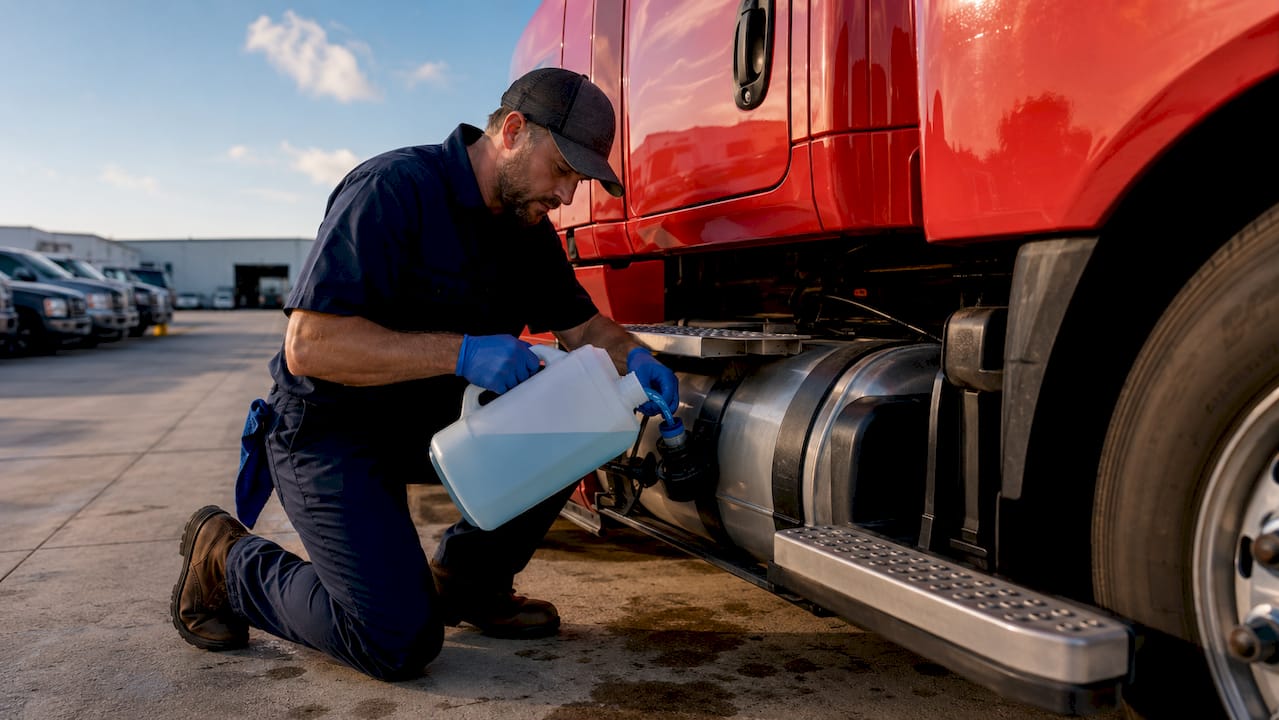
Engine platform matters as much as vehicle class. Cummins X15 engines use 3% to 5% of total diesel consumption in DEF, while Detroit DD15 engines use 3% to 6%. Newer engines calibrated to tighter EPA Tier 4 emissions standards often dose DEF at higher rates than older platforms.
| Vehicle Type | Daily Diesel Use | DEF Rate | Daily DEF Need |
|---|---|---|---|
| Class 8 semi-truck | 150 gallons | 4%–6% | 6–9 gallons |
| Medium-duty truck | 60 gallons | 2%–4% | 1.2–2.4 gallons |
| Construction excavator | 40 gallons | 3%–5% | 1.2–2 gallons |
| Agricultural tractor | 25 gallons | 2%–4% | 0.5–1 gallon |
| Diesel generator | 20 gallons | 2%–3% | 0.4–0.6 gallons |
These figures are planning benchmarks, not guarantees. Actual usage shifts with every route and job site.
2. How driving style and operating conditions affect DEF usage
DEF consumption is dynamic, tied to NOx production and engine heat rather than a fixed mileage interval. When an engine works harder, it produces more NOx, and the SCR system injects more DEF to neutralize it. A truck cruising a flat interstate at 65 mph burns DEF at the low end of its range. The same truck climbing mountain grades with a full load burns DEF at the high end or beyond.
Heavy hauling and mountain terrain can elevate DEF consumption 15% to 25% above highway averages. For a fleet running 50 trucks, that variance adds up to thousands of gallons per month in unplanned DEF demand. Idling is another hidden driver. Extended idling keeps the engine warm and the SCR system active, consuming DEF without covering any miles.
Most trucks cover 300 to 500 miles per gallon of DEF under normal conditions. A truck averaging 400 miles per DEF gallon on a 2,000-mile weekly route needs 5 gallons of DEF per week. Shift that truck to a mountain corridor and the same route may require 7 or 8 gallons.
Key operating factors that raise DEF consumption above baseline:
- Extended grades and mountain routes with loaded trailers
- Stop-and-go urban delivery cycles with frequent acceleration
- High-idle operations at job sites or loading docks
- Towing at or near maximum gross vehicle weight
- Cold weather starts that extend warm-up cycles
Pro Tip: Track DEF fill amounts by trip type for 30 days. Separate highway runs from urban delivery and job-site work. You will likely find one duty cycle consuming 30% to 40% more DEF than the others, which tells you exactly where to focus your inventory planning.
3. What are current DEF pricing ranges per gallon?
Retail DEF at truck stops costs $3 to $8 per gallon. That range reflects regional supply chains, brand markup, and convenience premiums. Paying $6 per gallon for a 2.5-gallon jug at a highway truck stop is a budget problem at scale. A 50-truck fleet filling DEF at retail prices can spend dramatically more than necessary.
Bulk delivery to fleet yards costs $0.80 to $1.80 per gallon. IBC totes run $1.50 to $2.50 per gallon. The gap between retail and bulk is not marginal. A 50-truck fleet switching to bulk DEF purchasing can save over $80,000 annually. That figure alone justifies the cost of a bulk storage tank and a delivery contract.
| Purchase Method | Price per Gallon | Best For |
|---|---|---|
| Retail jug (truck stop) | $3–$8 | Emergency or one-off use |
| IBC tote (275–330 gal) | $1.50–$2.50 | Small fleets, job sites |
| Bulk delivery (fleet yard) | $0.80–$1.80 | Fleets of 10+ trucks |
To see how these numbers apply to your specific fleet size, the DEF cost calculator at Defsales runs the math against your diesel consumption and vehicle count. For a deeper look at the real cost difference between formats, the bulk vs. jugs comparison breaks down total cost of ownership including storage and handling.
Pro Tip: Always buy DEF that meets ISO 22241 certification. Off-brand or uncertified DEF may cost less upfront but can contaminate your SCR system. A single SCR catalyst replacement costs up to $15,000, which erases years of savings from cheap fluid.
4. What are the risks of running out of DEF or using bad DEF?
DEF is an exhaust aftertreatment agent, not a fuel additive. The financial risk from DEF mismanagement comes from downtime and SCR damage, not from the fluid cost itself. That distinction changes how fleet managers should think about DEF budgeting.
Running out of DEF triggers a warning sequence followed by engine derates. Some manufacturers limit vehicle speed to 5 mph when the DEF tank empties, and the engine will not restart after shutdown until DEF is added. A truck stranded at 5 mph on an interstate is a safety hazard and an expensive tow. The cost of a roadside emergency call and lost delivery time far exceeds the cost of keeping a proper DEF inventory.
Contaminated DEF creates a slower but equally serious problem. SCR catalyst replacement costs can reach $15,000. Contamination typically comes from using the wrong container, mixing DEF with diesel or coolant, or buying uncertified fluid. The cross-contamination risks for fleet operators cover the most common failure points and how to prevent them.
The four consequences of DEF mismanagement, ranked by cost:
- SCR catalyst failure from contaminated DEF: up to $15,000 per unit
- Engine derate and roadside emergency: tow costs plus lost revenue
- Speed limitation to 5 mph: safety risk and delivery failure
- EPA emissions compliance violation: regulatory penalties and inspection flags
“DEF is not optional equipment. EPA Tier 4 and on-highway emissions regulations require SCR systems to function. Operating a derated or non-compliant vehicle is a legal exposure, not just a mechanical inconvenience.”
5. How to calculate and monitor your fleet’s DEF needs
The core formula for DEF planning is straightforward. Multiply your daily diesel consumption by your DEF rate to get daily DEF demand. Multiply that by your fleet size and operating days to get monthly volume.
Example: A 20-truck fleet where each truck burns 80 gallons of diesel daily at a 3% DEF rate needs 2.4 gallons of DEF per truck per day. Across 20 trucks and 22 working days, that is 1,056 gallons of DEF per month. Knowing that number lets you negotiate a bulk delivery contract at the right volume tier.
Steps to build a reliable DEF monitoring system:
- Record DEF fill amounts at every fuel stop alongside diesel fill amounts
- Calculate the DEF-to-diesel ratio for each truck weekly
- Flag any truck whose ratio exceeds 6% as a potential SCR system issue
- Separate consumption data by duty cycle (highway, urban, job site)
- Use the fleet DEF guides at Defsales to benchmark your numbers against industry averages
- Integrate DEF tracking into your existing fuel management software or telematics platform
- Set a minimum DEF tank level alert at 20% to prevent derates
Higher fuel efficiency engines require increased DEF dosing to meet emissions standards. A truck that improves its fuel economy through aerodynamic upgrades may actually increase its DEF-to-diesel ratio. Track both metrics together, not in isolation.
Key Takeaways
DEF consumption runs 2% to 5% of diesel burned, and managing that ratio with real data is the difference between a controlled operating cost and an expensive surprise.
| Point | Details |
|---|---|
| Standard consumption ratio | DEF runs 2%–5% of diesel burned; Class 8 trucks need 6–9 gallons of DEF per 150 diesel gallons. |
| Engine platform variation | Cummins X15 uses 3%–5% and Detroit DD15 uses 3%–6%, so know your engine specs. |
| Operating conditions shift usage | Heavy loads and mountain terrain raise DEF consumption 15%–25% above highway averages. |
| Bulk pricing cuts costs sharply | Bulk delivery at $0.80–$1.80 per gallon versus $3–$8 retail can save a 50-truck fleet over $80,000 yearly. |
| SCR damage is the real financial risk | Contaminated or low-quality DEF can destroy an SCR catalyst, costing up to $15,000 per replacement. |
Get accurate DEF supply for your fleet
Defsales gives fleet managers and owner-operators the tools to stop guessing on DEF. The DEF consumption calculator turns your diesel burn rate and fleet size into a precise monthly DEF volume, so you can order the right amount at the right price tier. For fleets ready to move off retail pricing, bulk DEF delivery through Anytime Fuel Pros covers San Antonio, Austin, Dallas, and Salt Lake City with on-site delivery and nationwide reach through a partner network. Proper DEF storage and handling guidance is also available for operators setting up on-site bulk tanks. Contact Anytime Fuel Pros to schedule your first bulk delivery and lock in fleet pricing.
FAQ
What is the standard DEF per gallon of diesel ratio?
DEF consumption runs 2% to 5% of diesel fuel burned. For every 100 gallons of diesel, a typical diesel engine uses 2 to 5 gallons of DEF.
How many miles does one gallon of DEF cover?
Most trucks cover 300 to 500 miles per gallon of DEF depending on load and driving conditions. Heavy hauling and mountain routes push that number toward the lower end.
How much does DEF cost per gallon in bulk vs. retail?
Retail DEF at truck stops costs $3 to $8 per gallon. Bulk fleet delivery runs $0.80 to $1.80 per gallon, and IBC totes fall in the $1.50 to $2.50 range.
What happens if a truck runs out of DEF?
The engine enters a derate mode and some manufacturers limit speed to 5 mph. The engine will not restart after shutdown until the DEF tank is refilled.
Does engine type affect DEF consumption rate?
Yes. Cummins X15 engines use 3% to 5% of diesel consumption in DEF, while Detroit DD15 engines use 3% to 6%. Newer EPA Tier 4 engines often dose at higher rates than older platforms.