

What are the key symptoms of DEF contamination in diesel engines?
Contaminated Diesel Exhaust Fluid triggers a recognizable set of engine and emissions system problems. Catching them early is the difference between a fluid swap and a $10,000 repair bill.
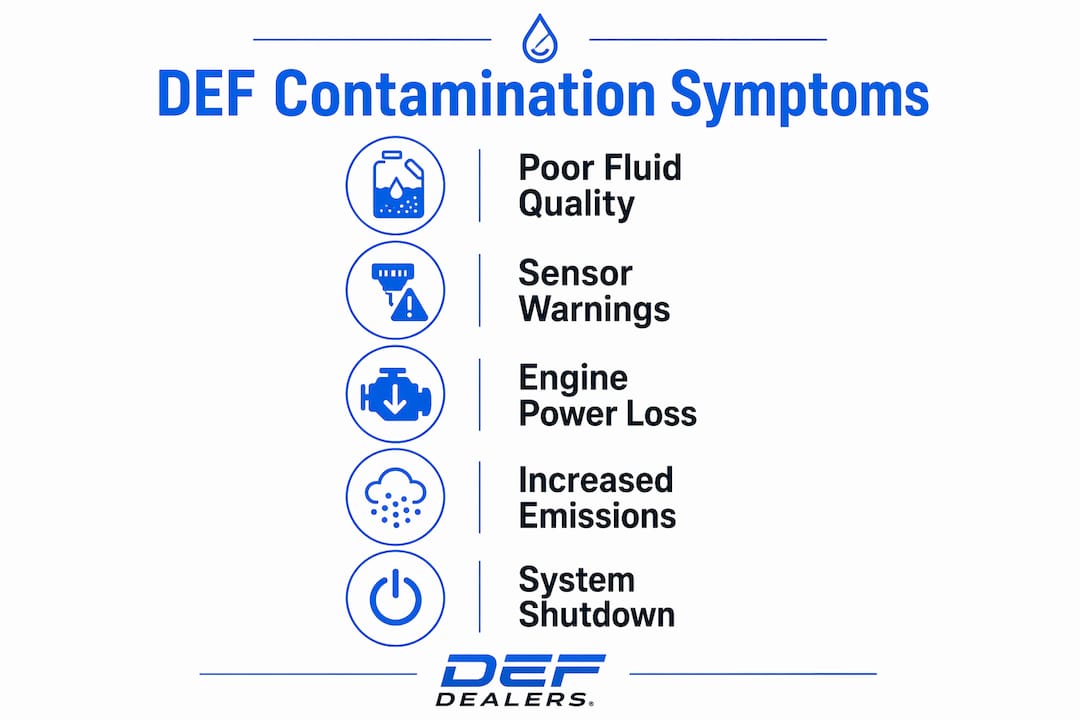
The most common symptoms operators report include:
- Check engine light or malfunction indicator lamp (MIL) activating without an obvious mechanical cause
- “DEF Quality Poor” or “SCR System Malfunction” dashboard messages appearing after a recent refill
- Unusual exhaust smoke with a bluish or grayish tint, signaling incomplete NOx conversion
- Ammonia odor from the exhaust, indicating unconverted ammonia escaping the SCR catalyst
- Engine power derate, where the engine drops to reduced speed or enters limp mode
- Higher-than-normal DEF consumption, often caused by the system dosing more to compensate for poor fluid quality
- White crystalline deposits around the DEF tank cap, filler neck, or exhaust components
- Strong fuel odor near the DEF tank, which points specifically to diesel fuel cross-contamination
Not every warning light means contaminated fluid. Sensor faults are frequently mistaken for fluid problems, so a proper diagnosis always matters. That said, the symptoms above, especially ammonia smell and visible deposits, point directly at fluid quality rather than electronics.
What is DEF and why does your diesel engine depend on it?
Diesel Exhaust Fluid is a precisely formulated aqueous urea solution used in Selective Catalytic Reduction (SCR) systems to reduce nitrogen oxide (NOx) emissions from diesel engines. The fluid is injected into the exhaust stream, where it converts harmful NOx into harmless nitrogen and water vapor. Every diesel engine built for on-road use since 2010 and most off-road equipment since 2014 relies on this process to meet federal emissions standards.

DEF must meet ISO 22241 standards, which specify a urea concentration of 32.5% in purified water. Even minor deviations from that specification, whether from contamination, temperature damage, or age, degrade SCR performance and can trigger the inducement cycle that ends in a derate or shutdown. The SCR system cannot function without compliant DEF, and long-term operation on bad fluid causes permanent catalyst damage.
How DEF contamination happens: common causes and risks
Diesel fuel cross-contamination, water intrusion, and substandard DEF products cause Contamination is the leading driver of aftertreatment failure, responsible for 60–70% of SCR system repairs. The sources are almost always preventable.
Common contamination causes include:
- Diesel fuel accidentally added to the DEF tank, the most catastrophic scenario
- Water intrusion through improperly sealed containers or condensation in bulk storage
- Non-dedicated funnels, hoses, or pumps carrying residue from other fluids
- Metal containers made of copper, zinc, aluminum, or brass, which react chemically with DEF and introduce metallic contaminants
- Temperature extremes: above 86°F causes urea decomposition; freezing below 12°F induces phase separation, both rendering DEF non-compliant
- Dirt, dust, or debris entering through an uncapped fill opening in a shop environment
- Expired DEF that has degraded past usable concentration
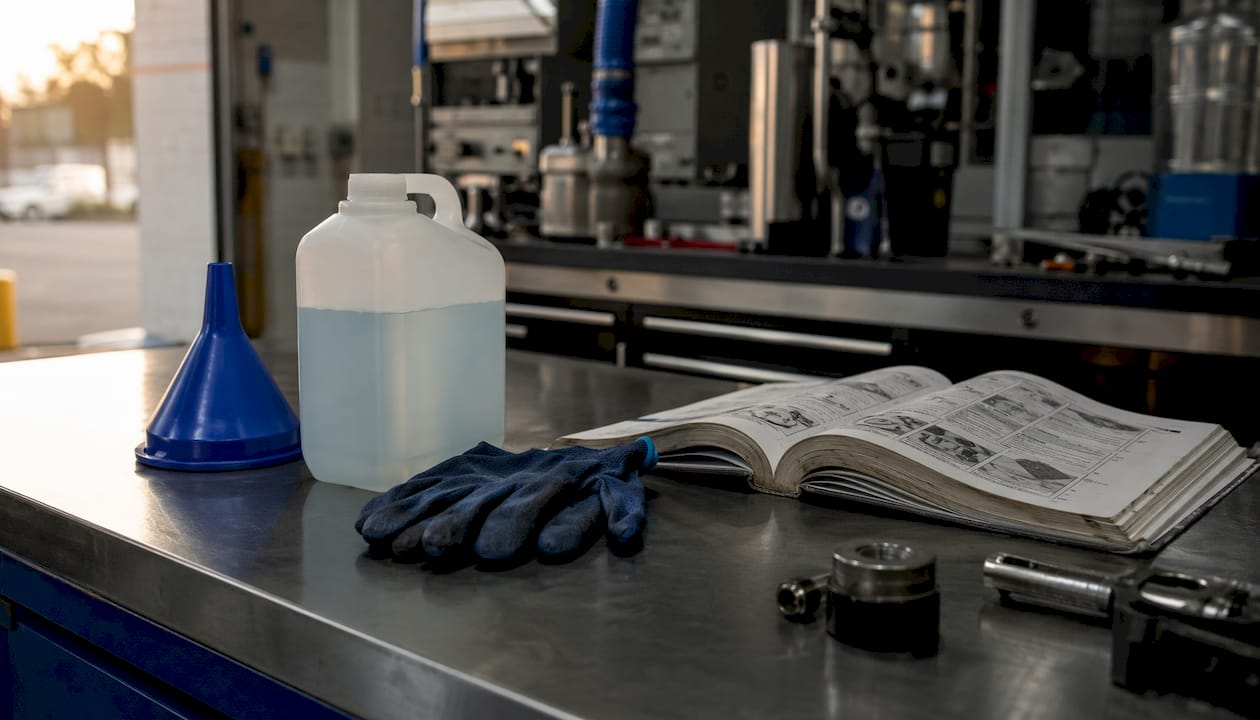
Pro Tip: Never use a funnel that has touched diesel, coolant, or any other fluid to fill a DEF tank. DEF is corrosive to many metals and highly sensitive to trace residues. Keep a dedicated, labeled DEF funnel stored in a sealed bag and replace it annually.
The DEF cross-contamination guide from Defsales covers each of these failure modes in depth for fleet operators managing multiple vehicles.
Recognizing and diagnosing DEF contamination
Fresh, quality DEF looks exactly like water: completely clear and colorless. Any deviation from that appearance is a red flag.
Visual indicators of contaminated fluid include:
- Cloudiness or haziness in fluid that should be transparent
- Yellow to brown discoloration, suggesting chemical degradation or foreign substance introduction
- Visible particles or sediment in supposedly fresh DEF
- Crystallization in the fluid itself, distinct from normal freezing behavior
- Persistent foam with odor after refilling (brief foaming from surfactant-based additives is normal; foam that lingers with cloudiness is not)
A refractometer gives you a quantitative read on urea concentration. The acceptable range is 31.8–33.2%. Readings outside that band confirm degraded or diluted DEF. Pair that with an OBD-II scan to pull fault codes like P20EE or P207F, which point to SCR dosing and catalyst faults.
| Symptom | Likely cause | Next step |
|---|---|---|
| DEF Quality Poor warning, clear fluid | Sensor or wiring fault | OBD-II scan, inspect sensor harness |
| DEF Quality Poor warning, cloudy fluid | Fluid contamination | Refractometer test, drain and replace |
| Ammonia odor from exhaust | Dosing problem or catalyst degradation | Inspect injector, test fluid concentration |
| White crystalline deposits at fill neck | Overflow or leak | Inspect tank seal, clean deposits |
| Fuel odor near DEF tank | Diesel cross-contamination | Do not start engine; tow to shop immediately |
| Engine derate with no warning codes | Sensor failure or bad fluid | Full aftertreatment inspection required |
How to clean and remediate a contaminated DEF system
The right response depends entirely on what got into the fluid. Water or particulate contamination calls for a drain, flush, and refill with certified DEF. Diesel fuel in the DEF tank is a different situation entirely.
Do not start or attempt to start the engine if you suspect diesel fuel has entered the DEF tank. Turning the key energizes the fuel system and can pump contaminated fluid deeper into the SCR components. Have the vehicle towed to a repair facility. Repair costs for diesel fuel in the DEF tank typically run $8,000–$20,000 because the entire delivery system, including the tank, supply lines, pump, and dosing injector, usually requires full replacement.
For less severe contamination, the remediation process follows these steps:
- Drain the DEF tank completely using a dedicated pump and collection container.
- Flush the tank with clean, distilled water two to three times until the rinse runs clear.
- Inspect and replace the DEF filter before refilling. Replace filters every 200,000 miles or 6,500 engine hours under normal conditions; replace immediately after any confirmed contamination event.
- Flush the supply lines and pump if particulate or chemical contamination reached beyond the tank.
- Inspect the dosing injector for crystallized urea deposits. Clogged injectors require professional cleaning or replacement.
- Refill with certified ISO 22241-compliant DEF and clear fault codes with an OBD-II scanner.
- Run the engine and monitor for recurring warning codes before returning the vehicle to service.
For fleet operators managing breakdown prevention, having a documented contamination response procedure cuts downtime significantly when an incident occurs.
Proper DEF disposal and handling best practices
Contaminated DEF cannot simply be poured down a drain or into a storm sewer. Most municipalities classify it as a chemical waste requiring proper disposal through a licensed waste handler or hazardous materials collection event.
Correct handling practices that prevent contamination from recurring:
- Store DEF only in sealed, UV-resistant, high-density polyethylene (HDPE) containers. Never use metal containers.
- Keep storage temperature between 12°F and 77°F. Review the DEF storage temperature guide for bulk tank setup specifics.
- Label all DEF dispensing equipment clearly and store it separately from diesel, coolant, and oil equipment.
- Inspect the DEF fill opening before every refill and wipe it clean to prevent debris entry.
- Check for a brown film on the surface of fluid in the tank before adding more DEF. A film indicates contamination; drain before refilling.
Pro Tip: In fleet shops, hang a laminated card at every DEF dispenser listing the three things that must never touch DEF equipment: diesel nozzles, coolant funnels, and bare metal tools. Simple visual reminders prevent the cross-contamination incidents that generate the biggest repair bills.
Routine maintenance matters too. Replace DEF filters on schedule, inspect tank interiors periodically for crystallization buildup, and keep tanks adequately filled. Running a DEF tank completely dry forces the engine into limp mode and stresses the pump.
Recent EPA updates and industry insights on DEF system management
The regulatory picture around DEF systems shifted meaningfully in 2026. The EPA removed the Urea Quality Sensor requirement in March 2026, directing manufacturers to switch to NOx sensors instead. The agency’s position is that traditional urea quality sensors have been a significant source of false fault codes and unnecessary derates, and that NOx sensors provide more reliable system feedback.
Starting with model year 2027, all new on-road diesel trucks must be engineered to prevent sudden and severe power loss when DEF runs out. Under the EPA’s August 2025 guidance, heavy-duty trucks now receive a warning light for 650 miles or 10 hours after a fault is detected, followed by only a mild derate for up to 4,200 miles or two work weeks, before speed drops to 25 mph. Nonroad equipment sees no impact for the first 36 hours before a slight torque reduction takes effect.
These changes reduce the operational disruption from sensor-triggered false alarms, but they do not change the underlying damage that contaminated fluid causes to SCR catalysts and injectors. A truck that stays running longer on bad DEF still accumulates catalyst damage. The EPA’s guidance buys time for repairs; it does not make contaminated fluid harmless.
60–70% of SCR system repairs are caused by contamination, making fluid quality the single most controllable variable in aftertreatment system longevity.
Manufacturers are also rolling out voluntary software updates under EPA guidance that extend inducement timelines and reduce harsh derates for existing vehicles. Check with your engine manufacturer or dealer to confirm whether your current fleet is eligible for these updates.
Key Takeaways
Contaminated DEF is responsible for 60–70% of SCR system failures, and catching the symptoms early prevents repair costs that can easily exceed $10,000.
| Point | Details |
|---|---|
| Contamination drives most SCR failures | 60–70% of SCR system repairs trace back to contamination, not mechanical wear. |
| Visual inspection is your first tool | Clear, colorless fluid is correct; cloudiness, discoloration, or particles mean drain and replace. |
| Diesel in the DEF tank is a stop-engine event | Do not start the vehicle; repair costs typically run $8,000–$20,000 for full system replacement. |
| Temperature compliance protects fluid quality | DEF degrades above 86°F and phase-separates below 12°F, both making it non-compliant. |
| 2027 EPA rules change derate behavior | New trucks must avoid sudden severe power loss on DEF depletion; existing fleets can access voluntary software updates now. |
Keeping your fleet’s DEF supply clean and properly stored is the most direct way to avoid SCR downtime. Defsales has a full DEF storage mistakes guide covering bulk tank setup, container selection, and temperature management for fleet operators at every scale.
Need certified DEF delivered to your site? Anytime Fuel Pros handles bulk and on-site DEF delivery across San Antonio, Austin, Dallas, and Salt Lake City, with nationwide reach through their partner network. Schedule a delivery before your next contamination incident forces the issue.